 Web
and Book design, Web
and Book design, Copyright, Kellscraft Studio 1999-2003 (Return to Web Text-ures) |
Click Here to return to Inca Lands Content Page Click Here to return to previous chapter |
 (HOME) |
| Web
and Book design, Copyright, Kellscraft Studio 1999-2003 (Return to Web Text-ures) |
Click Here to return to Inca Lands Content Page Click Here to return to previous chapter |
(HOME) |
|
CHAPTER
XIII VILCABAMBA
ALTHOUGH
the refuge of Manco is
frequently spoken
of as Uiticos by the
contemporary writers, the word Vilcabamba, or Uilcapampa, is used even
more
often. In fact Garcilasso, the chief historian of the Incas, himself
the son of
an Inca princess, does not mention Uiticos. Vilcabamba was the common
name of
the province. Father Calancha says it was a very large area, “covering
fourteen
degrees of longitude,” about seven hundred miles wide. It included many
savage
tribes “of the far interior” who acknowledged the supremacy of the
Incas and
brought tribute to Manco and his sons. “The Manaries and the Pilcosones
came a
hundred and two hundred leagues” to visit the Inca in Uiticos. The name, Vilcabamba,
is also
applied repeatedly to
a town. Titu Cusi says he lived there many years during his youth.
Calancha
says it was “two days’ journey from Puquiura.” Raimondi thought it must
be
Choqquequirau. Captain Garcia’s soldiers, however, speak of it as being
down in
the warm valleys of the montaña, the present rubber
country. On the
other hand the only place which bears this name on the maps of Peru is
near the
source of the Vilcabamba River, not more than three or four leagues
from
Pucyura. We determined to visit it. We found the town to
be on the
edge of bleak upland
pastures, 11,750 feet above the sea. Instead of Inca walls or ruins
Vilcabamba
has threescore solidly built Spanish houses. At the time of our visit
they were
mostly empty, although their roofs, of unusually heavy thatch, seemed
to be in
good repair. We stayed at the house of the gobernador, Manuel
Condoré. The nights were bitterly cold and we
should have been most
uncomfortable in a tent. The gobernador
said that the reason the town was deserted was that
most of the people were
now attending to their chacras, or
little farms, and looking after their herds of sheep and cattle in the
neighboring valleys. He said that only at special festival times, such
as the
annual visit of the priest, who celebrates mass in the church here, once a year, are the buildings fully
occupied. In the latter part of the sixteenth century, gold mines were
discovered in the adjacent mountains and the capital of the Spanish
province of
Vilcabamba was transferred from Hoyara to this place. Its official
name, Condoré
said, is still San Francisco de la Victoria de Vilcabamba, and as such
it
occurs on most of the early maps of Peru. The solidity of the stone
houses was
due to the prosperity of the gold diggers. The present air of
desolation and
absence of population is probably due to the decay of that industry. 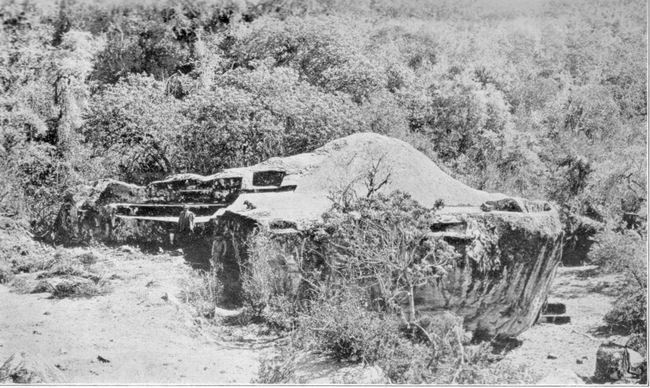 ÑUSTA ISPPANA The church is large.
Near it,
and slightly apart
from the building, is a picturesque stone belfry with three old Spanish
bells.
Condoré said that the church was built at least three hundred years
ago. It is
probably the very structure whose construction was carefully supervised
by
Ocampo. In the negotiations for permission to move the municipality of
San
Francisco de la Victoria from Hoyara to the neighborhood of the mines,
Ocampo,
then one of the chief settlers, went to Cuzco as agent of the
interested
parties, to take the matter up with the viceroy. Ocampo’s story is in
part as
follows: “The change of site
appeared
convenient for the
service of God our Lord and of his Majesty, and for the increase of his
royal fifths,
as well as beneficial to the inhabitants of the said city. Having
examined the
capitulations and reasons, the said Don Luis de Velasco [the viceroy]
granted
the licence to move the city to where it is now founded, ordering that
it
should have the title and name of the city of San Francisco of the
Victory of
Uilcapampa, which was its first name. By this change of site I, the
said
Baltasar de Ocampo, performed a great service to God our Lord and his
Majesty.
Through my care, industry and solicitude, a very good church was built,
with
its principal chapel and great doors.” We found the walls to be heavy,
massive,
and well buttressed, the doors to be unusually large and the whole to
show
considerable “industry and solicitude.” The site was called
“Onccoy,
where the Spaniards who
first discovered this land found the flocks and herds.” Modern
Vilcabamba is on
grassy slopes, well suited for flocks and herds. On the steeper slopes
potatoes
are still raised, although the valley itself is given up to-day almost
entirely
to pasture lands. We saw horses, cattle, and sheep in abundance where
the Incas
must have pastured their llamas and alpacas. In the rocky cliffs near
by are
remains of the mines begun in Ocampo’s day. There is little doubt that
this was
Onccoy, although that name is now no longer used here. We met at the gobernador’s an old Indian who admitted that an Inca had
once lived
on Rosaspata Hill.
Of all the scores of persons whom we interviewed through the courtesy
of the
intelligent planters of the region or through the customary assistance
of
government officials, this Indian was the only one to make such an
admission.
Even he denied having heard of “Uiticos” or any of its variations. If
we were
indeed in the country of Manco and his sons, why should no one be
familiar with
that name? Perhaps, after all,
it is not
surprising. The
Indians of the highlands have now for so many generations been
neglected by
their rulers and brutalized by being allowed to drink all the alcohol
they can
purchase and to assimilate all the cocaine they can secure, through the
constant chewing of coca leaves,
that
they have lost much if not all of their racial self-respect. It is the
educated mestizos of the principal
modern
cities of Peru who, tracing their descent not only from the Spanish
soldiers of
the Conquest, but also from the blood of the race which was conquered,
take
pride in the achievements of the Incas and are endeavoring to preserve
the
remains of the wonderful civilization of their native ancestors. Until
quite recently
Vilcabamba was an unknown land to most of the Peruvians, even those who
live in
the city of Cuzco. Had the capital of the last four Incas been in a
region
whose climate appealed to Europeans, whose natural resources were
sufficient to
support a large population, and whose roads made transportation no more
difficult than in most parts of the Andes, it would have been occupied
from the
days of Captain Garcia to the present by Spanish-speaking mestizos,
who might have been interested
in preserving the name of
the ancient Inca capital and the traditions connected with it. After the mines which
attracted
Ocampo and his
friends “petered out,” or else, with the primitive tools of the
sixteenth
century, ceased to yield adequate returns, the Spaniards lost interest
in that
remote region. The rude trails which connected Pucyura with Cuzco and
civilization were at best dangerous and difficult. They were veritably
impassable during a large part of the year even to people accustomed to
Andean
“roads.” The possibility of
raising
sugar cane and coca between
Huadquina and Santa Ana
attracted a few Spanish-speaking people to live in the lower Urubamba
Valley,
notwithstanding the difficult transportation over the passes near Mts.
Salcantay and Veronica; but there was nothing to lead any one to visit
the
upper Vilcabamba Valley or to desire to make it a place of residence.
And until
Señor Pancorbo opened the road to Lucma, Pucyura was extremely
difficult of
access. Nine generations of Indians lived and died in the province of
Uilcapampa between the time of Tupac Amaru and the arrival of the first
modern
explorers. The great stone buildings constructed on the “Hill of Roses”
in the
days of Manco and his sons were allowed to fall into ruin. Their roofs
decayed
and disappeared. The names of those who once lived here were known to
fewer and
fewer of the natives. The Indians themselves had no desire to relate
the story
of the various forts and palaces to their Spanish landlords, nor had
the latter
any interest in hearing such tales. It was not until the renaissance of
historical and geographical curiosity, in the nineteenth century, that
it
occurred to any one to look for Manco’s capital. When Raimondi, the
first
scientist to penetrate Vilcabamba, reached Pucyura, no one thought to
tell him
that on the hilltop opposite the village once lived the last of the
Incas and
that the ruins of their palaces were still there, hidden underneath a
thick
growth of trees and vines. A Spanish document of
1598 says
the first town of
“San Francisco de la Victoria de Vilcabamba” was in the “valley of
Viticos.”
The town’s long name became shortened to Vilcabamba. Then the river
which
flowed past was called the Vilcabamba, and is so marked on Raimondi’s
map.
Uiticos had long since passed from the memory of man. Furthermore, the fact
that we
saw no llamas or
alpacas in the upland pastures, but only domestic animals of European
origin,
would also seem to indicate that for some reason or other this region
had been
abandoned by the Indians themselves. It is difficult to believe that if
the
Indians had inhabited these valleys continuously from Inca times to the
present
we should not have found at least a few of the indigenous American
camels here.
By itself, such an occurrence would hardly seem worth a remark, but
taken in
connection with the loss of traditions regarding Uiticos, it would seem
to
indicate that there must have been quite a long period of time in which
no
persons of consequence lived in this vicinity. We are told by the
historians
of the colonial period
that the mining operations of the first Spanish settlers were fatal to
at least
a million Indians. It is quite probable that the introduction of
ordinary
European contagious diseases, such as measles, chicken pox, and
smallpox, may
have had a great deal to do with the destruction of a large proportion
of those
unfortunates whose untimely deaths were attributed by historians to the
very
cruel practices of the early Spanish miners and treasure seekers. Both
causes
undoubtedly contributed to the result. There seems to be no question
that the
population diminished enormously in early colonial days. If this is
true, the
remaining population would naturally have sought regions where the
conditions
of existence and human intercourse were less severe and rigorous than
in the
valleys of Uiticos and Uilcapampa. The students and
travelers of
the late nineteenth
and early twentieth centuries, including such a careful observer as
Bandelier,
are of the opinion that the present-day population in the Andes of Peru
and
Bolivia is about as great as that at the time of the Conquest. In other
words,
with the decay of early colonial mining and the consequent
disappearance of bad
living conditions and forced labor at the mines, also with the rise of
partial
immunity to European diseases, and the more comfortable conditions of
existence
which have followed the coming of Peruvian independence, it is
reasonable to
suppose that the number of highland Indians has increased. With this
increase
has come a consequent crowding in certain localities. There would be a
natural
tendency to seek less crowded regions, even at the expense of using
difficult
mountain trails. This would lead to their occupying as remote and
inaccessible
a region as the ancient province of Uilcapampa. It is probable that
after the
gold mines ceased to pay, and before the demand for rubber caused the
San
Miguel Valley to be appropriated by the white man, there was a period
of nearly
three hundred years when no one of education or of intelligence
superior to the
ordinary Indian shepherd lived anywhere near Pucyura or Lucma. The
adobe houses
of these modern villages look fairly modern. They may have been built
in the
nineteenth century. Such a theory would
account for
the very small
amount of information prevailing in Peru regarding the region where we
had been
privileged to find so many ruins. This ignorance led the Peruvian
geographers
Raimondi and Paz Soldan to conclude that Choqquequirau, the only ruins
reported
between the Apurimac and the Urubamba, must have been the capital of
the Incas
who took refuge there. It also makes it seem more reasonable that the
existence
of Rosaspata and Nusta Isppana should not have been known to Peruvian
geographers and historians, or even to the government officials who
lived in the
adjacent villages. We felt sure we had
found
Uiticos; nevertheless it
was quite apparent that we had not yet found all the places which were
called
Vilcabamba. Examination of the writers of the sixteenth century shows
that
there may have been three places bearing that name; one spoken of by
Calancha
as Vilcabamba Viejo (“the old”), another also so called by Ocampo, and
a third
founded by the Spaniards, namely, the town we were now in. The story of
the
first is given in Calancha’s account of the trials and tribulations of
Friar
Marcos and the martyrdom of Friar Diego Ortiz. The chronicler tells
with
considerable detail of their visit to “Vilcabamba Viejo.” It was after
the
monks had already founded their religious establishment at Puquiura
that they
learned of the existence of this important religious center. They urged
Titu
Cusi to permit them to visit it. For a long time he refused. Its
whereabouts
remained unknown to them, but its strategic position as a religious
stronghold
led them to continue their demands. Finally, either to rid himself of
their
importunities or because he imagined the undertaking might be made
amusing, he
yielded to their requests and bade them prepare for the journey.
Calancha says
that the Inca himself accompanied the two friars, with a number of his
captains
and chieftains, taking them from Puquiura over a very rough and rugged
road.
The Inca, however, did not suffer from the character of the trail
because, like
the Roman generals of old, he was borne comfortably along in a litter
by
servants accustomed to this duty. The unfortunate missionaries were
obliged to
go on foot. The wet, rocky trail soon demoralized their footgear. When
they
came to a particularly bad place in the road, “Ungacacha,” the
trail went for some distance through water. The monks were forced to
wade. The
water was very cold. The Inca and his chieftains were amused to see how
the
friars were hampered by their monastic garments while passing through
the
water. However, the monks persevered, greatly desiring to reach their
goal, “on
account of its being the largest city in which was the University of
Idolatry,
where lived the teachers who were wizards and masters of abomination.”
If one
may judge by the name of the place, Uilcapampa, the wizards and
sorcerers were
probably aided by the powerful effects of the ancient snuff made from huilca seeds. After a three days’
journey over very rough country, the monks arrived at their
destination. Yet
even then Titu Cusi was unwilling that they should live in the city,
but ordered
that the monks be given a dwelling outside, so that they might not
witness the
ceremonies and ancient rites which were practiced by the Inca and his
captains
and priests. Nothing is said
about the appearance of “Vilcabamba Viejo” and it is doubtful whether
the monks
were ever allowed to see the city, although they reached its vicinity.
Here
they stayed for three weeks and kept up their preaching and teaching.
During
their stay Titu Cusi, who had not wished to bring them here, got his
revenge by
annoying them in various ways. He was particularly anxious to make them
break
their vows of celibacy. Calancha says that after consultation with his
priests
and soothsayers Titu Cusi selected as tempters the most beautiful
Indian women,
including some individuals of the Yungas who were unusually attractive.
It is
possible that these women, who lived at the “University of Idolatry” in
“Vilcabamba Viejo,” were “Virgins of the Sun,” who were under the
orders of the
Inca and his high priests and were selected from the fairest daughters
of the
empire. It is also evident that “Vilcabamba Viejo” was so constructed
that the
monks could be kept for three weeks in its vicinity without being able
to see
what was going on in the city or to describe the kinds of
“abominations” which
were practiced there, as they did those at the white rock of
Chuquipalta. As
will be shown later, it is possible that this Vilcabamba, referred to
in
Calancha’s story as “Vilcabamba Viejo,” was on the slopes of the
mountain now
called Machu Picchu. In the meantime it
was
necessary to pursue the hunt
for the ruins of Vilcabamba called “the old” by Ocampo, to distinguish
it from
the Spanish town of that name which he had helped to found after the
capture of
Tupac Amaru, and referred to merely as Vilcabamba by Captain Garcia and
his
companions in their accounts of the campaign. Click
 here to continue to the next chapter of Inca Lands
 |