
Web
and Book design,
Copyright, Kellscraft Studio 1999-2007 (Return to Web Text-ures) |
 (HOME)
|
|
III LIFE IN THE COUNTRY
It was a large, two-story building, standing snug to the street, and joining walls with neighboring houses on either side. From the highway, its appearance was rather blank and forbidding, but as soon as I passed through it to the rear I found the lacking touch of homelikeness. From a vine-clad porch I looked out on a lawn, in which were several flower-beds and a cluster of trees. Slightly farther removed, was the garden, subdivided into many neat little plots of vegetables and small fruits, and beyond the garden were the open fields. The house
was
flanked with ponderous wings that in size almost rivalled the main
structure.
One of these had formerly been the doctor’s barn, but now it was used
for odds
and ends of storage. The doctor had been something of a farmer, and the
barn
was broad and big and had an expansive roof of mossy tiles. Access to
it from
the street was had by an arched and paved passage that went straight
through
the main building. In the
wing
opposite the barn, up one flight, I had my room — a room that, in its
way, was
rather imposing. It was large and high, and had a broad fireplace
with a
decorative mantel; and above the mantel was a mirror built into the
wall and
surrounded with elaborately panelled woodwork. Some of the furniture
was
handsomely solid and interestingly aged, but the room as a whole showed
plainly
by its barrenness, its cracked ceiling, and its stained and loosening
wallpaper,
that its aristocracy was of the far past. The pleasantest feature of
the
apartment was its one wide, high window. This window opened in halves
inward,
and it had a balustrade on which I liked to lean and look out on the
grassy
court and the dull-toned, wavy lines of the old tile roofs, and watch
the
people of the house, whose work often brought them into view down
below. The house
had a
number of tenants, all humble villagers, and I came to be very well
acquainted
with some of them. One of these was a man who always wore a blue apron,
and
whose only work seemed to be weeding and hoeing in the garden and doing
other
small jobs about the place. Another was a black-capped, hardy old
woman, who,
at our first meeting, took great pains to let me know her age. I did
not
comprehend her clearly until she stooped and wrote “81” with her finger
in the
dirt of the courtyard path where we were standing. Then she asked how
old I
was, and I scratched the figures in the path beside hers. Naturally, the person I saw most was my landlady. She, too, was elderly and black-capped, but she was thin and bent, and did not carry her years as well as the other woman, and she had no pride in them to make her anxious I should know their exact number. She was a very painstaking body, and tried to do everything she could for my comfort. Indeed, she tried too hard. I was gradually picking up a French vocabulary, but my acquirements at that time did not go far when it came to carrying on an extended conversation. My landlady liked to talk, and, worst of all, she insisted daily on finding out in detail what I wanted to eat. I could not make her understand that I did not much care, and that she could bring what she chose. She must know about each individual thing — did I like it, or would I prefer something else? — and we always had a struggle with the language in making out my bill of fare. 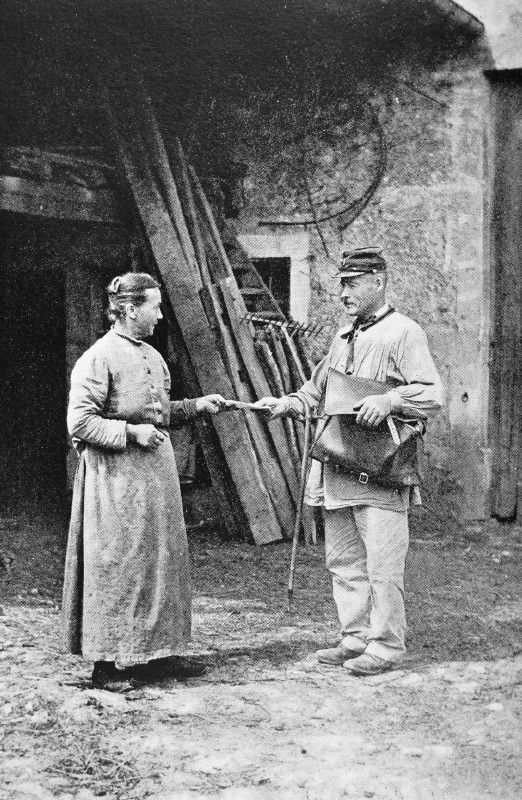 THE POSTMAN Yet, in
spite of
all my blundering, I gained something of a reputation as a linguist,
for I
heard my landlady one day telling a companion that I knew French — I
“was not
just an ignorant foreigner, oh, no!” I think the reason for this
undeserved
honor lay in the fact that when my landlady was rattling along in her
conversationals, I made it a point to agree with her as nearly as I
could. Most
of her remarks were quite inconsequential, and it did not matter much
what I
said. I confined my answers, as a rule, to “Oui” and “Non,” and made a
guess at
which was right. If my landlady stopped and looked surprised, I hastily
changed
to the other word, and she would go on satisfied. She lived
in the
second story of the main part of the house, and she brought my meals
thence in
a basket. From my window I would see her, in her neat black cap, come
plodding
along the path across the yard to the passage that led from without up
to my
room, then hear her slowly mounting the stairs, and opening the
creaking door.
“Bon jour, monsieur,” she says, and then follows a patter of small
talk, to
which I contribute my occasional affirmatives and negatives. When she
had
finished spreading the cloth and putting on the dishes, she often
groaned once
or twice, but I do not know whether that was because she was unwell or
exhausted. Quite likely the latter, as it was no small task to attend
me, with
all that carrying and stair climbing. For my
noonday and
evening meals, which were served in courses, she had to make several
journeys.
First came soup, and then followed meat, vegetables, dessert, etc.
Bread was
supplied in the form of a loaf that very much resembled a stout
walking-stick
in length and slenderness. In the morning I had only a cup of chocolate
and one
lone roll that was crust clear to the heart. This made what the French
call
their “first breakfast,” and it is considered entirely sufficient until
noon.
Then they have their “second breakfast,” which is fairly substantial.
But for a
good, square meal, from the English and American point of view, you
have to
wait until “dinner” in the evening. Still, this regimen is not at all
unsatisfactory after one gets used to it, and the food everywhere in
France is
almost unfailingly well cooked and well served. The
village of La
Chapelle lay on what had been an important highway in the days
anteceding the
railroad, and the houses all gathered as close as they could to this
old
thoroughfare. The hamlet had no side streets worth mentioning, but
extended in
a single narrow line, and house crowded house as if each was intent on
seeing
all the passing traffic. There are no great coaches now, and no
equestrians
coming and going as in the old days — but there stand the houses just
as they
were built a century or more ago, elbowing each other in vain
expectancy of
the return of the ancient hurly-burly on the highway. The
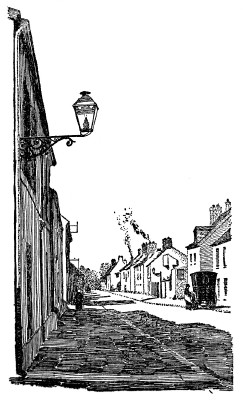
village street
was laid with rough paving-stones, over which the ponderous wheels of
the
loaded carts rumbled with a suggestion of thunder, and with a rude
jolting that
made the houses vibrate. The walks were as rudely paved as the street,
and it
was like doing penance to travel over them. You had no comfort till you
left
the village, when the roads became macadam, and the walks either
disappeared
or gave place to narrow paths of dirt. My village
of
course had its church, and it also had an open square called a “place,”
which
seemed to be the more important of the two. The former was for
religion, the
latter for business and pleasure; and the French love recreation and
buying and
selling far more than sermons and devotions. They are Catholics almost
universally, the exceptions being less than one in fifty; but I got the
impression that the church was kept up more for the sake of ancestral
custom
than because the people cared for it. The adherence of many to the
dominant
faith is nominal rather than real, and most intelligent people dissent
in private,
at least, from many of the church doctrines. But interest in the matter
is
languid. They feel that the church — some church — is valuable and
necessary,
and their idea is that as long as the Catholic Church is not actually
working
mischief they might as well support it and say nothing. The priests are nearly always the sons of farmers and tradespeople. They rarely are drawn from the more wealthy and cultured classes. Between the ages of twelve and twenty the boys who plan to go into the priesthood attend a clerical school. Then for a year they are obliged to serve in the army. The army influence has a tendency to counteract that of the period of schooling, and many retire from the ranks of the soldiery to become ordinary civilians. Those who go on and take priestly orders and enter on their life work, usually make their home with relatives. In case a priest has no convenient kinspeople, he is apt to live alone, save for the company of a single elderly servant, and if he is poor he takes care of his own garden. Few priests have an independent income, and the stipend from the government, in most instances, is not over twenty dollars a month, though to this must be added the proceeds of christenings, weddings, and burials. The priests visit the sick and needy, and, as a rule, are charitable and benevolent. They confine themselves pretty closely to Catholic reading; their sermons are made on ancient theological models, and they are very unprogressive as a class. To me they seemed an uncanny lot, in their broad hats and long black robes, and I could not but think that their lives were narrow, their intelligence limited, and that they were so bound to an antiquated past as to be less and less fitted for leaders of men in the enlightened present. 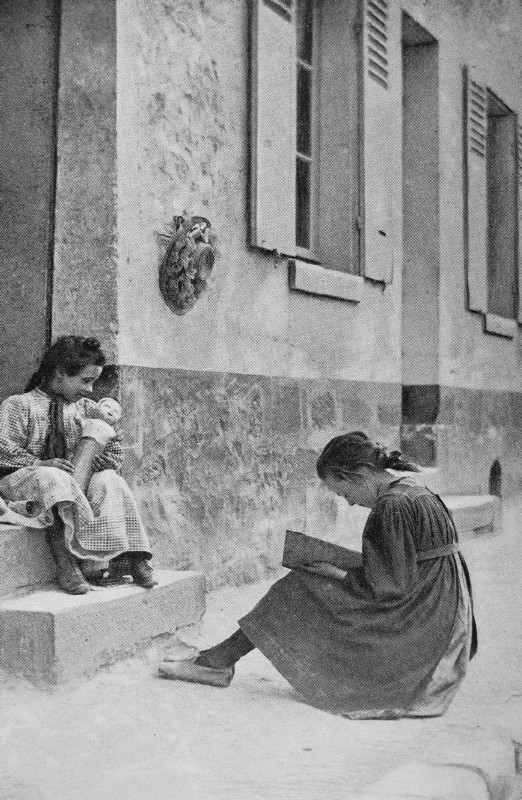 A HOME DOORWAY The church
at La
Chapelle was a pleasing little stone building with a graceful spire,
but it was
crowded in among the houses and there was no churchyard about it set
thick with
graves and lichened stones. Except in Normandy and some others of the
coast
departments, the cemeteries are usually outside the villages, and this
was the
case with the burying ground at La Chapelle. It was a small square plot
among
the fields, inclosed by a high stonewall. Its iron gates were kept
locked, and
they were constructed to bar one’s seeing as well as entering. The only
way I
could get a glimpse in was by mounting a chance hummock by the wall and
standing on tiptoe. The view was not beautiful. There were a few small
trees, a
path or two, some rows of unmarked mounds, and around the borders of
the
inclosure a number of gravestones decorated with bead wreaths. The
place looked
as if it was in a strait jacket, or as if it was a prison-yard from
which it
was feared the inmates might attempt to escape. I was told that the
French
authorities have no wish that the burial places should be visited. To
them a
cemetery is simply the lonely habitation of the dead — a repository of
bodies,
tombstones, and artificial mementos of beads and wire. You ask for the
key — no,
some damage will be done; not that they suspect you of evil intents,
but
without surveillance there is no knowing what might happen. In
particular there
is fear that the children who possibly may accompany you will hasten
the
destruction of the unearthly wreaths. I
mentioned that La
Chapelle had a little open reserve, or common, called a “place.” This
was not
like its English prototype, the village green, for it was not green at
all, but
a barren of trodden earth and rough paving. About half of it was
shadowed by
some rows of trees with tops clipped off at the height of ten or twelve
feet.
On the “place” the children played; there, in the shade, on warm
afternoons,
the old women loitered with their knitting; there travelling tinkers
and
pedlers often stopped with their carts, and there was held the annual
village
fête. The La
Chapelle
fête was in progress at the time of my arrival, and on the first
evening of my
stay I went around to have a look at it. Several tents and wagons were
stationed on the borders of the stumpy grove, lamps had been lit here
and
there, and the people, their day’s work done and their dinners eaten,
were
beginning to congregate from the village homes. The children were the
most
eager of the attendants, and they came prepared to spend all their
treasure of
pennies, which they held tight-clasped in their palms, or, for greater
safety,
carried in tin boxes where the coins rattled reassuringly until the
last one
was gone. Many bareheaded young women were present, a few white-capped
matrons,
all the lads and young men, and now and then an older man. The
merry-go-round,
with its double row of little wooden horses, its gold and tinsel and
gay
colors, and its organ that belched forth music unceasingly, was the
great
attraction for the children. The organ was played by a man who looked
as if
turning a crank and eliciting harmony by main strength was hot, hard
work. The
motive power of the merry-go-round itself was furnished by a man and a
boy, who
walked around within the circle of wooden steeds and pushed on the
braces. The clumsy
mechanism of all this made the roundabout decidedly prosaic to me, but
the
riders had the gift of forgetting accessories, and to them the whirl on
the
hobby-horses was clearly airy and exhilarating. A number
of the
adjoining tents were simple little booths devoted to the sale of fancy
wares,
crockery, and toys, but in one there was a shooting-gallery in charge
of a
young woman. She loaded the guns, and the men could shoot at
bull’s-eyes, or at
clay pipes stuck up in various positions for the purpose, or at some
whirling
effigies. The marksmen popped away very perseveringly, though I could
not see
that they were doing any great damage to either the bull’s-eyes or the
other
targets. One of the bull’s-eyes was reserved, and if you chose to try
your skill
on that you must pay an extra price. But, granting that you hazarded
the amount
charged and that your aim was true, you had the pleasure of having your
prowess
made known by a monkey, which, under the directions of the
gallery-keeper,
walked out from a cage behind the target and rang a bell. That duty
attended
to, he was pushed back behind the doors, and a fresh target set up. Late in the evening, after the small fry went home, there was to be an open-air dance on the common, but there was no knowing at what hour it would begin, and I did not wait to see it. When I came away most of the crowd had gathered around a booth where a woman was allowing the people to draw cards with numbers on them from a tin can. This was a lottery, and as near as I could understand, one of the numbers on every card was a prize-winner. Your only difficulty was in selecting the lucky number. The most important drawing I saw made was a large doll. The woman who received it at once retired to the outskirts of the crowd and ran about among her friends, showing her prize with great glee. As a whole, lucky numbers seemed scarce, but there was no lack of eagerness on the part of the ticket-buyers. 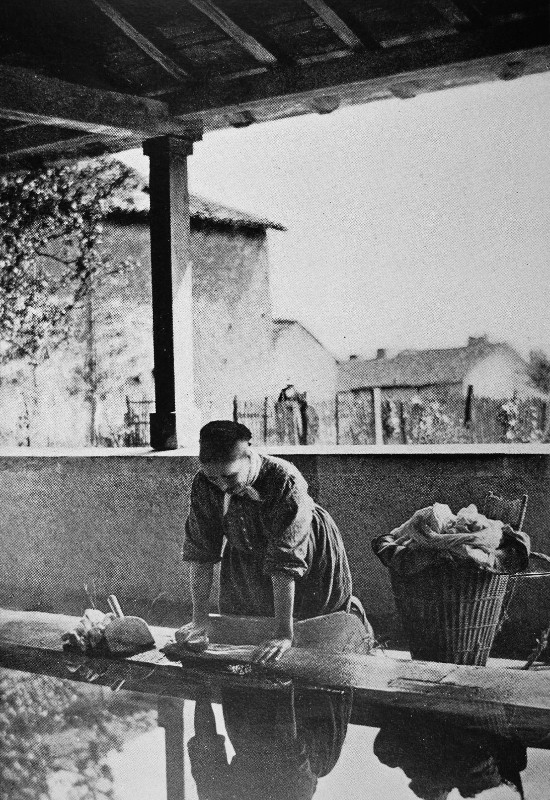 A VILLAGE WARE-HOUSE In all
country
communities this annual fête is the most notable merrymaking of the
year. It
continues through several summer days, always starting on Sunday
afternoon.
That is the only time in the week when the whole population of the
region is at
liberty and disposed for recreation, and at no other time would the
fête start
off so auspiciously. La Chapelle was too small for it to be seen there
in all
its glory, but on another occasion I was present in a larger village on
the
opening afternoon. In this case, the common was spacious and well
grassed.
Around its borders on every side were tents and booths, some for
pleasure and
some for the sale of food and drink, toys, cheap jewelry, and frail
trinkets of
all sorts. There were shooting-galleries, swings, and roundabouts, and
a variety
of lesser contrivances to induce the populace to exchange pennies for
pleasure.
In many ways the fête was like an American cattle show or circus. It
had the
same fakir adjuncts, and the similarity was farther emphasized by the
presence
of hawking pedlers moving about among the throng, and carrying their
stock in
trade along with them. The
biggest of all
the erections on the common was a great tent, closed in the daytime,
but open
in the evening for dancing, which would continue to the accompaniment
of
cornets and fiddles till well toward daybreak. Admission to the tent
was free
to ladies. Men were charged ten cents to go in, and, in addition, had
either to
pay five cents every time they danced, or sixty cents to buy in one
lump the
privilege of engaging in as many dances as they chose. I saw
hardly anything
in all the round of the common which had real charm. Some things were
commonplace, many were gay or gaudy, and not a few, meant to be clever
and
humorous, were coarse and offensive. The attraction which drew and held
the
bulk of the crowd about it was one furnished free by the municipality,
consisting of a troupe of acrobats, male and female, who went through a
series
of contortions and exhibitions of strength, skill, and clownishness
for the
delectation of the audience. They performed their antics to the music
of a band
on an open stage in the centre of the common. The people
were out
in force, rich and poor, old and young, men, women, and children. Of
all these,
the person who made the most impression on me was a black-robed,
elderly priest
going about benignant and approving with fatherly bows and handshakes.
Apart
from its all being on Sunday, I wondered if he had no conscientious
scruples
about the lottery or about various other phases of this vanity fair,
which, to
say the least, were decidedly vulgar. The lottery in most villages is
the main
dependence for defraying the necessary expenses of the fête. It is
under the
management of the commune, and the ticket-selling is in charge of the
constable, who, some time beforehand, informs every one what the prizes
are to
be, and conducts a house-to-house canvass. All public-spirited citizens
are
interested in making the fair a success, and many of the ladies sell
tickets
among friends living in other places. The drawing takes place in the
big tent
on the last day of the fête, at three o’clock in the afternoon, with
the mayor
and council presiding at the ceremonies. The chief prize at the fête I
have
been describing was a clock valued at twelve dollars; but much more
expensive
prizes are offered in some villages. That the
fête
should begin on Sunday seems to the French perfectly natural, for with
them the
Sabbath is a nondescript day that is divided between work, play, and
religion
according to individual likings and impulses. Persons who are
penurious, or
whose crops are in special need of attention, work all day; others play
all
day; more work half and play half. In certain factory towns the mills
close
Monday instead of Sunday, and it is a very common custom to make
Monday the
day off for masons, carpenters, and mechanics. “Holy Monday” they call
it; and
they recuperate from their six days’ labor for some one else by doing
one day’s
work for themselves, or by going on a pleasure jaunt, or, not
infrequently, by
getting drunk. The
earlier hours
of the country Sabbath, as I saw it in the vicinity of La Chapelle, had
very
much the ordinary week day aspect. There was ploughing, weeding, and
hoeing in
the outlying fields, the loaded wagons went and came, the anvil rang
from the
blacksmith’s shop, pedlers’ carts made their rounds from door to door,
and the
proprietors of the shops took off their shutters and bought and sold as
usual.
When the church bells called to service, a good many women and
children would
wend their way to mass, but the men who responded to the summons were
few and
far between. As a rule, the Sunday workers desist at noon, and both they and the church attendants feel free to celebrate for the rest of the day. They go visiting, resort to the cafés, walk or ride, or engage in some sort of athletic sport. In many places, archery is a favorite form of Sunday amusement. Another thing which furnishes great entertainment, alike to those who take part and to those who look on, is a fire drill. A hand engine and a fire company is a very common village institution, and the Sunday afternoon drills are conducted with immense ardor and excitement. The first time I approached one, I thought a riot was in progress, there was such a babel of orders and counter orders, and such a hurry-scurrying about the field in which the crowd had gathered. The apparatus was simple — one or two pairs of wheels, a ladder in sections, some lengths of hose, and a tank into which water could be poured. On either side of the tank were handles, and two men were working these up and down as if for dear life. But I was informed that the participants were not practising for a fire — because they never have fires in the French country, or only at such long intervals that the matter of actual service only enters the minds of the fire-drill enthusiasts as a remote possibility. Frequent fires are an American habit, not European, and the main object which impels the men engaged in these drills to put forth their best efforts is the hope of carrying off the honors in the annual contests with the fire companies of neighboring villages. 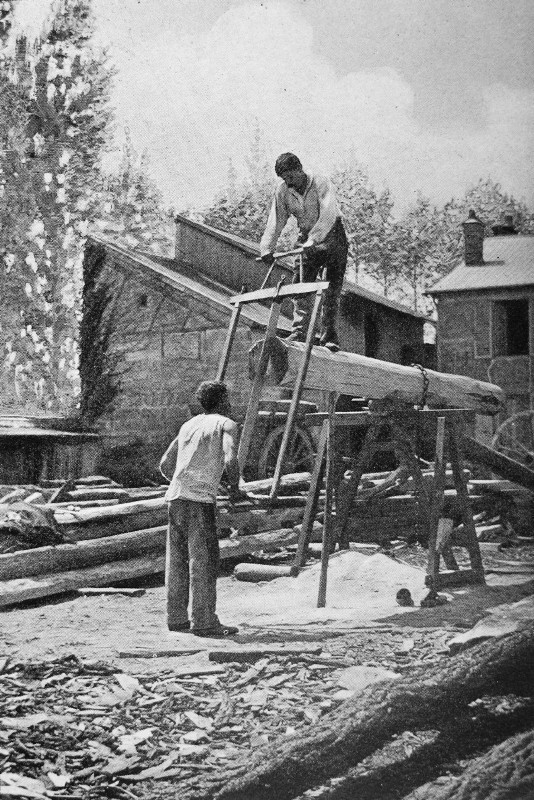 SAWING BOARDS BY HAND So far as
they can,
the French live out of doors. They take their recreation, eat their
meals, and
do their work in the open air to an extent that is astonishing to an
American.
You see the women busied with housework of all kinds in home yards, or
on the
near street walks. There they sew, get ready the vegetables for
dinner, and,
in a small way, do their washing. Once I saw a little girl standing on
a stool
and busied up her mother’s hair in the public view quite unconcerned.
Indeed,
the family life among the peasantry all through my village was much
more public
than private in pleasant weather. I early
adopted the
ways of the people, and though I did not go to the length of combing my
hair on
the street, I loitered in the open air almost as much as any of them.
On the
day of my arrival, Madame, the landlady, had set an easy-chair on the
flagging
by the porch, and indicated that it was for me, and all through my stay
I often
occupied it in the mild evenings, or in the heat of midday when it was
too warm
to be comfortable walking in the sun. It was very domestic there — the
old
woman, my housekeeper, and the other humble workers coming and going,
and a cat
or two wandering about, swallows soaring and occasionally dipping down
and out
of sight to their nests in the cavernous barn, songsters trilling in
the trees,
and sparrows scolding somewhere within hearing. At times the
blue-aproned man
appeared with a scythe and cut a few swaths of the grass, which was
growing
tall and rank and hiding the flower-beds. He found mowing sweltering
work, and
he only did a little every day, and a good share of what he cut, his
wife
carried off to the rabbit hutch at the rear of the premises. Nearly
every one in
the village had a colony of rabbits in some dark nook about their
homes. They
were raised for eating, and many families kept them in preference to
hens,
because they were less trouble, and because they could be housed in
more meagre
quarters. They required little care, and thrived on the kitchen waste
and on
grass and weeds brought from the fields or the garden. Then, too, their
skins
were always salable to pedlers who went about with racks on their
backs, or
with pushcarts, from door to door, buying them at the rate of a cent or
two
apiece. The
village street
was the most interesting place to see the local life, especially the
shadowed
side in the afternoon. Some of the villagers brought out chairs, some
sat on
doorsteps, or on the benches which every house had against the wall
near the
entrance. There were old women and quaint little white-capped babies,
young
women and middle-aged women, and there were small boys and girls of all
sizes,
running about or perhaps lying on the rough paving-stones near their
elders. The
children were most numerous after school hours. Then you saw them in
and about
every doorway, with their dolls and picture-books and other playthings,
eating
big pieces of bread, jumping ropes, and doing all the other thousand
and one
things that children delight in. There was
no end of
visiting on the street. The people liked to gather in groups, and
passers often
paused for a word with friends. Doors were many of them open, and
windows were
conveniently low, with sashes swinging on hinges, and neighbors always
found it
easy to see and talk with each other, even when domestic duties kept
some of
them in the house. I rarely saw any of the adults reading. They found
their
intellectual stimulus in social intercourse; and they would sit by
their house
doors through the long June evenings and talk, talk endlessly, until
the stars
came out. The toddlers whom I saw on the highway were often in charge of their grandmothers. One of these grandmotherly caretakers lived close by my stopping-place. Her charge was a sturdy, rebellious little youngster, whose notions about the dangers of the street differed from hers materially. They were always having contests, and the grandmother’s wrinkled, leathery face seemed sharpened by the anxiety of continual watching. She never looked in the youth’s direction without telling him to do or not to do something, and usually that seemed to rouse his determination to go just contrary to her commands. But what made him maddest was to have her catch him unawares and with her apron wipe his nose. That never failed to set him kicking and squirming in great disgust. 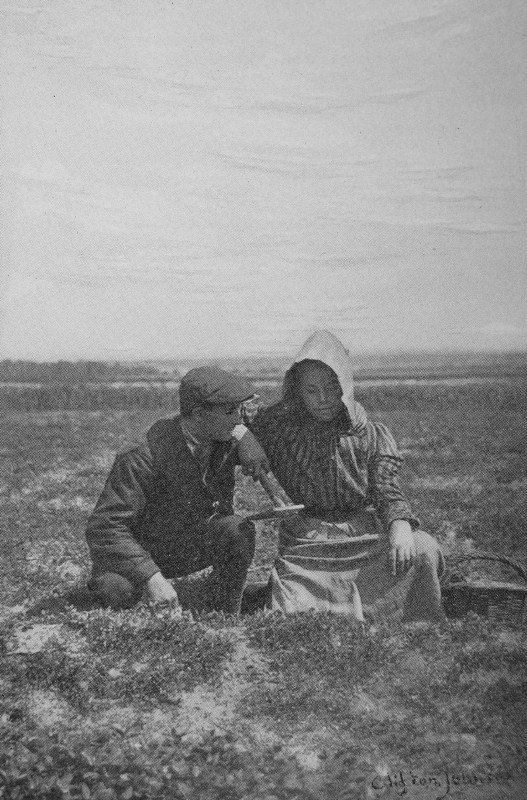 THE WORKERS I think,
as a rule,
the French are very fond of their children and take excellent care of
them. The
only case of abuse I saw was one day when I met a thin, angular woman
on the
outskirts of the village, with a baby in her arms and in front of her a
weeping
little girl whom she was driving toward the hamlet. The woman was
screaming in
a perfect torrent of scolding, and she was cuffing the little girl
about the
head so hard as to almost knock the child off her feet. Even this was
not
enough, and the woman kicked the girl and threw sticks at her. The baby
in the
woman’s arms was crying loudly with fright, and the little girl was
wailing
too, as she staggered along, blinded by her tears and by her towsled
hair,
which had fallen over her face. They turned a corner and disappeared,
but they
left with me a distressing memory that lingered long and depressingly.
One
evening I
walked about a mile out from the village along a lonely road that led
me past a
reedy pond, where the frogs and other weird-voiced water-creatures were
croaking, to a little grove in the borders of which a nightingale was
thrilling
the air with its varied melody. My road continued into the wood and
came to an
end in a quiet forest dell, where was a low, tile-roofed shed — the La
Chapelle
washhouse. It was vacant at that hour, but the door was open, and I
went in. A
long, shallow basin of cemented brickwork occupied the middle of the
structure,
and through this flowed a little stream. On either side was space for a
dozen
kneeling women. It was a
pretty
spot and a cool interior, but it was a whole mile from the village, and
all
that distance the women have trundled their barrows of washing, winter
and
summer, from time immemorial. There was no stream nearer to the
village, and
for home use they depended on wells, whence they drew water in wooden
buckets
by pulling on a rope running over a wheel. A short time previous there
had been
a project for a system of waterworks, with pipes to every house in the
village.
The commune had money enough for the undertaking in its treasury, but
when the
measure was put to vote it was defeated. They always had gone to the
wash-house
in the grove, and why should they not continue to go? After all, it was
only a
mile; and they would not spend money on a change which would confer so
slight
benefit. Not every
village
possesses a wash-house, either near or far, and the women do the work
beside
the streams and ponds, with no protection from wind or sun, save that
given by
the lay of the land or by near trees. The washing apparatus usually
includes a
box to kneel in and keep the worker out of the mud, a paddle, a
scrubbing-brush, soap, and a bottle of ammonia to take out spots. In
winter, a
kettle of hot water is brought also, into which the worker now and then
dips
her numb hands to restore, in some degree, their warmth. The
washing-place has
very real charms for the peasantry, and they have no desire to betake
themselves
to individual wash-tubs in the seclusion of their homes. The attraction
lies in
its sociability. It is the village newspaper. There you hear all the
local
happenings, rumors, and opinions. Another reason for clinging to it is
custom;
for the woman who gets used to washing by the waterside thinks she can
wash in
no other manner. At one
house where
I was visiting, the mistress had travelled and imbibed some foreign
ideas, and
she tried to get her maid to wash handkerchiefs and other little
articles
indoors, with a tub on a chair. But the maid declared it was
impossible. Her
mistress insisted she would not have the maid running all the time to
the
washing-place, and finally they compromised. The maid would do the
washing at
home, but she must take it out on the lawn back of the house and get
down on
her knees, or she was Of the
villages
neighboring La Chapelle, I liked best one called Orry, hardly ten
minutes’ walk
distant. It did not lie on a main highway, and was built at random
along
crooked paths and lanes. For its public features there was a
tile-roofed
church, a common bounded with rows of squat trees, and a pool in the
heart of
the hamlet, about which the swallows liked to flit, making swift dips
along its
surface and sometimes alighting on its margin to get mud for
nest-building.
The water was stagnant and brown, and was the home of vast numbers of
pollywogs, water-bugs, and wigglers. Yet it was the drinking-place of
the
village cows and horses, and the creatures seemed to like it. The cows
would
wade far in, and take deep draughts in evident enjoyment. The beverage
was
surely rich and soupy, but I had my doubts about its improving the
flavor of
the milk. On the
village
borders, where two roads met, was a stone cross, shadowed by a cluster
of
poplars. Crosses are to be met with almost everywhere in France, but
they are
much more numerous in the remoter sections than near Paris. As far as I
noticed, no one paid any attention to them, yet I was told that, while
few
besides the priests offered a conspicuous obeisance, all good
Catholics made
the sign of the cross when they passed one, though in so quiet a way —
a wave
of the hand, a touch over the heart — that you would not observe it
unless you
were watching closely. The sight
that was
to me most curious in Orry was two men in a lumber yard sawing out
boards. They
had a log poised up in the air on a slender framework, and one man
stood on the
log and the other on the ground below, each grasping the handles of a
long saw
which they pushed and pulled back and forth as it cut its slow way
through the
wood. I had the impression that sawing boards by hand was no longer a
practice
except in very out-of-the-way regions, but in France a great deal of
lumber is
still worked up by the hand-sawyers. The region
round
about Orry and La Chapelle was characteristic French country — wide,
cultivated
plains with a frequent dotting of snug farm hamlets, each so environed
by trees
that, as viewed from the fields, it appeared to be built in a grove. On
our
side of the Atlantic villages are comparatively loose and straggling,
and
neighborless homes on the lonely country roads are to be found in every
township. But such homes are exceptional abroad; and France is
everywhere
reminiscent of the days when, for mutual protection, the people were
obliged to
gather in close village groups if they were to exist at all. The bare
monotony
of the plains in contrast with the village groves is suggestive of a
desert
broken by green oases. But the resemblance is not complete, for there
are
nearly always within the range of vision several poplar-lined roadways.
The
trees are planted and cared for by the government. They stand at
uniform
intervals, and the periodical trimming off of all the side branches
makes their
slender, tufted forms, when seen from a distance, seem like some
mysterious
arboreal troops marching in double columns across the country. Twenty
years
from the time of planting the trees reach maturity, and attain a value
of four
dollars each. After they are cut, other trees are set out in their
places — sometimes
poplars, but more often, at present, fruit trees, as the latter bring
the
government quicker and larger returns. The roads
which
these tree-avenues lightly shadow are, I suppose, the finest in the
world. They
are often marvels of regularity — smooth as a floor, no loose stones,
no gravel
or depressions, and they are even curbed along the sides. They are as
much
better than American macadam as that is better than plain earth. In the
checkered
fields about La Chapelle, the farm work was going forward all day, and
practically every day, from early dawn to late evening. The men did the
heavier
work, such as ploughing and carting, while the women, at this season,
were
mostly engaged in planting, or in a warfare with the weeds. Sometimes
the laborers
worked in family groups, sometimes singly. In one field you might see a
man
ploughing or hoeing alone; in another, there might be father, mother,
and
children; in still another, you would find half a dozen women moving in
a
martial line through a wheat field and cutting out the thistles. If it
was the
right time of day, you would be pretty sure to come on some men cutting
for
fodder a load of crimson clover, luscious and heavy, and just reaching
its
prime of ruddy, deep-colored bloom. Here is a potato field, and a man
and a boy
busy planting. The man has a broad-tined hook which he jabs into the
earth and
opens a crack wide enough for the boy to toss in a potato. Then he
drops the
earth back into place and steps forward for another jab. The boy, with
a big
basket of potatoes suspended from his shoulder by a strap, walks
backward, and
the two do the work quite rapidly. Asparagus
was a
favorite crop in this region, and there were sometimes acres in a
single field.
One such field I noticed was in the care of two young women. They spent
their
whole time there, Sundays and all, cutting the stalks for market and
hoeing out
the weeds. Their hoes were the most clumsy affairs imaginable. The
handles were
mere stubs, so short as to compel the workers to bend almost double;
yet that
was the sort of hoe used all over France. I sometimes tried to explain
the
virtues of our American hoes, but the farmers could not be convinced
that their
lightness and length of handle were desirable. They wanted something
heavy and strong,
and the handle must be short, else the laborers would be so far from
the weeds
that they would escape their eyesight, and the work not be half done. The
asparagus field
in charge of the two young women showed no signs of having any crop on
it, for
they cut the sprouts as soon as the heads appeared above the earth. To
get
length of stalk they dug down ten or twelve inches into the ground. All
except
the tip is so bitter and tough as to be uneatable, but the stalks look
very
white and nice, which seems to be the main point with the French
buyers. The
asparagus girls, or rather one of them, often had the help of a young
man from
a neighboring field. She whom he assisted, however, did not begin to
keep up
with the other girl as long as he staid. The trouble seemed to be a
mutual
affection, with an accompaniment of fond looks and chatter and
embraces, — and
who ever knew lovers in one another’s company to make haste? When the midday Angelus rang, all the field-workers left their tasks, either to tramp back to the village or to seek the nearest shade, and I saw nothing more idyllic in all my travels than some of the family groups — father, mother, and children, and perhaps grandparents, lunching together in the heat of the day, under the trees among the open fields. 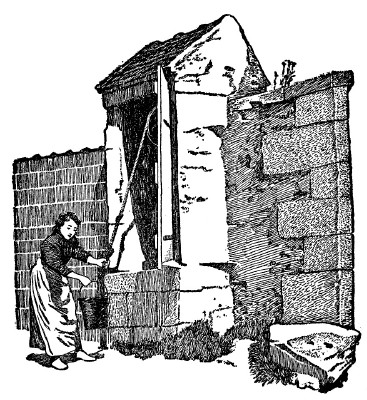 |
 Click the book image to turn
to the next Chapter.
Click the book image to turn
to the next Chapter.