|
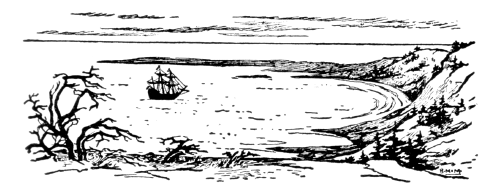
"The breaking
waves dashed high
On a stern and rock-bound
coast,
And the woods against a stormy sky
Their giant branches tossed."

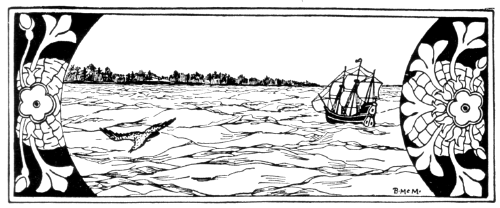
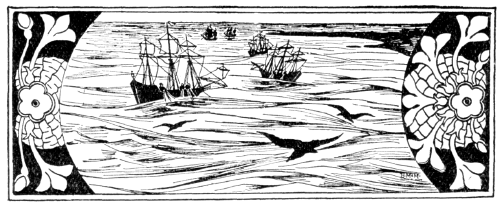
ON the ninth of November, amid great rejoicing,
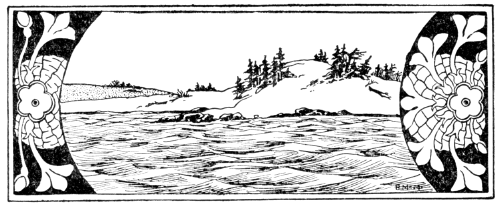
land was sighted -- a flat but well-wooded coast
coming down to the sea, "covered with oak, pine, juniper, and
sassafras."
The captain said he thought the
land was Cape Cod. What he should have said was, he knew it to be Cape
Cod, and that he had in fact shaped his course for it.
This accusation carries
considerable weight with it, as it is well known that the Dutch
intended to plant a colony at Manhattan Island, and it is presumed that
the master of the Mayflower was coerced by them
to keep his ship north of that point.
At the time this was not suspected,
however, and the same day the ship was apparently headed southward so
as to round the cape, but after trying for some hours to accomplish
this they found themselves among the shoals and currents off the
highlands, so they returned to calm water before nightfall. Then
followed a serious conference. The southern passage was dangerous, the
season late, and disease had broken out among the passengers, hence
they concluded to abandon all further attempts to voyage southward.
With a sense of relief they came to
this decision, and finding themselves once more in harbor,
|
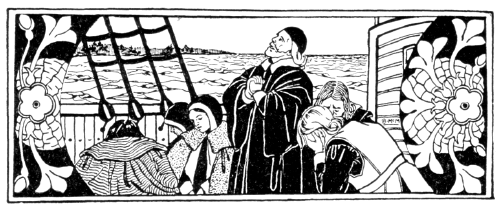
"They fell upon their knees and
blessed the God of heaven who had brought them over the vast and
furious ocean."
-- WILLIAM BRADFORD'S JOURNAL.
|
The Virginia company had no
territorial rights over the lands bordering upon Cape Cod Bay, and the
patent which the settlers possessed had none, hence, under the
circumstances, there was danger of disorder and malcontent arising;
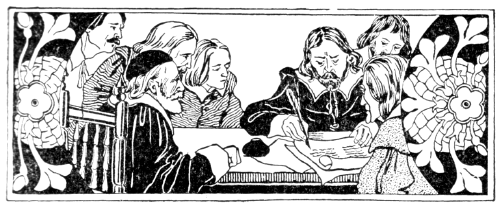
this was, however, precluded by the following compact signed by the
adult of the company in the cabin of the Mayflower, and
which afterward became the basis of the constitution of the infant
colony:
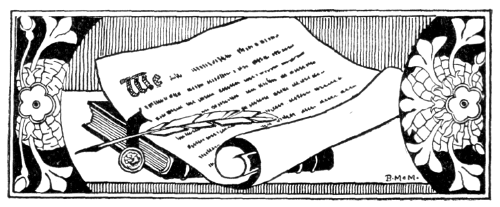
"In the name of God, amen. We whose
names are underwritten, the loyal subjects of our dread sovereign lord,
King James, by the grace of God, of Great Britain, France and Ireland,
King, defender of the faith, etc., having undertaken, for the glory of
God and advancement of the Christian faith, and honor of our King and
country, a voyage to plant the first colony in the northern parts of
Virginia, do by these presents solemnly and mutually, in the presence
of God and one another, covenant and combine ourselves together into a
civil body politic for our better preservation and furtherance of the
ends aforesaid; and by virtue thereof to enact, constitute, and frame
such just and equal laws, ordinances, and offices from time to time as
shall be thought most meet and convenient for the general good of the
colony, into which we promise all due submission and obedience.
In witness whereof, we have
hereunder subscribed our names at Cape Cod, the 11th November, in the
year of the reign of our sovereign lord, King James of England, France
and Ireland the eighteenth, and of Scotland the fifty-fourth, anno
domini 1620.
Mr. JOHN CARVER,
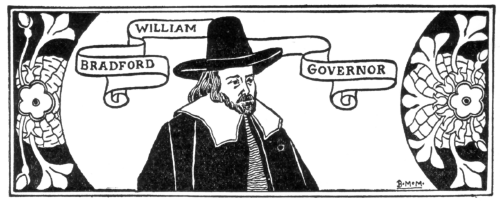
WILLIAM BRADFORD,
Mr. EDWARD WINSLOW,
" WILLIAM BREWSTER,
" ISAAC ALLERTON,
Captain MYLES STANDISH,
JOHN ALDEN,
Mr. SAMUEL FULLER,
" CHRISTOPHER MARTIN,
" WILLIAM MULLINS,
|
" WILLIAM WHITE,
" RICHARD WARREN,
" JOHN HOWLAND,
" STEPHEN HOPKINS,
" EDWARD TILLY,
" JOHN TILLY,
" FRANCIS
COOKE,
" THOMAS ROGERS,
" THOMAS TINKER,
" JOHN RIGDALL,
" EDWARD FULLER,
" JOHN TURNER,
" FRANCIS EATON,
" JAMES CHILTON,
" JOHN CRACKSTON,
" JOHN BILLINGTON,
" MOSES FLETCHER,
|
" JOHN GOODMAN,
" DEGORY PRIEST,
" THOMAS WILLIAMS,
" GILBERT WINSLOW,
" EDMUND MARGESON,
" PETER BROWN,
" RICHARD BRITTRIDGE,
" GEORGE SOULE,
" RICHARD CLARKE,
" RICHARD GARDINER,
" JOHN ALLERTON,
" THOMAS ENGLISH,
" EDWARD DOTEY,
" EDWARD LEISTER.
|
|
The voyagers originally intended
settling in the northern part of the Virginia colony, as by the
agreement, signed on board the Mayflower before
leaving the old world:
"We whose names are
underwritten being undertaken, for the glory of God and the advancement
of Christian faith and honour of our King and country, a voyage to
plant a colony in the northern part of Virginia."
Hence, so far as they then knew,
they may have supposed that they were in that neighborhood when they
first sighted land.
The greatest
strength that the charge against the commander gains, is in the fact
that the Dutch were desirous of retaining the region around Manhattan
Island for their exclusive occupation; hence the charge that he was not
to sail his ship south of Vineyard Sound.
The region round about Cape Cod was
by no means entirely unknown in 1620. Mariners from England were
already engaged in the Newfoundland and off-shore fisheries, Verrazano
had already been here, and likewise Gosnold, who first gave name to
Cape Cod on account of the abundance of codfish to be taken in the
adjacent waters.
In 1604 a French explorer, Sieur de
Montes, set sail with four vessels from Havre de Grace with Champlain,
already famous for his New World discoveries, as pilot. The expedition
discovered what was afterward known as Plymouth Bay and Harbor, a
locality which was subsequently mapped in detail by Champlain.
Hendrik Hudson, then in the employ
of the East India Company, skirted the adjacent coast in 1608, landing
on the extreme end of Cape Cod, but not entering the bay.
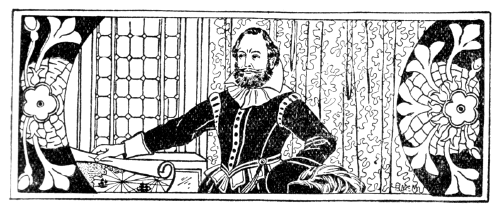
Captain John Smith, famous in
history and romance alike, on account of his exploits in Virginia,
after his return therefrom to England, set sail again with a small
company in two ships "to take whales and to mine for gold and copper."
First making land at Monhegan, in what was afterward the Maine
Province, Smith anchored his vessel, and set sail in shallops southward
to Cape Cod, mapping the region between from point to point and from
inlet to inlet.
Smith returned to England and
submitted a copy of his new map to Prince Charles, his patron, who
afterward reigned as Charles I., and who gave the nomenclature to some
of the principal features -- the Charles River, after himself, and Cape
Anne, a spur of land a few leagues north, in remembrance of his mother,
Anne of Denmark.
Nearly two years before the landing
of the Pilgrims Captain Thomas Dermer, a navigator already familiar
with the locality, and who had previously explored the near-by waters,
suggested in his correspondence to his employer, Sir Fernando Gorges,
that a plantation be settled here. This may possibly account for the
allusion to the duplicity of the commander of the Mayflower as
having steered his craft away from a course that would fetch them off
Manhattan Island, or the mouth of the Hudson River, already viewed by
the Dutch as a likely place for settlement.
It is doubtful if the charge is
true, but it is also possible that various influences were brought to
bear toward inducing the Pilgrims to form a settlement at this point.
Prince Charles also suggested the
name of New Plymouth for the settlement, which was a duplicate merely
of the name of the English seaport at the mouth of the River Plim.
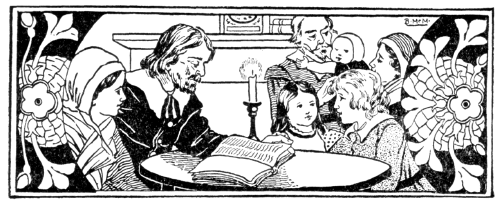
The list of names of the one
hundred and two souls that formed the company is here given. They were
gathered together in groups or families by those ties of kinship or
intimacy under which they had previously lived, the better to serve
their common ends and for the sake of Christian unity.
The servants, so frequently
referred to in the records of the Pilgrims, were undoubtedly not
menials, but were those who served individual members or families or
the company in the various capacities which were necessary to their
self-government or in posts of honor or responsibility. It is not to be
presumed that the term was used opprobriously, for the very tenets of
their agreement were for equality and co-operation for a common end,
although we know that some more learned than others were naturally held
in the highest esteem and formed the heads of their councils.
They were all, however, of a common
flesh and blood, and to their associates only, the crew of the Mayflower,
could the slightest criticism of adverse
character or coarseness be applied. The crew particularly were rough,
brutal, and blasphemous, even during the times of great peril on the
voyage, and the captain himself was of a selfish and unsympathetic
nature, and, the charge against him of complicity with the Dutch being
true, he was undoubtedly corrupt.
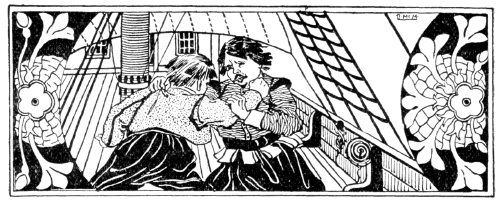
The only apparent internal troubles
and bickerings up to this time were caused by these conditions alone,
hence so magnificent it was that they were able to hold together and
allay all spirit of doubt that had so often arisen.
List of names of the company who
made the voyage on the Mayflower, 1620:
JOHN CARVER,
KATHERINE CARVER, his wife;
DESIRE WINTER,
|
JOHN HOWLAND,
ROGER WILDER,
WILLIAM LATHAM,
Maid servant,
JASPER MOORE,
WILLIAM BREWSTER,
MARY BREWSTER, his wife;
LOVE BREWSTER,
WRESTLING BREWSTER,
RICHARD MORE,
------- MORE,
EDWARD WINSLOW,
ELIZABETH WINSLOW, his wife;
GEORGE SOULE,
ELIAS STOREY,
WILLIAM BRADFORD,
DOROTHY BRADFORD, his wife ;
|
ELLEN MORE,
ISAAC ALLERTON,
MARY ALLERTON, his wife;
BARTHOLEMEW ALLERTON,
REMEMTER ALLERTON,
JOHN HOOKE,
SAMUEL FULLER,
JOHN CRACKSTON,
JOHN CRACKSTON, Jr.,
MYLES STANDISH,
ROSE STANDISH, his wife;
CHRISTOPHER MARTIN,
------- MARTIN, his wife;
SOLOMON POWER,
JOHN LANGEMORE,
WILLIAM MULLINS,
------- MULLINS, his wife;
|
PRISCILLA MULLINS,
JOSEPH MULLINS,
ROBERT CENTER,
(Carter. Ed.)
WILLIAM WHITE,
SUSANNA WHITE,
WILLIAM HOLBROOK,
EDWARD THOMPSON,
STEPHEN HOPKINS,
ELIZABETH HOPKINS, his wife;
GILES HOPKINS,
CONSTANCE HOPKINS,
DAMARIUS HOPKINS,
OCEANUS HOPKINS,
EDWARD DOTY,
EDWARD LEISTER,
RICHARD WARREN,
JOHN BILLINGTON,
|
ELEANOR BILLINGTON,
JOHN BELLWRIGHT,
FRANCIS BELLWRIGHT,
EDWARD TILLY,
ANNE TILLY, his wife
HENRY SAMPSON,
HUMILITY COOPER,
JOHN TILLY,
------- TILLY, his wife;
ELIZABETH TILLY,
FRANCIS COOKE,
JOHN COOKE,
THOMAS ROGERS,
JOSEPH ROGERS,
THOMAS TINKER,
------- TINKER,
------- TINKER,
|
JOHN RIGDALL,
ALICE RIGDALL,
JAMES CHILTON,
CHILTON, his wife;
MARY CHILTON,
EDWARD FULLER,
------- FULLER, his wife
------- FULLER,
JOHN TURNER,
TURNER, his wife;
------- TURNER,
FRANCIS EATON,
SARAH EATON, his wife;
SAMUEL EATON,
MOSES FLETCHER,
THOMAS WILLIAMS,
DEGORY PRIEST,
|
JOHN GOODMAN,
EDMOND MORGESON,
RICHARD BRITTRIDGE,
RICHARD CLARKE,
RICHARD GARDINER,
GILBERT WINSLOW,
PETER BROWNE,
JOHN ALDEN,
THOMAS ENGLISH,
JOHN ALLERTON,
WILLIAM TREVOR,
------- ELY.
|
|
 Click the book image to continue to the next chapter
|
 copyright,
Kellscraft Studio
copyright,
Kellscraft Studio