 Web
and Book design, Web
and Book design, Copyright, Kellscraft Studio 1999-2006 (Return to Web Text-ures) |
Click
Here to return to From St. Lawrence to Virginia Content Page Return to the Previous Chapter |
 (HOME) |
|
III
THE HEART OF THE HUDSON HIGHLANDS FOR a distance of twenty
miles, from
Cornwall on the north to Peekskill on the south, the broad current of
the
Hudson twists and turns among the mountains. Where the river enters
this realm
of rugged peaks are the two opposing heights of Storm King and
Breakneck
Mountain, forming the Northern Gate of the Highlands. Where the river
escapes
into the milder region beyond Peekskill is the Southern Gate guarded by
the
Dunderberg on the west shore, and the Spitzenberg Mountains opposite.
Up and
down the stream the great river steamers plough their way, and the
canal-boat
tows toil back and forth, and there are frequent motor boats plying in
the
neighborhood of the towns, and now and then one sees a steam yacht, or,
best of
all, especially amid the wilder scenery, a slow, old sailing vessel
dependent
wholly on the vagaries of the winds. Hugging close to either
shore for
nearly the whole distance through the Highlands is a railroad, and to
get a
foothold, even at the water’s edge, it has often been necessary to
blast out a
terrace at the base of the crags, or to open a way through some
outjutting
ridge by cutting down from the top or by tunnelling. The thunder of the
trains
along the iron rails comes to the ear almost unceasingly, the air is
apt to be
much dimmed by the smoke that pours forth from the engines, and you
are
constantly reminded that the valley is a great commercial highway. Perhaps of all the
bordering
mountains Storm King is the best known. Its abruptness and comparative
isolation make it particularly impressive. To some the name seems
rather
sentimental, but to most it is in keeping with the mountain’s size and
character, and they would not have it replaced with the older cognomen
of
Butter Hill. “A pretty big lump of butter,” one of the long-time
residents of
the vicinity commented to me, “but it really does have the shape of a
lump of
butter if you see it from some points of view.” He called my attention to
the sister
height across the stream, and said: “That’s another big bunch of rocks.
They
say an Indian fell down the cliffs there once and broke his neck, and
so they
call it Breakneck Mountain.” As one continues
southward the more
important mountains are Bull Hill, Crow Nest, Sugar Loaf, Anthony’s
Nose, Bear
Hill, and the Dunderberg, all steep and ponderous, and with many a
bare, gray
shoulder of rock showing through the foliage. About half way between
the
northern and southern gates is West Point with its magnificent,
castle-like
buildings nestling amid the trees near the cliff-bordered river and
having a
background of forested ridges. Most of these features of
the region
are familiar to whoever has journeyed up and down the river, but I
wanted to
see something of life and nature beyond the immediate borders of the
stream. On
the map, back among the mountains, I had found a place called
Doodletown, and I
determined to make its acquaintance, fully persuaded that a place with
such a
name and in such a situation was worth investigating. I made a guess at
what
was the nearest railroad station, and there I left the train one sunny
October.
morning. A short climb up a steep hill took me into a tiny village in a
wooded
glen, where one of the natives gave me detailed directions so that the
crooks
and partings of the roads between there and Doodletown should not
puzzle and
take me astray. While we were talking, a shock-headed country boy about
fourteen years old sat on a store porch close by. He looked straight
ahead and
was apparently meditating, wholly oblivious of what was going on around
him,
but as I was resuming my walk he casually observed that he was going to
Doodletown
and would show me the way. So we went on together. I presently learned that
my
companion’s name was Johnny Stotten. He was at first somewhat reticent,
but
gradually became voluble and confidential. “I’m goin’ to be a boatman,”
he
said. “I’ll get a job on a brick barge, don’t you know? This year I’m
in
school, but I’ll be on the river next year. Some boys might not like
handling
bricks, but I’ve always worked from a kid up, and I don’t think it’ll
be any
harder than what I’ve had to do up here in the mountains. I help
loading the
wagons and sleds and driving the horses. Some of the cordwood sticks
are so
heavy I can’t hardly lift ‘em, and often we have to draw the wood from
awful
rocky places where it’s right straight down almost, and the load nearly
pushes
the collars off the horses’ heads. Once in a while there’s an accident.
A man
near us was up in the woods sleddin’, and he was walkin’ side of the
load
drivin’ when he stepped on a wet stick — you know how slippery that is.
His
feet went from under him, and the horses drug him quite a distance.
Some of his
ribs was broken and his shoulder, and he’s been a cripple man ever
since. “Do you see those dead
trees up
there on that slope? There used to be lots of highholes in them. A
highhole is
a bird with a big, long mouth. It’s like a woodpecker, only larger.
They’re
good to eat, and we used to shoot ‘em while they were around in the
bushes
after dogwood and sumach berries. “Now we’re passing along
side of a
little lake — Highland Lake, they call it. The water looks clear and
nice, but
it’ll poison anyone who takes a drink. It makes your mouth itch and
your face
swell up. My brother drank some once, and when he came home we did n’t
know
him. Oh! did n’t he have a big face! There’s lots of fish in the lake —
black
bass, perch, pickerel, and everything. Gorry! I don’t know what is n’t
in
there. We’ve eaten many a nice mess of ‘em. “A battle was fought near
here in
the Revolutionary War — that’s what they tell me. I like to hear about
battles
and I like to read history; but I don’t like to read novels. They scare
me so
my hair stands up straight, and I don’t know what to do. “There’s a family of
Arabians have
got a camp off in the woods on this side road that leaves the main road
here.
The man goes around to the houses and tells fortunes. I guess he makes
money
because he’s always dressed good when I seen him. He wanted to give an
entertainment in the schoolhouse, but they would n’t let him. One of
the
Doodletown boys went to the Arabians’ camp, and the man took a half
dollar and
blew it into a dollar. The boy don’t want to go there again. He says
they are
witches. I would n’t want to see ‘em do such things, and I don’t
believe they
can. They have some kind of a scheme to fool you. “Way up on that mountain
ahead of us
a horse fell off the rocks last summer. It was a big white horse that
was out
to pasture, and it broke its back and busted a big hole in its head.” At last we reached
Doodletown up
among the forest heights. It is a place of scattered homes, and these
are
dotted along on divergent roads that follow up various valleys between
the big
rocky ridges. Nowhere is there a village nucleus, and even the church,
the
schoolhouse, and the store are widely separated from each other, and
none of
them has more than a house or two in the immediate vicinity. The
little white
church stands at the junction of two roads, and close by was a great
wayside
pile of cordwood. This wood was indicative of the chief industry of the
region.
The forests, and not the diminutive fields or the few cattle, are the
main
support of the people. One of the dwellings that
particularly attracted my attention was a shed-like structure scarcely
high
enough to stand up in. Roundabout the grass grew rank, and evidently
was
neither cut nor browsed off. The door was padlocked. On the end of the
hut
toward the road the window was open and several narrow strips of board
had been
nailed across in a manner to suggest a cage for savage beasts; and,
sure
enough, when we came opposite the house, several dogs leaped up on the
inside,
put their forepaws on the windowsill and barked at us viciously. “Hello, Danny,” Johnny
said. “Who are you speaking
to?” I asked. “Well,” Johnny said, “the man who lives there looks just like one of his dogs, and I can’t tell whether I see Danny or the tarrier at the window; so I say ‘hello’ anyway when I go past. Danny calls the dogs his children. He lives there alone with ‘em, and when he goes off to work he locks ‘em in. I think they get their noses in every bit of food he eats.”  Going a-milking I inquired of Johnny
where I could
find a lodging-place, and he mentioned several homes including his own.
It was
easier to continue with the friend I already had than to seek refuge
among
entire strangers, and we went on up one of the valleys to the last
house on the
winding mountain road. The dwelling was a shapeless, uncertain
structure, the
older portion of which had at some time been painted yellow. At the
front door
was a little porch with a broken floor, and the porch posts were so
decayed at
the base that they threatened to let the patched and twisted roof down
altogether. On the hard-trodden earth round about was a great variety
of
household furniture — chairs and rugs, pieces of stovepipe, etc. The
boy’s
mother appeared at the door, towsled and grimy-handed and somewhat
disconcerted by the advent of a stranger. She was in the midst of
housecleaning, but I might stay if I would be satisfied with the
accommodations
they could furnish. So I sat down in one of
the chairs
in the yard where I could look forth at the mountains aglow in the
sunshine
with their autumn tints of scarlet and gold. Johnny and a younger
brother,
Gerald, and a still smaller sister started a game of ball at one side
of the
house amid the weeds and upthrusting boulders. For clubs they used
woodpile
sticks, and their ball was a little wad of cloth wound about with
string. There
was a good deal of laughter in their play, and a good deal of scolding,
disputing,
and bluffing. They could not bat the ball far without its going into
the brush
or trees or over a tumble-down stone wall. Often they knocked around
some hard,
green, globular fruit that strewed the ground under one of the yard
trees. I
asked what the green balls were, and Gerald said: “We call ‘em mock
oranges,
but they hain’t. When they get dry they smell awful pretty and we like
to put
‘em in the bureau drawers where we keep our clothes.” Close by the picket gate
that gave
entrance to the yard was a big dead cherry tree with its gauntness
almost
hidden by grapevines. The leafage on the vines was still green, and
here and
there I could catch glimpses of pendant purple clusters of grapes.
Presently
Johnny went and stood by the roadside surveying the tangle of vines up
above.
“I guess I’ll have to get some of them grapes,” he said to me. “There’s
grapes
in the woods, too — summer grapes and frost grapes. The summer grapes
grow
around the swamps. They are big and sweet, and we pick and do them
down. If I’m
where the frost grapes are after they are ripe I eat ‘em right out of
hand.” Johnny now sat down and
took off his
shoes, then gripped the tree and scuffled upward till he was among the
branches. Soon the grapeskins began to drop, and Gerald observed this
evidence
of feasting with watering mouth. “Give us a bunch, Johnny,” he called. But Johnny said nothing,
and the
grapeskins continued to fall with irritating profusion. Gerald
repeated his
request and threw one of the hard green mock oranges up at Johnny as an
inducement to comply. When this did not produce the desired result the
bombardment
of appeals and missiles became continuous. The boy in the tree was well
protected by vines, and at first he was not especially disturbed. But
after a
while he was hit. Then he protested loudly and told his brother he
would come
down and kill him. “Chuck us a bunch, and I
won’t
bother you,” Gerald said. Just then Lizzie, a
grown-up sister,
came out to the road and addressing Gerald said: “S’pos’n’ you made
Johnny fall
out of the tree. I’ll go right in and tell mama of you.” So he threw a few mock
oranges at
her, which made her skip and screech. Some of them flew in my
direction. “Stop
it, Gerald!” she cried. “You’ll hit that man! You think you’re awful
cunning,
but you just wait till papa comes home!” “Mama!” she called, as
she scurried
into the house, “Johnny’s in the grape tree and Gerald’s pelting him.” Pretty soon she
reappeared.
“Johnny,” she called, “come down and lick him. Come down and chase him
till you
ketch him.” After a while Mrs.
Stotten came out
and looked up into the tree. “Where are yer, Johnny?” she said. “Why
don’t you
get that man some of those grapes? Pick some nice bunches, and I’ll put
‘em in
a dish.” She went back and got a
pan and
caught the bunches as he tossed them down. “They all smash,” she said
depricatingly. “Go git a apron,” Johnny
said. She brought the apron and
holding it
well spread out said: “Let’s have some nice big ones, Johnny. That’s it. Well, now,
Johnny, get a
few more bunches, and then hurry down. You’ve got to go to the store.
I’ve been
pokin’ you to go all the afternoon.” “I’ll be right down,”
Johnny
responded. “It begins to get cool,”
Mrs.
Stotten said to me. “Perhaps you’d be more comfortable sitting in the
parlor.
The men’ll get home soon, and they’ll be company for you.” I went in and she brought
me some
grapes in a glass dish. Most of them were intact, and the clusters were
large,
though the individual grapes were small. While I sat by the open window
eating
them the little girl approached shyly outside and put an apple on the
sill for
me, and then hastily and silently departed. Mrs. Stotten presently
called again
to Johnny who still lingered in the tree. “I’m coming,” he said
reassuringly;
but not until he had been called once or twice more did he descend.
Then he
leisurely put on his shoes and went off down the road to do the errand
at the
store. Mrs. Stotten now began
supper
preparations by going to where a few long sticks lay by the wayside and
cutting
enough into firewood to make an armful. She wielded the ax with an
effective
vigor that was plainly the result of much practice. About this time the
man of
the house arrived with Luther, his oldest son. They sat down in the
parlor with
me, and Mr. Stotten said: “You some resemble a man named Willetts who
comes up
here from New York to paint pictures. He’s the greatest mountain runner
I ever
seen in my life. That feller goes around our rough roads and woods just
for
pleasure. Oh, gracious sakes, yes!” While Mr. Stotten talked
he smoked
his pipe, and from time to time he relieved himself of his surplus
saliva.
There was a carpet on the floor, but it was so cut as to leave a strip
of
painted floorboards exposed along the borders of the room, and it was
this
strip of flooring that received his expectorations. “I
heard a good many guns goin’
today,” he continued. “There’s
fine hunting here. I don’t s’pose any mountains
have more game in ‘em than these. You see, for a long
distance back westerly
it’s mostly wilderness with very few inhabitants. We have any
amount of red and
gray foxes, and once in a while a link or a catamount, and sometimes a
black
bear travels through. Probably those bigger wild animals wander here
from the
mountainous country in Pennsylvanny. My wife’s brother come
across one of those
Rocky Mountain wildcats when he was out with his dog hunting
not long ago. The
wildcat clumb a tree, and it made a spring for him just as he shot at
it. Down
it come close to him, and if it had n’t been hit so bad it
was about at its last
kicks it would have killed him, dog and all. A wildcat is a nasty beast
when it
comes to fighting. It has a way of layin’ on its back and
scratchin’ a dog all
to pieces. “This is my native
region, but I’ve
worked a good deal on boats up and down the Hudson and along the coast.
One
while I worked on a New Haven oyster boat, and what feasts I had then!
I can
eat oysters till I look like ‘em — eat ‘em raw right out of the shell.
Those
oysters were big — they were old bouncers. “That puts me in mind of
a girl who
lived back here in the mountains. Her home was in what is called
Burke’s Holler
over t’other side of Bull Hill. A feller named Henry Newell, who used
to run
around with her a good deal, invited her to go with him to West P’int
where
there was to be some doin’s. This ‘ere girl had n’t never seen the
river
before, and when a steamboat hove in sight she grabbed Henry by the
arm and
says, ‘Look a’ there! What’s that comin’ up the river?” “‘That’s a steamboat,’
Henry says. “‘How old is that
steamboat?’ she
asked. “‘I s’pose twelve or
fourteen
years,’ Henry says. “‘Well, my gracious!’ the girl says, if she grows
till
she’s twenty won’t she be a bouncer!’ “Henry made a mistake giving her that outing. After seem’ how the young fellers at West P’int dressed and behaved she concluded he wa’n’t smart enough for her. He was expectin’ they’d be goin’ to the dominie soon to get j’ined together, but she dropped him. That was years ago, but he won’t stand any jokin’ on the subject even now. I met him with his team on the road lately and made some pleasant remark about the age of steamboats and the like o’ that, and he was goin’ to knock my brains out with a cordwood stick. 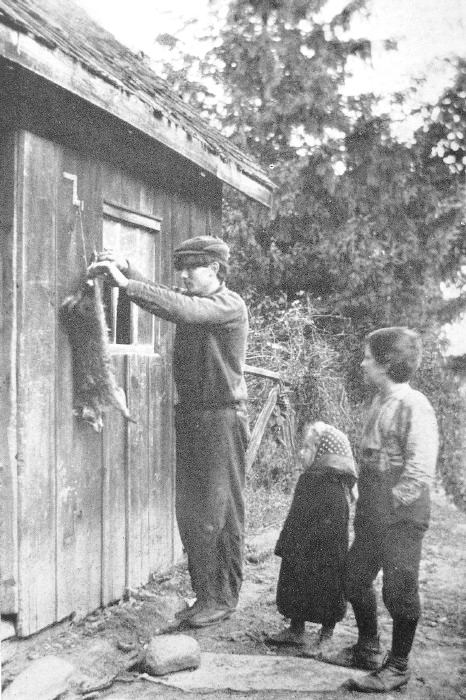 Skinning the coon “That girl gives you a
fair idea of
the ignorance of some of the people in these parts of the world. I
s’pose
there’s folks back here who’ve lived to a terrible age and never seen
New York.
One day I met a well-to-do man I knew in a village where there was a
little
fruit and candy store and invited him to have an ice-cream with me at
my
expense. “He hung back. ‘I don’t
know whether
I’d like it,’ he said. “But I insisted on to
him, and we
went into the little store and had some. ‘Well, John, that’s pretty
good, ain’t
it?’ he says, when we finished. “He was seventy years
old, and in
his hull life had never tasted ice-cream before. The fact is he was
that
infernal stingy he would n’t buy it even if he wanted it. “Another old man — his
name was
Courtlandt Powers — went down to New
York for the first time. When he come back we asked him how it looked.
He said
he thought it was quite a smart place, but he felt no satisfaction in
going
there because the houses were so blame thick he could n’t see
anything.” I mentioned the salute
Johnny and I
had received from the dogs in the little hut down the road. “Yes,” Mr. Stotten said,
“Danny is
quite a dog fancier. He had seven or eight dogs livin’ there with him
one
while. But he got sick, and the board of health come up and decided it
would
improve the premises and his chances of getting well to dispose of the
dogs.
They sent word for me to see that the dogs was all shot. I went there,
and
Danny made a great fuss. He said there was no religion in dog-shooting,
and no
man who was a man would do such a thing — the man who’d drag away a
poor dog
and kill it must have a heart of stone. I told him I had my orders, but
he
would n’t let me shoot only three. “Danny’s a good worker.
The worst
you can say about him is that he’s an opium-eater. He’ll take a
two-ounce
bottle of laudanum and put it to his mouth and drink it right off, and
he has
to have the opium or he’d die. If he goes without it any length of time
he’ll
lay right in fits and froth at the mouth like a mad dog till he gets
it. I knew
a woman who used opium. She lived to be wonderful old, but in her last
years
she was all withered and dried up so there was nothing of her. When she
did n’t
have opium she’d be in such distress you would n’t think she’d live
from one
minute to another, but when she got some again she’d be up inside of
quarter
of an hour and around as lively as a cricket. Luther, you remember her.
That
was Jim Beasley’s wife — mother to Mandy and Molly.” Supper was now announced,
and Mr.
Stotten knocked the ashes out of his pipe, and Luther threw away the
stub of a
cigaret he had been puffing, and we adjourned to the dining-room. The
room was
small, and with its table, chairs, stove, and other furniture was much
crowded.
The food was bountiful, and appetites were hearty, and huge mouthfuls
conveyed
on the knife blades disappeared with remarkable rapidity. The place of
honor at
the table was occupied by a white-haired patriarch whom Mr. Stotten
addressed
as Daddy, and whom the children called Grampy. “He’s past eighty years
old,”
Mr. Stotten said to me, “and just as well as he ever was. You never had
a
doctor to you in your life, did you Daddy?” “Wunst,” the veteran
said. “But I’ll warrant you
wa’n’t so
wonderful serious sick even if you did have the doctor,” Mr. Stotten
declared,
and he turned to me and added, “I wish my health was as good as his.” “Is that a dog under the
table
stepping on my feet?” Luther said. Lizzie, who was bringing
in a
freshly-filled dish of potato and some apple sauce from the little
leanto
kitchen, set the things on the table, and investigated underneath. “No,
it’s a
cat,” she announced. One of the delicacies in
the bill of
fare was honey. The comb that contained it was in irregular pieces and
the
cells were a good deal broken. “We got that honey from over in the
woods a few
days ago,” Mr. Stotten explained. “I watched some bees flying away from
a bunch
of sumachs and saw the direction they took, and I follered to where
they went
into a hole in the rocks. We put sulphur in dry rags and made a smudge.
That
killed most of ‘em, though some people say that bees killed that way
come to
after a few hours. It was a bad place to get at. Luther crawled down in
head
first, and I held onto him by the seat of his pants. He cut the honey
loose and
then hooked onto it with a crotched stick and drew it out. We could n’t
help
its dragging on the rock, so there’s some grit into it. But we got more
honey
than I ever got out of any bee tree I’ve cut. Luther was stung quite a
little
about his hands, and they swelled up like cushions. Will you have some
more
potato? This has been a poor year for raisin’ potatoes here. We planted
four
barrels, but I doubt if we’ll git that many. We had a fair hay crop.
Johnny and
Gerald can both swing a scythe now, and they’re quite a help. A machine
is not
much use here, the fields are so small, and there’s so many rocks
stickin’ up,
and so many swampy spots.” Johnny returned from the
store just
then. He sidled up to his mother rubbing his stomach and said: “I don’t
feel good.
Will some one else milk for me?” “Yes, I will,” she
responded. Then Gerald wanted some
one to milk
for him, not because he did n’t feel well, but because he had filled
the
woodbox and he thought he had done his share of work. His plea was not
successful,
and the evening tasks were done somehow. Even the invalid Johnny did
not escape
scot-free, for when it was announced that the horse had strayed off
down the
road he was obliged to go out and pursue it in the thickening gloom of
the
evening. I had gone back to the
parlor. In
the center of the room was a little stand with a big shabby family
Bible on it,
and in one corner was a marble topped table, the edge of which had been
beautified by a band of home-applied bronze. The other furniture
included several
modern easy chairs, two attractive rugs, a stove, and a little organ.
On the
corner table was an ornate lamp of huge dimensions. It was such a lamp
as
seldom makes an advent into as humble a home except as the result of a
wedding,
and how it got there I could not imagine. But Mrs. Stotten came in and
lighted
it and with some pride informed me she had earned it acting as an agent
in
selling soap, coffee, tea, witch-hazel, and similar things in the
neighborhood.
“Every time I sell ten dollars’ worth,” she said, “I send on the money,
and get
as pay for my work something nice for my rooms. You can furnish your
whole
house. I can sell ten dollars worth in a day pretty near. I just hitch
up the
horse and drive around. Most everyone will take off me when I go
myself. If I
send the children they won’t do as well. I only go in summer when
money’s
plenty, and I sell two or three ten dollar lots in a season. That
cuckoo clock
on the wall is one of the things I got. I don’t always take the trouble
to wind
it, and I see it ain’t going, but I’ll start it and you can hear it
strike.” She wound it up and
resumed her
seat, and pretty soon it struck eleven, and its melodious notes seemed
to
sufficiently atone for the fact that it was four or five hours out of
the way.
While Mrs. Stotten and I were talking the little girl came in and
climbed into
her mother’s lap, and began to tell about playing ball that afternoon.
“I made
three runs,” she announced. “Well I bet yer,” the
mother
commented. “This is the baby,” she added to me. “She’s seven years old,
and now
it’s her bedtime.” She went away with the
little girl,
and soon afterward Johnny looked in at the parlor door and said: “Pop
says for
you to come out in the other room where there’s a fire. We ain’t got
the
stovepipe up in here yet. There’s a fireplace in back of that stove,
but it’s
boarded up and we don’t use it. In the summer we hear the young
swallows holler
in there. Once I took away the board and found one of the big swallows.
I made
a grab and caught him. He had little black eyes. I carried him outdoors
and let
him go. I like to see the swallows fly.” When I entered the
dining-room Mr.
Stotten was leaning over the lamp that was on the table lighting his
pipe at
the top of the chimney. Luther was preparing to write a letter, but
was having
difficulty in finding paper. A week ago he had a box full, and now as
he shook
the box and looked into it ruefully he discovered only one lone
envelope. “Who
uses my paper like that?” he said. “Gorry! I wish they’d leave
something
alone. I s’pose if I’d waited another day that envelope would have been
gone,
too.” However, with his
mother’s help, he
was at last furnished with writing materials. “Liz,” he said, as he
settled
down to start his letter, “you go and get me some water to drink. The
pail in
the back room is empty.” They got their water from
a well in
front of the house of their nearest neighbor. “No, I don’t want to go,”
Liz said.
“I’m afraid.” “Oh, go on,” Luther urged. “No,” Liz persisted. “I’ll go with you,” Mrs.
Stotten
said. “I can’t keep the Old Boy away from you, but I guess I can
protect you
from the dark.” So Liz got the pail and
the two went
forth into the night. “This region has been
settled a
long, long time,” Mr. Stotten said. “There were people living here
before the
Revolutionary War, and the British soldiers who marched back and forth
through
the mountain called them the Yankee Doodle Boys. That’s the way the
name of
Doodletown started. Once there was a big fight between the Hessians and
the
Americans down by Highland Lake. Oh! it was a bloody battle. Our men
slaughtered them Hessians right and left, and after the fight ended
they threw
the dead into the lake. There was so many they say a person could walk
across
on those dead bodies. The water is eighty to ninety feet deep anywhere
you
might to measure it, and in one place they claim there ain’t no bottom
at all.
A while ago a young feller who was fishing on the lake raised a body
with his
hook. But he was so scairt when he brought the dead man to the surface
that he
took out his hook and let the body sink. Then he could n’t get it
again. It had
on a uniform of gray cloth with two rows of brass buttons down the
front, and a
yaller stripe across the shoulders, and a yaller band around the
sleeves. The body
itself wa’n’t decayed, but was petrified just like a clay man. Whether
that’s
true or not he always told it straight. I’ve heard him tell it myself
as many
as half a dozen times. Yes, it’s likely there’s lots of dead men down
in that
lake. “The water in it is bad.
I’ll
guarantee that whoever drinks it will have trouble. There used to be a
big icehouse
by the lake, and in the winter three hundred men would be working to
fill it.
They drank the water, and they all had sore lips and a sore mouth. Then
they
got quills for to suck through, but it still made ‘em have sore tongues
and
sore throats.” “A great many years ago,” Mrs. Stotten said, “one of my relations — Hiram Holley, his name was — found a skull on that battlefield, and he took it home. Ole Mis Holley kept it in her bedroom on the bureau as a kind of ornament. Gracious sake! what an ugly thing it must have been. I don’t think I’d want it on my bureau lookin’ at me. Once my mother, when she was a girl, went visitin’ the Holleys for a few days, and they put her in that bedroom to sleep. But she would n’t stay in there, and I guess I would n’t either.” 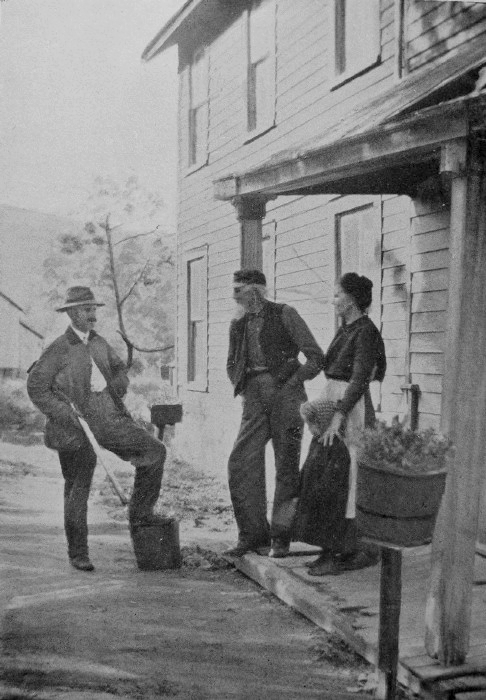 Ready to start after partridges “That puts me in mind of
a story I
heared a feller tell down in Jersey,” Mr. Stotten said. “Two men was
workin’ in
a cemetery, and in their talkin’ they begun to brag of how bold they
were. ‘I’d
dare go anywhere the darkest night that ever was,’ says one. “‘Well,’ says the other,
‘I’ll bet
you would n’t go in that vault over there at midnight and pick up a
dead man’s
skull and bring it out.’ “‘I’ll bet you a gallon
of rum I’ll
do it this very night,’ says the first man. “So about midnight he
went to the
tomb. The other feller had got there first and was hiding inside
intending to
give his friend a scare. The man walked in and felt around until he got
hold of
a skull, when the other feller says, ‘Let that alone. That’s my skull.’
“‘Well, if that’s yours,
I don’t
want it,’ the feller says. ‘I’ll find another.’ “After a little search he
found one,
and the other feller hollers out, ‘Let that alone. That’s my skull.’ “But
they can’t both be yours,’ the
feller says. ‘There’s only one man
talkin’! I’m goin’ to have this
anyhow.’ “So out he walked with
it, and he
won the bet.” Luther had now finished
writing, and
he brought out a rattlesnake skin to show me. The live beast had been
over five
feet long, and on the end of the tail were ten rattles and a button. “I
come
across him right in the middle of the road,” Luther said, “and when I
threw a
stone at him he showed fight and rattled and struck at me. Rattlesnakes
have
tushes that are just like cat’s claws, and they open up their mouth
wide and
hack at you.” “There used to be a man
who had a
saloon down by the river,” Mr. Stotten said. “Wildcat Bill they called
him, and
he was a wildcat, too. He kep’ some snakes there. I did n’t know he had
the
devilish things till one day I was in the saloon and an Irishman come
in and
says, ‘Can I get some beer here?’ “‘Sure thing,’ says Bill.
‘I got
beer that would make a dead man alive, and a live man dead.’ “He filled a glass and
put it on the
counter and then reached underneath and got a great big rattlesnake and
stretched it beside the glass. When the Irishman saw that snake he gave
one
frightened whoop and dashed out of the door. Wildcat Bill was too fond
of
playing those little jokes with his snakes. His saloon did n’t prosper,
and he
gave up the business.” Johnny was sitting with a
dog in his
lap, and he mentioned that last summer the dog had been bitten by a
rattlesnake. “Yes,” Mr. Stotten said, “and for two or three days
afterward, if
he heard a grasshopper or any little noise along the way, he’d imagine
‘twas a
rattler, and he’d almost jump out of his skin. I laughed at him till I
had a
pain in the side. I put kerosene on his bite — put it on good and
plenty. That
kills the p’isen right on the spot — kills it in a jiffy as dead as a
stone.” “The biggest rattlesnake
I ever
killed had only five rattles,” Luther observed, “but I seen one another
feller
killed that had twenty-seven. They claim the first button comes when
the snake
is three years old and after that one rattle grows every year, but the
snake
with twenty-seven was n’t large. I believe snakes are a good deal like
people,
and shrink up when they get old.” “Pop come near being
bitten by a
copperhead once,” Johnny said. “It fastened onto his pantleg, and he
was
dragging it along when I told him of it.” “I tell you, a copperhead
is a bad
animal to have hold of you,” Mr. Stotten affirmed. “I don’t want one to
draw
any blood on me.” “But a rattlesnake is ten
times more
p’isener,” Luther commented. “You’s think that in a
wooded
country like this there’d be considerable timber good for building
purposes,”
Mr. Stotten said, “but we have to buy all our lumber. There ain’t a
sawmill in
the region. There used to be plenty in the olden time, and you can
still find
the places where they stood, and the ruins of their dams. The mountains
are
kep’ cut off in supplying cordwood to the brickyards, and we manage to
get it
all no matter where it grows. If the slopes are too steep for a team,
we pitch
the wood down or make gutters and slide it down. “Daddy,” he said, raising
his voice
and addressing the old man, who was sitting by the stone in the leanto
kitchen,
“you can remember, before coal was common, when they tuck most all the
wood
from here to New York to use for kindlings and firewood in the
house‑stoves.” “Oh, good gracious, yes!”
the
patriarch said. “Some curious stories are
told about
what happened through here in the early days,” Mr. Stotten said. ‘There
was
Cap’n Blauvell, for instance. He was a-sailin’ his sloop down near
Haverstraw
one dark night, when his crew heard some one holler to him three times
—
‘Hello! Jake Blauvell.’ He anchored and went ashore in a boat, and
after a
while he come back. They sailed on down to New York, discharged the
cargo, and
returned to Haverstraw, and there the cap’n laid up his sloop. He did
n’t make
any more voyages, and from that time off he was a terrible rich man.
Whoever it
was that called to him must have told him where treasure was buried.
They
calculate he dug it up somewhere on the beach here by Iona Island. It
had been
buried by Captain Kidd, I suppose. Kidd’s vessel was chased up here one
time by
a government ship. When he saw he could n’t escape, he scuttled his
ship and
went ashore in a boat that was just loaded with gold and silver. In the
rocks
up above West P’int there’s what is called Kidd’s Cave. They say a
skeleton of
a man was found in it and quite some treasure, too, and they think
Captain Kidd
must have crawled in there and died. “I understand there’s
treasure right
on the United States grounds at West P’int. In 1872 three men offered
three
thousand dollars for the privilege of digging under the corner of the
government barn there. I know that to be a fact, and it made quite an
excitement in the papers at the time. But the government would n’t let
‘em dig.
The men were Mart and Sam Conklin and Josiah Hunter. Mart, he told me
himself
that as near as he could calculate by an instrument they used for
discovering
precious metals, a hogshead half full of gold and silver was buried
right
there. I knowed Mart well, but ‘tain’t likely he’d have told me if he
had n’t
had a little rum in. “Did you ever hear tell
of an
instrument that would locate treasure? I’d almost take my oath they
used a
witch-hazel crotch. That boy there,” he said, indicating Luther, “can
take a
witch-hazel limb and find a ten cent piece anywhere. A peach limb does
just as
well, and there’s a feller down at Jones P’int uses basswood in
preference to
either. You grip the end of a branch in each hand so the crotch p’ints
straight
up, and when you come to where you are over money or a spring of water,
it tips
outward and down. But with me it draws right back to my body. That
shows I’m
pretty well charged with electricity. Anyhow, I can’t locate less than
eight or
ten dollars. But I’ve been thinkin’ lately that I always had a big
silver watch
in my pocket. Perhaps it was that made the difference. “They say those three men
dug up a
pot of money out here in Orange County near Galloway’s Tavern. I did
n’t see
the pot, but I’ve seen the cover. It lay there at Turner’s Station on
the stoop
a long time, and it was kind of a flat stone about three inches thick
and
eighteen across that looked as if it had been knocked with a hammer and
made
pretty near round. Four columns of letters was cut into it, but no one
could
read ‘em. I’ve seen that cover I s’pose a dozen times. “On one of our mountains
there’s some
strange letters cut into a rock. They’re in two rows, and one row is
twelve
feet long, and the other nearly as long. The letters are formed by
making nicks
in the rock with a stone chisel. The nicks are not deep, and they are a
little
distance apart. You, can only see ‘em one time in the day, when the sun
shines
ag’in’ the rock in the afternoon. The rock is very difficult to find.
Years ago
two boys named Horace Flemming and Henry Keyser come across it, and
when they
left the place they never dremp but that they could go right back any
time they
pleased. But them boys could n’t find that rock ag’in, though they
hunted and
hunted and hunted. Other people could n’t either, or if they did they
could n’t
go back to it. Those boys noticed that they could see Flemming’s house
as they
looked down from the lettered rock on the mountain top. But from the
house the
mountain could n’t be seen on account of a knoll between. Seems as if
there was
a kind of enchantment about the spot. Once a clairvoyant woman was
taken up
there on the mountain to see what she could discover, but she could n’t
do
anything. She had fits and fainted away and everything else, and she
said all
sorts of spirits was up there follerin’ her. “It’s supposed that the
letters
chipped on that rock tell where the Long Tinker’s silver mine is on
Black
Mountain. That mine was worked by the Indians when the white men first
come to
this country. Finally an Italian come into the mountains here, and he
was
terrible tall and a tinker by trade, so he was knowed as the Long
Tinker. The
Indians asked him if he could n’t find any better business than that
for makin’
a livin,’ and he told ‘em, ‘No.’ Then they tuck and showed him this
silver
mine. After working it for a good while and getting all the silver he
wanted he
went back to Italy with his wealth. In the meantime the Indians had
cleared
out, and no one else knew anything about where the mine was until it
was
discovered by Cap’n Waldron and Alexander Bulson. While hunting on
Black
Mountain they come to a brush fence, and forced their way through it
and found
three beaten paths. They followed one path, and it led to a spot where
the long
tinker had made charcoal for to melt his ore, and among the weeds and
bushes
was a little forge and crucible. They comeback and follered another of
the
paths, and it went down a hill to where the tinker had dumped cinders
in a
brook. The third path tuck ‘em to the mine, the mouth of which was
corked up
with a lot of wood that had been stuffed into it. They tried to pull
some of
the wood out, but it was rotten and would n’t hold together. The guns
they
carried were a long old-fashioned flintlock sort in common use at that
time,
called buccaneer guns; and they reached in as far as they could with
‘em and
did n’t strike no end to the hole. Right at the edge of the opening was
a shelf
cut out of the rock, and on it was a lot of ore. They picked up some
and
started back down the mountain. By and by Bulson throwed his ore away.
He said
he had stone enough on his land at home without lugging on any more.
But Cap’n
Waldron tuck hisn on board his packet sloop, and there he kep’ it two
or three
years. You see, neither he nor Bulson knew anything about the Long
Tinker and
they did n’t bother to investigate further. One day a young feller
who’d come
aboard the cap’n’s packet and was lookin’ around happened to notice
that ore
from Black Mountain and he asked what it was. “‘I don’t know,’ says the
cap’n. ‘I
found it in the mountain in an old mine hole.’ “‘Can I take it and have
it tested?’
the feller asks. “‘Yes, take it and
welcome,’ says
the cap’n, and he never made any inquiry what the feller’s name was or
where he
could find him. “He’d pretty near forgot
all about
the matter when a few months later that feller spoke to him on a street
in New
York, and said the ore was the richest of blue silver and wanted to
know where
the mine was located. They come up here to the mountains and went to
hunting
for it. But they could n’t find it, and then they called on Alexander
Bulson
and asked him if he knew where it was. ‘By my life!’ said he, ‘I could
go there
the darkest night that ever blowed. I could find the way blindfolded.’ “The next morning all
three started
out, and they hunted till they had to give it up; and that mine hain’t
been
found since. But once a feller was up on Black Mountain lookin’ for
sheep, and
something happened to him. What it was he never would tell, except that
he went
into a trance and when he come to himself he was close by the mine. Yet
he
would n’t go back there, nor tell others how to go. Long afterward,
when he was
on his death bed, they went and tried to get him to. tell, and they
thought he
would n’t refuse them, but he did.” About the time this tale
was
finished Luther came in from the hall with a hunting-coat on, carrying
a gun
and a lantern. “Come boys,” he said to the dogs, and they roused up and
leaped
about him eagerly. “I’m goin’ coon-hunting,” he explained, and he
lighted a
cigaret and departed. “I’ve give up hunting
coons myself,”
Mr. Stotten said. “The last time I went I got so dead tired I vowed I’d
never
go again. Steve Burrows went with me. Perhaps you’ve heard of him. He’s
one of
the biggest politicianers anywhere in this region. Yes, he’s in
politics head
over heels. A coon will go up a tree after the dogs have run it pretty
tight,
and then you generally have a chance to shoot it; but Steve and I run
one an
hour and then it went into a holler tree, and as we did n’t have no ax
with us
we had to give up tryin’ to get that coon. I guess we travelled thirty
miles
that night, and then we laid in the woods all day afterward. The next
night we
got on the trail of a wildcat. He’d run for a while and climb a tree,
and
before we’d get near enough to shoot he’d jump down and run again.
Finally we
tuck the dogs off the track. If we had n’t they’d be follering that
wildcat
still. Later the dogs got after some coons, and they treed ‘em, and
pretty soon
we had ‘em. There was four. That satisfied us and we started for home.
By the
time we got there we was tired out and half starved out, too.” Everyone had gone to bed
but Mr.
Stotten and I, and now I retired also. About an hour later I was
aroused by
voices calling my name and by a thumping on my door. Then Mr. Stotten
and
Luther came into my room. The latter carried his lantern and a coon he
had
shot. “The dogs found it in a pile of wood that had upsot,” said he,
“and they
scared it out and it ran along an old woodroad. Why the deuce it did
n’t go up
the timber I don’t know, but it kep’ on till it come to a slippery,
slanting
rock. It scampered along that rock toward a cliff, but as soon as I
stepped on
the rock I slid down, gun, lantern, and all, into a brook. The dogs
overtook
the coon at the foot of the cliff, and they fought it to beat the band.
A coon
is a pretty cunning animal, and it’s awful strong and spunky. I
scrambled up
somehow to where the coon was, and I managed to kick it two or three
times to
help the dogs out. Then it broke away and was climbing up the rocks
when I shot
it. Just heft it and see how solid it is.” So I hefted the coon, and
after a
few final comments my visitors left me. In
the morning, soon after six, I
heard Mr. Stotten tramping upstairs and calling the boys, and by and by
we had
breakfast, with flapjacks for the chief item in the menu. There was a
heaped-up
plate when we started, and fresh additions, hot from the backroom
stove, kept
it heaping to the very end, in spite of our vigorous attacks. After we
finished, Johnny had me look at one of the dogs that had gone on the
hunt the
previous night. There were bloodstains on the dog’s neck and
marks of the
coon’s teeth. “We got a standing offer of forty
dollars for him,” Johnny said.
“He’s gettin’ kind o’ old now,
but he’s smart as a whip and ain’t afraid of
nothin’. The only trouble is that his teeth are worn down so
he can’t get a
holt and hang on. “One of our dogs was
poisoned last
spring right in his coop in the yard. He was a tarrier — a little bit
of a runt
like. In the morning we found him lying there all swelled up. Gosh! we
gave him
sweet milk and all we could think of, but it did n’t do no good.” “There’s some queer
things happen
here,” Mr. Stotten said. “Down on the river road a barn burned last
week. Some
one had been stealing from the man that owned it. Every time he’d git a
load of
feed the thief would come and help himself and take a hundred pounds or
so. The
man got tired of bein’ robbed, and he bought some locks and fastened
his barn
up good and tight. That very night, after he went in and sot down to
eat
supper, his wife said: ‘Oh look! What a light!’ “The barn was on fire. He
ran out
intendin’ to save his horses. His wife tried to hold him, but he shook
her off
and went into the burning barn, and cut the horses loose and clubbed
‘em out.
It was a nice big barn, and he always kep’ his flour and meat in there,
and he
had lots of good tools in it, and a carriage that cost one hundred and
thirty
dollars, and farm wagons and twenty ton of hay. He ain’t got a secret
too good
to tell me, and since the fire we’ve talked things over. It’s his idee
that the
guilty man is a feller that’s lately moved into the neighborhood who
has a
habit of layin’ around all day doin’ nothin’. He’s often been seen to
hitch up
in the evening and start off somewhere, and he must return late in the
night, for
no one sees him coming back. A man who does like that I would n’t trust
noways.
But you have to be careful what you say when you can’t prove it. No,
people
dassen’t say much for fear he might burn ‘em up while they lay asleep.”
“I saw someone come
snoopin’ around
our house one evening,” Luther said. “My gun was right handy in the
shed, and I
picked it up and blazed away at the feller as he was goin’ down through
the
orchard. I shot to hit, too, but I probably did n’t.” Now the younger boys got
their milkpails
and went to the little barn where each had a cow to milk. One of the
cows was
tied in the barn because it had no respect for fences, but the other
was in the
barnyard. Luther took his coon, fastened it up on the sunny side of a
shed, and
began skinning it. Several dogs lingered about him, shivering in the
chill
morning air and watching him hungrily. I could not help remarking on
the
appearance of one of the dogs, he was so very lean and bony and
forlorn. “That
dog has got a good pedigree,” Luther said, “but he killed one of our
chickens
in the summer, and that has set the women folks against him so they
won’t feed
him. See that big bird up there in the sky. It’s an eagle. Now it’s
making a
turn, and the sun shines on its bald head and white tail feathers. They
build
their nests here among the rocks. It’s dangerous to meddle with their
nests.
They’ll pick and bite and claw savage. I’ve seen seven or eight of them
at once
up on Timp Mountain.” Presently the task of
skinning the
coon was finished, and after the skin had been tacked up on the shed
Luther and
Mr. Stotten started off to their work somewhere in the woods. Later in
the day
I retraced my steps to the valley depths of the Hudson. A three mile
walk from
the upland glen where I had been stopping took me to the railroad
station, and
then the metropolis was scarcely more than an hour’s journey distant.
The
wonder was that so much of the wild and primitive should survive close
beside
the busy valley thoroughfares, and at such a slight remove from one of
the most
populous centers of civilization. NOTE. — The Highlands of
the Hudson,
a continuation of the Appalachian Blue Ridge, lift some of their
mightiest
heights directly beside the spacious and stately Hudson. A
particularly easy
and inexpensive way to make a general acquaintance with them and the
river is
to go on a day steamer from New York to Albany. The trip lasts from
about 9 in
the morning to 6 in the evening. The boats are magnificent in size and
equipment, and the largest one will carry 5,000 passengers. The most
interesting sights and points of interest along the river are the
turretted
peninsula of New York; the Palisades; the broad expanse of the Tappan
Zee; the
vicinity of Tarrytown, just below which place is Sunnyside, the quietly
charming
home of Washington Irving, while just above is the hamlet he made
famous in his
“Legend of Sleepy Hollow;” Stony Point, the scene of “Mad” Anthony
Wayne’s
notable exploit in capturing the stronghold from the British in 1779;
West
Point; and the Mountains of the Highlands ending with Storm King. The river is not
especially
picturesque beyond Poughkeepsie, and many persons prefer to disembark
there. On
the outskirts of the city is Vassar College. The valley roads are
macadam for the
most part and offer many attractions for the motorist. A good
opportunity to
view the mountains from a height is afforded by the Dunderberg which
is
ascended by a spiral railway from Jones Point. The summit is an
amusement
resort. For more about the
characteristics
and history of the valley see Johnson’s “Picturesque Hudson.” |
 Click the book image to turn
to the next Chapter.
Click the book image to turn
to the next Chapter.