 Web
and Book design, Web
and Book design, Copyright, Kellscraft Studio 1999-2006 (Return to Web Text-ures) |
Click
Here to return to History of the Great Fire of Boston Content Page Return to the Previous Chapter |
 (HOME) |
| CHAPTER IV.
BEGINNING OF THE GREAT FIRE. ON the
south-easterly side of Summer and Kingston Streets, but a short
distance from
the bay, stood a large, four-story granite building, owned by Leman
Klous, and
occupied in the basement and the first story by Messrs. Tebbitts,
Baldwin, and
Davis, wholesale dealers in dry-goods; while Damon, Temple, and Co.,
wholesale
venders of hosiery, gloves, laces, and small wares, used the second and
third
floors; and Alexander K. Young and Co., manufacturers of ladies’
hoop-skirts,
held the upper flat. It was one of the most solid and well-built
structures in
Boston, and was constructed but a few years before the fire, in
accordance with
a neat and carefully-prepared design. It was crowded with the
merchandise which
had been brought in for the winter’s stock, but contained nothing more
combustible than the hundreds of dry-goods boxes and counters which
occupied
the lower stories. For the convenience of the whole building, an
elevator had
been constructed inside the walls, which was drawn up from basement to
attic by
means of machinery, for which a small steam-engine in the basement
furnished
the power. It was
from the
fire under that steam-boiler, and by means of that elevator, that the
great
conflagration began. It is not known just how the fire caught; for the
fireman
raked the coals, and took all the usual precautions with careful hand.
Some
spark snapping outward, or some stray coal undiscovered, which escaped
from the
furnace during the process of raking, or overheated surfaces which came
in
contact with combustible material, may have caused the fearful
destruction; but
we can only conjecture. No human eye was there to note the little
spark, the
diminutive flame, and the tiny stream of smoke, that could so easily
have been
smothered with the foot, or extinguished with a cup of water. It is easy
to
surmise that the flame started from the floor, and slowly burned its
way into
the sheathing and casings of the room, and thence naturally into the
aperture,
from floor to floor, through which the elevator passed up and down, and
which
acted as a flue for the fire, and with a strong draft drew the flames
upward,
fanning them into wilder life. The blaze may have streamed through the
doorways
by which the elevator communicated with each story, and almost
simultaneously
dashed into every apartment: but this is one of God’s secrets; and the
tale, as
far as human evidence is concerned, begins when the building was on
fire from
basement to attic, and from end to end. The
Old-South clock
had just struck seven, when a pedestrian hurrying up Summer Street
noticed
something strange about the structure, and paused a moment to satisfy
his
curiosity. The gigantic fortress was silent and immovable, and the
outlines of
its ornamented roof and cornice cut sharp corners against the sky;
while a
dull, moaning sound, as of distant waters, was all that he heard. Were
the
owners inside? Oh, no! They had closed their shutters, balanced their
accounts,
covered their counters, locked their safes, and, with thoughts
intention the
evening’s joys or the morrow’s rest, hurried away in fancied security.
They
dreamed, as millions have dreamed before, that they of all others were
the most
safe. The week of prosperous manufacture and trade illumined their
waking
dreams, until the delusive light appeared to shine far into the future,
showing
to them, as to others, commercial hills of beauty, and valleys of
social peace. The weary
footsteps
of clerk and agent had long since died away as they sought the
thresholds of
up-town homes; and yet an unearthly, half-stifled groan came from the
building,
as though an army sighed within. Then suddenly a stream of flame, red
as living
blood, — like a hideous spectre-gleam from the regions of hell, —
flickered and
flashed in the darkened room of an upper story, and confronted the
moonlight on
the windowpanes with its hideous shadows of smoke and flame. The
gigantic
warehouse was on fire; and Summer Street, with all its wealth of
merchandise,
was in danger. Yet the confident owners knew it not; and the silks
rustled as
richly about the sweet faces in luxuriant halls as though no volcanic
Titan was
heaving, puffing, and tugging to get at their piles of merchandise and
well-filled vaults. Will they smile to-morrow when he is king? Sooner
than it can
be told, and before the alarm could be given, the fiery monster within,
as
though the building were a frail prison-house, lifts the floors, and
shakes the
windows; and, before his presence is known even to the solitary
pedestrians
whose footsteps echo in the deserted arches, he roars with the voice of
continuous thunder, and, bursting the window-panes, thrusts out his
lurid
fingers to clasp the cornice and casings which adorn the street-front.
Then,
impatient of restraint, and laughing at granite, he lifts himself, and
spreads
his arms of fire. The walls divide, the roof falls; and the demon most
dreaded
of earth is free to crush and devour, till the city weeps in dust and
ashes,
and the wealthy are made poor. Where is
the voice
or the pen which can portray that horrid feast of fire? “Oh for a Homer’s
pictured words
To paint the fearful fray!” To one who has not seen Vesuvius in furious eruption, or heard the thunders of Stromboli, no comparison can be made which would be sufficiently expressive; and only they who saw the seething, shooting, overleaping columns of flame, and heard the hissing, snapping, and bellowing of that all-consuming fire, can form any accurate idea of it.  BOSTON IN FLAMES. Quickly
did the
beholder rush to the signal-box upon the corner; and instantly
thereafter the
electric nerves of the city carried the news to the City Hall and to
the bells,
saying, in five slow strokes and two quick beats of tongue and gong,
that there
was fire near Box 52. Hundreds of thousands heard the notes of alarm,
but went
on their way as unheeding and careless as though the fire were back in
the
heavens from whence Demetrius stole it. In an
incredulously
small space of time the steam fire-engines came rattling into Summer
Street,
and, one after the other, hastily took their stations at convenient
points
about the burning pile. Soon the water surged and hissed against the
melting
walls, and clouds of steam almost obscured the fire. But when the roof
began to
fall, and the walls to topple, the flames ascended far into the
heavens,
carrying up thousands of fire-brands, to drop them upon the tar-covered
roofs
of adjoining blocks. Then came
the
war-dance of the fire-fiends, with al] its hideous concomitants, — its
snapping, rattling, bellowing, crashing; its streams of hellish flame,
and
puffs of swarthy smoke, as though the earth had yawned, and loosed
those weird,
traditional denizens of its fiery depths. They peered into the
glittering
windows, and the panes ran off in crystal pearl-drops; they crept
through the
empty sashes into the ware-rooms, and danced about the ceiling, — now
peering
into the closets and darkened stairways; now wildly glaring into boxes
of
dry-goods, or slyly peeping under loaded counters, searing all with
their
breath of fire. Pallid faces filled the streets below; fire-engines
roared and
screamed; and firemen clambered upon window-sills, cornice, and
embattlement:
but the insatiate flames hissed their defiance, and with lurid hands
thrust
back the water in spiral clouds of steam. “No quarter!” screeched the
flashing
crusaders against wood and stone; and before them merchandise turned to
ashes,
and escaped by the windows in the gusts of miniature whirlwinds. Iron
melted;
granite crumbled; brick and mortar fell away; and stout timbers glowed
a
moment, and then tumbled and crashed into the ash-heaps which seethed
at the
bottom of the fiery abyss. It burned
as fires
have burned before, and may burn again; except that never before in its
history
had it such solid fortresses to capture, and so much stone and iron to
destroy.
Wood is the fiend’s proper food; and men are not surprised when he
seizes and
consumes that material: but well might they look aghast, and begin to
forget
the “Bostonians’ stolid faith,” when slate, granite, marble, brick,
iron, and
steel seemed to flash up as tinder, and glow like furnace-coal. It
seemed a
fruitless, foolish task to attempt the quelling of such ferocious
flames, when
they leaped across Summer Street to Otis Street, bursting in the
windows,
scaling off the stone, and sending their little shoots of fire into
every
crevice, nook, and corner, and with white-heat driving the firemen from
the
street, and charring long lines of hose. Nevertheless, what man could
do the
firemen of Boston did. They erected barricades, and, crouching behind
them,
held the nozzles of the hose in position until the fire came down into
the
streets and seized upon their shelter. They risked their lives on
precarious
projections, and hung to the roof and window-sashes, using one hand for
self-preservation, and with the other giving direction to the streams
of water.
It is true, that in the confusion, and the sometimes insane riot, which
for a
time were caused by the wild attempts to save the burning or exposed
merchandise contiguous to the falling blocks, men jostled the firemen,
crowded
about the engines, and crippled the hose with the cuts of horse-hoofs
and the
breakage by heavily-loaded wheels. But men must be much nearer angels
than they
ever have been in times like that, if such a fearful calamity could
threaten,
and no one be unreasonably excited. The Bostonians had been calm, as we
have
said; and their silence and almost careless manner were something to
marvel at,
until the flames filled and covered the great warehouse known as
“Beebe’s
Block.” Then the sense of insecurity began to creep in; and, as the
towers of
flame rose to the clouds, Boston suddenly realized her danger. Men
rushed,
crowded, shouted, jammed; drove all kinds of vehicles into the crowds;
and
roughly trampled under foot the great network of hose, in which lay
their only
salvation. Still the fire roared and crackled on. Bales of shirts, boxes of dry-goods, heaps of tailors’ cloths, shelves of fancy goods, and costly stocks of hoop-skirts, which had been stored in the basement and salesroom until those great halls could hold no more, were charred to ashes, and sent off on the winds with every whiff of the rioting flames. Laughing at water and men, the fire leaped across Otis Street to the roof of that magnificent commercial palace known as “Beebe’s Block,” standing between Summer Street and Winthrop Square. This was the very heart of the dry-goods trade; and when the fiery elements crept down from story to story, bursting windows, and flashing along cornice and windowsills, it found a store of wealth such as few commercial houses ever see. Down, down, into the lower stories, blazing along the stairways, dropping down the elevator, and with marvellous pyrotechnic displays flitting out at one window, and in at another; while immense clouds of smoke, incessantly illuminated as with electric flashes, rolled upward, and piled themselves in crags and mountains like the thunder-clouds of summer. Into counting-room, salesroom, closets, and boxes hurried the consumers, melting safes, and crushing the granite, until, after one short hour, the walls fell away, the roof thundered and crashed into the lake of fire, and only a seething furnace told of the palace, which, for its extent, was as costly as the Escurial. 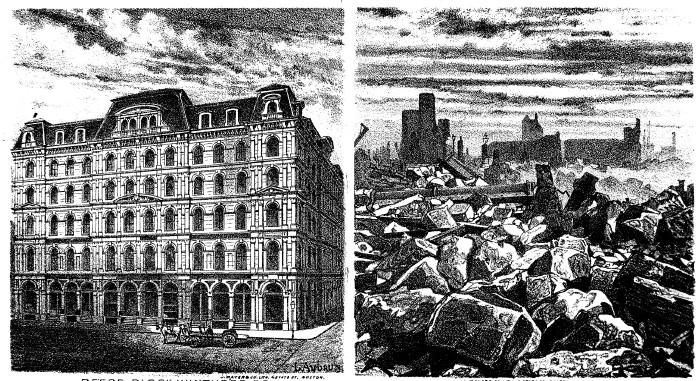 BEEBE BLOCK, WINTHROP SQUARE OTIS STREET AND BEEBE BLOCK From this
point the
fire spread in every direction, and awakened the confident thousands
gazing
upon it to a realization of the fact, that even Boston could
burn, and that,
too, in spite of all the efforts of their efficient fire-department.
From the
building in which the fire originated, it swept down the south side of
Summer
Street, ebbing along the roofs in glowing waves, just as the half-spent
tides
of the sea come rippling and foaming up the smooth beach. The great
heat
created strong currents of air, and caused the winds to whistle about
the
corners and alleys as fierce and cold as January. Thus growing the more
greedy,
the more it devoured: and, making a breeze with which to fan itself
into more
activity, it shot into the windows of the dry-goods stores; consumed
great
stacks of hats and caps, and the rooms that contained them; battered
down
walls, and seized upon woollens and clothing; destroyed the paintings,
engravings, and plates of a great lithographic establishment as it
hurried down
the south side of Summer Street, toward the wharves; into needle-stores
and
suspender-stores, worming around and into boot-and-shoe stores; taking
all the
food there was in a restaurant, and crushing the building into ashes;
into a
comfortable home, and through a doctor’s office; tugging at the walls
of a calfskin-store
until leather and fixtures smouldered under a strange heap of rubbish;
and then
darting with dexterous skill into the show-windows, and about the
stocks of
leather, of furs, of gloves, of groceries, which were deposited in
neighborly
buildings along the street. At last it crept into the lodging-houses;
and, one
after another, these homes of the many lit up with wild gusts of flame,
and
then sank down, melted and broken, to shelter the poor and the stranger
no
more; then along Bedford Street, which, beyond its junction with
Summer, is
practically an extension of Summer Street, taking a long block of
boarding-houses, and hiding them in smoke while it careened and
gibbered
within. From them it flitted around the corner of Broad Street, and
with long
streamers reached across that thoroughfare, and ignited the dry wooden
station
of the Boston, Hartford, and Erie Railroad, standing among the wharves
of the
harbor. Coal-wharves and partially-unladen vessels, storehouses for
fish and
ship-stores, all flashed into blaze; and the quiet waters reflected far
the
dazzling light and the gloomy pillars of smoke. A great
wonder has
it since been to professional firemen, and professors of science, and
of course
more of a marvel to those who have not searched into these things, why
the fire
did not sweep far to the south of Summer Street, when the wind blew
strongly in
that direction, and when the most combustible structures in the city
stood upon
that side of the fire, and contiguous to it. The great fire in London,
according to Defoe, exhibited the same unaccountable inclination to
burn
“against the wind;” and, while the fire-brigade spent much time and
pains in
preparing for a fight on the side toward which the wind blew, the
conflagration
spread with astonishing rapidity in the opposite direction, and the
most
combustible portion of the city was left untouched, although the breeze
loaded
itself with sparks and brands as it went towards the unburned district.
It was
only accounted for by supposing that the residents in that quarter were
more
devout, and consequently miraculously defended by the Almighty. The
exemption
of Bedford and Essex Streets, and perhaps the whole South End, could as
reasonably be accounted for on the same hypothesis. We believe,
however, that
there is some natural law by which the flames were controlled, that
will one
day be discovered, and made the basis of action in all such great
fires. Meantime
the fire
crossed Kingston Street at the corner of Summer Street, gliding along
the eaves
and casings into other great blocks, where were stored the result of
years of
labor and the riches of many a wealthy merchant. Millions of gloves,
stacks of
laces, piles of clothing, carpeting (enough, it is said, to supply a
whole
city), thousands of hats, caps, and imported wares, all disappear in
the heated
flood which surges, and dashes into fragments the mighty fortresses of
Boston’
most thriving trade. With linens and calicoes, silks and velvets,
shawls and
hosiery, straps and blankets, and the countless articles which compose
a stock
in the dry-goods trade, the dread element fed itself, and, by the flash
of
their consuming, lighted itself through the spacious apartments into
Chauncey
Street. At
midnight it
crossed that street, still on its way up Summer toward Washington
Street, and
settled upon the corner occupied by Forbes, Richardson, and Co. It
drove away
the owners while attempting to secure some little portion of their
costly
fabrics, and, as if in anger, melted the windows, and, like electric
currents,
glimmered along from desk to counter, from bale to box, from floor to
ceiling;
and then, with one grand outburst, the whole store, with its stock of
carefully-accumulated wealth, gleamed through the smoke like streams of
molten
iron. On into the great woollen stores, and through thick walls into
the
fur-store, streaked those ghastly fires; and there, for the first time,
it
relaxed in its fury, and, being confronted with skilful combatants,
turned away
to vent its rage on other monuments less favored in location and
construction. From Otis
Street
the fire made steady progress along the north side of Summer Street,
destroying
the warehouses and stocks of clothing-dealers, dry-goods merchants,
upholsterers, venders of trimmings and furnishing-goods, sellers of
sewing-machines, traders in rubber goods, in furs and small wares,
printers,
coal-agents, grocers, restaurant-keepers, crockery-mongers, and
carpet-salesmen, and including in that terrible sweep grand old Trinity
Church,
with its stores of traditions, its costly furniture, and embattled
walls of
granite. |
 Click the book image to turn
to the next Chapter.
Click the book image to turn
to the next Chapter.