
Web
and Book design,
Copyright, Kellscraft Studio 1999-2007 (Return to Web Text-ures) |
Click
Here to return to
Autobiography of Benjamin Franklin Content Page Return to the Previous Chapter |
 (HOME)
|
|
XIX AGENT OF
PENNSYLVANIA IN LONDON OUR new governor, Captain Denny,
brought over for me the before‑mentioned medal from the Royal Society,
which he
presented to me at an entertainment given him by the city. He
accompanied it
with very polite expressions of his esteem for me, having, as he said,
been
long acquainted with my character. After dinner, when the company, as
was
customary at that time, were engag’d in drinking, he took me aside into
another
room, and acquainted me that he had been advis’d by his friends in
England to
cultivate a friendship with me, as one who was capable of giving him
the best
advice, and of contributing most effectually to the making his
administration
easy; that he therefore desired of all things to have a good
understanding with
me, and he begged me to be assured of his readiness on all occasions to
render
me every service that might be in his power. He said much to me, also,
of the
proprietor’s good disposition towards the province, and of the
advantage it
might be to us all, and to me in partiular, if the opposition that had
been so
long continu’d to his measures was dropt, and harmony restor’d between
him and
the people; in effecting which, it was thought no one could be more
serviceable
than myself; and I might depend on adequate acknowledgments and
recompenses,
etc., etc. The drinkers, finding we did not return immediately to the
table,
sent us a decanter of Madeira, which the governor made liberal use of,
and in
proportion became more profuse of his solicitations and promises. My answers
were to
this purpose: that my circumstances, thanks to God, were such as to
make
proprietary favours unnecessary to me; and that, being a member of the
Assembly, I could not possibly accept of any; that, however, I had no
personal
enmity to the proprietary, and that, whenever the public measures he
propos’d
should appear to be for the good of the people, no one should espouse
and
forward them more zealously than myself; my past opposition having been
founded
on this, that the measures which had been urged were evidently intended
to
serve the proprietary interest, with great prejudice to that of the
people;
that I was much obliged to him (the governor) for his professions of
regard to
me, and that he might rely on everything in my power to make his
administration
as easy as possible, hoping at the same time that he had not brought
with him
the same unfortunate instruction his predecessor had been hampered
with. On this he
did not
then explain himself; but when he afterwards came to do business with
the
Assembly, they appear’d again, the disputes were renewed, and I was as
active
as ever in the opposition, being the penman, first, of the request to
have a
communication of the instructions, and then of the remarks upon them,
which may
be found in the votes of the time, and in the Historical Review I
afterward
publish’d. But between us personally no enmity arose; we were often
together;
he was a man of letters, had seen much of the world, and was very
entertaining
and pleasing in conversation. He gave me the first information that my
old
friend Jas. Ralph was still alive; that he was esteem’d one of the best
political writers in England; had been employed in the dispute1
between Prince Frederic and the king, and had obtain’d a pension of
three
hundred a year; that his reputation was indeed small as a poet, Pope
having
damned his poetry in the Dunciad,2
but his prose was thought as good as any man’s. The
Assembly
finally finding the proprietary obstinately persisted in manacling
their
deputies with instructions inconsistent not only with the privileges of
the
people, but with the service of the crown, resolv’d to petition the
king
against them, and appointed me their agent to go over to England, to
present
and support the petition. The House had sent up a bill to the governor,
granting a sum of sixty thousand pounds for the king’s use (ten
thousand pounds
of which was subjected to the orders of the then general, Lord
Loudoun), which
the governor absolutely refus’d to pass, in compliance with his
instructions. I had
agreed with
Captain Morris, of the packet at New York, for my passage, and my
stores were
put on board, when Lord Loudoun arriv’d at Philadelphia, expressly, as
he told
me, to endeavour an accommodation between the governor and Assembly,
that his
majesty’s service might not be obstructed by their dissensions.
Accordingly, he
desir’d the governor and myself to meet him, that he might hear what
was to be
said on both sides. We met and discussed the business. In behalf of the
Assembly, I urged all the various arguments that may be found in the
public
papers of that time, which were of my writing, and are printed with the
minutes
of the Assembly; and the governor pleaded his instructions, the bond he
had
given to observe them, and his ruin if he disobey’d, yet seemed not
unwilling
to hazard himself if Lord Loudoun would advise it. This his lordship
did not
chuse to do, though I once thought I had nearly prevail’d with him to
do it;
but finally he rather chose to urge the compliance of the Assembly; and
he
entreated me to use my endeavours with them for that purpose, declaring
that he
would spare none of the king’s troops for the defense of our frontiers,
and
that, if we did not continue to provide for that defense ourselves,
they must
remain expos’d to the enemy. I
acquainted the
House with what had pass’d. and. presenting them with a set of
resolutions I
had drawn up, declaring our rights, and that we did not relinquish our
claim to
those rights, but only suspended the exercise of them on this occasion
thro’
force, against which we protested, they at length agreed to drop that
bill, and
frame another conformable to the proprietary instructions. This of
course the
governor pass’d, and I was then at liberty to proceed on my voyage.
But, in the
meantime, the packet had sailed with my sea-stores, which was some loss
to me,
and my only recompense was his lordship’s thanks for my service, all
the credit
of obtaining the accommodation falling to his share. He set out
for New
York before me; and, as the time for dispatching the packet-boats was
at his
disposition, and there were two then remaining there, one of which, he
said,
was to sail very soon, I requested to know the precise time, that I
might not
miss her by any delay of mine. His answer was, “I have given out that
she is to
sail on Saturday next; but I may let you know, entre
nous, that if you are there by Monday morning, you will be
in time,
but do not delay longer.” By some accidental hindrance at a ferry, it
was
Monday noon before I arrived, and I was much afraid she might have
sailed, as
the wind was fair; but I was soon made easy by the information that she
was
still in the harbor, and would not move till the next day. One would
imagine
that I was now on the very point of departing for Europe. I thought so;
but I
was not then so well acquainted with his lordship’s character, of which
indecision was
one of the strongest
features. I shall give some instances. It was about the beginning of
April that
I came to New York, and I think it was near the end of June before we
sail’d.
There were then two of the packet-boats, which had been long in port,
but were
detained for the general’s letters, which were always to be ready
to-morrow.
Another packet arriv’d; she too was detain’d; and, before we sail’d, a
fourth
was expected. Ours was the first to be dispatch’d, as having been there
longest.
Passengers were engaged in all, and some extremely impatient to be
gone, and
the merchants uneasy about their letters, and the orders they had given
for
insurance (it being war time) for fall goods; but their anxiety avail’d
nothing; his lordship’s letters were not ready; and yet whoever waited
on him
found him always at his desk, pen in hand, and concluded he must needs
write
abundantly. Going
myself one
morning to pay my respects, I found in his antechamber one Innis, a
messenger
of Philadelphia, who had come from thence express with a packet from
Governor
Denny for the general. He delivered to me some letters from my friends
there,
which occasion’d my inquiring when he was to return, and where he
lodg’d, that
I might send some letters by him. He told me he was order’d to call
to-morrow
at nine for the general’s answer to the governor, and should set off
immediately. I put my letters into his hands the same day. A fortnight
after I
met him again in the same place. “So, you are soon return’d, Innis?” “Return’d! no, I am not gone yet.” “How so?” “I have
called here
by order every morning these two weeks past for his lordship’s letter,
and it
is not yet ready.” “Is it possible, when he is so great a writer? for I
see him
constantly at his escritoire.” “Yes,” says Innis, “but he is like St.
George on
the signs, always on horseback,
and never
rides on.” This observation of the messenger was, it seems,
well
founded; for, when in England, I understood that Mr. Pitt3
gave it
as one reason for removing this general, and sending Generals Amherst
and
Wolfe, that the minister never
heard from
him, and could not know what he was doing. This daily
expectation of sailing, and all the three packets going down to Sandy
Hook, to
join the fleet there, the passengers thought it best to be on board,
lest by a
sudden order the ships should sail, and they be left behind. There, if
I
remember right, we were about six weeks, consuming our sea-stores, and
oblig’d
to procure more. At length the fleet sail’d, the general and all his
army on
board, bound to Louisburg, with the intent to besiege and take that
fortress;
all the packet-boats in company ordered to attend the general’s ship,
ready to
receive his dispatches when they should be ready. We were out five days
before
we got a letter with leave to part, and then our ship quitted the fleet
and
steered for England. The other two packets he still detained, carried
them with
him to Halifax, where he stayed some time to exercise the men in sham
attacks
upon sham forts, then altered his mind as to besieging Louisburg, and
returned
to New York, with all his troops, together with the two packets above
mentioned, and all their passengers! During his absence the French and
savages
had taken Fort George, on the frontier of that province, and the
savages had
massacred many of the garrison after capitulation. I saw afterwards in London Captain
Bonnell, who commanded one of those packets. He told me that, when he
had been
detain’d a month, he acquainted his lordship that his ship was grown
foul, to a
degree that must necessarily hinder her fast sailing, a point of
consequence
for a packet-boat, and requested an allowance of time to heave her down
and
clean her bottom. He was asked how long time that would require. He
answered,
three days. The general replied, “If you can do it in one day, I give
leave;
otherwise not; for you must certainly sail the day after to-morrow.” So
he
never obtain’d leave, though detained afterwards from day to day during
full
three months. I saw also
in
London one of Bonnell’s passengers, who was so enrag’d against his
lordship for
deceiving and detaining him so long at New York, and then carrying him
to
Halifax and back again, that he swore he would sue him for damages.
Whether he
did or not, I never heard; but, as he represented the injury to his
affairs, it
was very considerable. On the
whole, I
wonder’d much how such a man came to be intrusted4 with so
important
a business as the conduct of a great army; but, having since seen more
of the
great world, and the means of obtaining, and motives for giving places,
my
wonder is diminished. General Shirley, on whom the command of the army
devolved
upon the death of Braddock, would, in my opinion, if continued in
place, have
made a much better campaign than that of Loudoun in 1757, which was
frivolous,
expensive, and disgraceful to our nation beyond conception; for, tho’
Shirley
was not a bred soldier, he was sensible and sagacious in himself, and
attentive
to good advice from others, capable of forming judicious plans, and
quick and
active in carrying them into execution. Loudoun, instead of defending
the
colonies with his great army, left them totally expos’d while he
paraded idly
at Halifax, by which means Fort George was lost, besides, he derang’d
all our
mercantile operations, and distress’d our trade, by a long embargo on
the
exportation of provisions, on pretence of keeping supplies from being
obtain’d
by the enemy, but in reality for beating down their price in favour of
the
contractors, in whose profits, it was said, perhaps from suspicion
only, he had
a share. And, when at length the embargo was taken off, by neglecting
to send
notice of it to Charlestown, the Carolina fleet was detain’d near three
months
longer, whereby their bottoms were so much damaged by the worm that a
great
part of them foundered in their passage home. Shirley
was, I
believe, sincerely glad of being relieved from so burdensome a charge
as the
conduct of an army must be to a man unacquainted with military
business. I was
at the entertainment given by the city of New York to Lord Loudoun, on
his
taking upon him the command. Shirley, tho’ thereby superseded, was
present
also. There was a great company of officers, citizens, and strangers,
and, some
chairs having been borrowed in the neighborhood, there was one among
them very
low, which fell to the lot of Mr. Shirley. Perceiving it as I sat by
him, I
said, “They have given you, sir, too low a seat.” “No matter,” says he,
“Mr.
Franklin, I find a low seat
the
easiest.” While I
was, as
afore mention’d, detain’d at New York, I receiv’d all the accounts of
the
provisions, etc., that I had furnish’d to Braddock, some of which
accounts
could not sooner be obtain’d from the different persons I had employ’d
to
assist in the business. I presented them to Lord Loudoun, desiring to
be paid
the ballance. He caus’d them to be regularly examined by the proper
officer,
who, after comparing every article with its voucher, certified them to
be
right; and the balance due for which his lordship promis’d to give me
an order
on the paymaster. This was, however, put off from time to time; and
tho’ I
call’d often for it by appointment, I did not get it. At length, just
before my
departure, he told me he had, on better consideration, concluded not to
mix his
accounts with those of his predecessors. “And you,” says he, “when in
England,
have only to exhibit your accounts at the treasury, and you will be
paid
immediately.” I
mention’d, but
without effect, the great and unexpected expense I had been put to by
being
detain’d so long at New York, as a reason for my desiring to be
presently paid;
and on my observing that it was not right I should be put to any
further
trouble or delay in obtaining the money I had advanc’d, as I charged no
commission for my service, “O, Sir,” says he, “you must not think of
persuading
us that you are no gainer; we understand better those affairs, and know
that
every one concerned in supplying the army finds means, in the doing it,
to fill
his own pockets.” I assur’d him that was not my case, and that I had
not
pocketed a farthing; but he appear’d clearly not to believe me; and,
indeed, I
have since learnt that immense fortunes are often made in such
employments. As
to my ballance, I am not paid it to this day, of which more hereafter. Our
captain of the
paquet had boasted much, before we sailed, of the swiftness of his
ship;
unfortunately, when we came to sea, she proved the dullest of
ninety-six sail,
to his no small mortification. After many conjectures respecting the
cause,
when we were near another ship almost as dull as ours, which, however,
gain’d
upon us, the captain ordered all hands to come aft, and stand as near
the
ensign staff as possible. We were, passengers included, about forty
persons.
While we stood there, the ship mended her pace, and soon left her
neighbour far
behind, which prov’d clearly what our captain suspected, that she was
loaded
too much by the head. The casks of water, it seems, had been all plac’d
forward; these he therefore order’d to be mov’d further aft, on which
the ship
recover’d her character, and proved the best sailer in the fleet. The
captain said
she had once gone at the rate of thirteen knots, which is accounted
thirteen
miles per hour. We had on board, as a passenger, Captain Kennedy, of
the Navy,
who contended that it was impossible, and that no ship ever sailed so
fast, and
that there must have been some error in the division of the log-line,
or some
mistake in heaving the log.5 A wager ensu’d between the two
captains, to be decided when there should be sufficient wind. Kennedy
thereupon
examin’d rigorously the log-line, and, being satisfi’d with that, he
determin’d
to throw the log himself. Accordingly some days after, when the wind
blew very
fair and fresh, and the captain of the paquet, Lutwidge, said he
believ’d she
then went at the rate of thirteen knots, Kennedy made the experiment,
and own’d
his wager lost. The above
fact I
give for the sake of the following observation. It has been remark’d,
as an
imperfection in the art of ship-building, that it can never be known,
till she
is tried, whether a new ship will or will not be a good sailer; for
that the
model of a good-sailing ship has been exactly follow’d in a new one,
which has
prov’d, on the contrary, remarkably dull. I apprehend that this may
partly be
occasion’d by the different opinions of seamen respecting the modes of
lading,
rigging, and sailing of a ship; each has his system; and the same
vessel, laden
by the judgment and orders of one captain, shall sail better or worse
than when
by the orders of another. Besides, it scarce ever happens that a ship
is
form’d, fitted for the sea, and sail’d by the same person. One man
builds the
hull, another rigs her, a third lades and sails her. No one of these
has the
advantage of knowing all the ideas and experience of the others, and,
therefore, cannot draw just conclusions from a combination of the
whole. Even in the simple operation of sailing when at sea, I have often observ’d different judgments in the officers who commanded the successive watches, the wind being the same. One would have the sails trimm’d sharper or flatter than another, so that they seem’d to have no certain rule to govern by. Yet I think a set of experiments might be instituted; first, to determine the most proper form of the hull for swift sailing; next, the best dimensions and properest place for the masts; then the form and quantity of sails, and their position, as the wind may be; and, lastly, the disposition of the lading. This is an age of experiments, and I think a set accurately made and combin’d would be of great use. I am persuaded, therefore, that ere long some ingenious philosopher will undertake it, to whom I wish success. 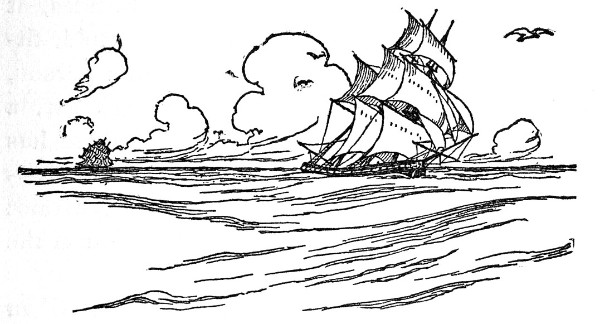 We were several times chas’d in our
passage, but out-sail’d every thing, and in thirty days had soundings.
We had a
good observation, and the captain judg’d himself so near our port,
Falmouth,
that, if we made a good run in the night, we might be off the mouth of
that
harbor in the morning, and by running in the night might escape the
notice of
the enemy’s privateers, who often cruis’d near the entrance of the
channel.
Accordingly, all the sail was set that we could possibly make, and the
wind
being very fresh and fair, we went right before it, and made great way.
The
captain, after his observation, shap’d his course, as he thought, so as
to pass
wide of the Scilly Isles; but it seems there is sometimes a strong
indraught
setting up St. George’s Channel, which deceives seamen and caused the
loss of
Sir Cloudesley Shovel’s squadron. This indraught was probably the cause
of what
happened to us. We had a
watchman
plac’d in the bow, to whom they often called, “Look
well out before there,” and he as often answered, “Ay, ay”; but perhaps had his
eyes shut,
and was half asleep at the time, they sometimes answering, as is said,
mechanically; for he did not see a light just before us, which had been
hid by
the studding-sails from the man at the helm, and from the rest of the
watch,
but by an accidental yaw of the ship was discover’d, and occasion’d a
great
alarm, we being very near it, the light appearing to me as big as a
cartwheel.
It was midnight, and our captain fast asleep; but Captain Kennedy,
jumping upon
deck, and seeing the danger, ordered the ship to wear round, all sails
standing; an operation dangerous to the masts, but it carried us clear,
and we
escaped shipwreck, for we were running right upon the rocks on which
the
lighthouse was erected. This deliverance impressed me strongly with the
utility
of lighthouses, and made me resolve to encourage the building more of
them in
America if I should live to return there. In the
morning it
was found by the soundings, etc., that we were near our port, but a
thick fog
hid the land from our sight. About nine o’clock the fog began to rise,
and
seem’d to be lifted up from the water like the curtain at a play-house,
discovering underneath, the town of Falmouth, the vessels in its
harbor, and
the fields that surrounded it. This was a most pleasing spectacle to
those who
had been so long without any other prospects than the uniform view of a
vacant
ocean, and it gave us the more pleasure as we were now free from the
anxieties
which the state of war occasion’d. I set out
immediately, with my son, for London, and we only stopt a little by the
way to
view Stonehenge6 on Salisbury Plain, and Lord Pembroke’s
house and
gardens, with his very curious antiquities at Wilton. We arrived in
London the
27th of July, 1757.7 As soon as
I was
settled in a lodging Mr. Charles had provided for me, I went to visit
Dr.
Fothergill, to whom I was strongly recommended, and whose counsel
respecting my
proceedings I was advis’d to obtain. He was against an immediate
complaint to
government, and thought the proprietaries should first be personally
appli’d
to, who might possibly be induc’d by the interposition and persuasion
of some
private friends, to accommodate matters amicably. I then waited on my
old
friend and correspondent, Mr. Peter Collinson, who told me that John
Hanbury,
the great Virginia merchant, had requested to be informed when I should
arrive,
that he might carry me to Lord Granville’s,8 who was then
President
of the Council and wished to see me as soon as possible. I agreed to go
with
him the next morning. Accordingly Mr. Hanbury called for me and took me
in his
carriage to that nobleman’s, who receiv’d me with great civility; and
after
some questions respecting the present state of affairs in America and
discourse
thereupon, he said to me: “You Americans have wrong ideas of the nature
of your
constitution; you contend that the king’s instructions to his governors
are not
laws, and think yourselves at liberty to regard or disregard them at
your own
discretion. But those instructions are not like the pocket instructions
given
to a minister going abroad, for regulating his conduct in some trifling
point
of ceremony. They are first drawn up by judges learned in the laws;
they are
then considered, debated, and perhaps amended in Council, after which
they are
signed by the king. They are then, so far as they relate to you, the law of the land, for the king
is the
LEGISLATOR OF THE COLONIES,”9 I told his lordship this was
new
doctrine to me. I had always understood from our charters that our laws
were to
be made by our Assemblies, to be presented indeed to the king for his
royal
assent, but that being once given the king could not repeal or alter
them. And
as the Assemblies could not make permanent laws without his assent, so
neither
could he make a law for them without theirs. He assur’d me I was
totally
mistaken. I did not think so, however, and his lordship’s conversation
having a
little alarm’d me as to what might be the sentiments of the court
concerning
us, I wrote it down as soon as I return’d to my lodgings. I recollected
that
about 20 years before, a clause in a bill brought into Parliament by
the ministry
had propos’d to make the king’s instructions laws in the colonies, but
the
clause was thrown out by the Commons, for which we adored them as our
friends
and friends of liberty, till by their conduct towards us in 1765 it
seem’d that
they had refus’d that point of sovereignty to the king only that they
might
reserve it for themselves. After some
days,
Dr. Fothergill having spoken to the proprietaries, they agreed to a
meeting
with me at Mr. T. Penn’s house in Spring Garden. The conversation at
first
consisted of mutual declarations of disposition to reasonable
accommodations,
but I suppose each party had its own ideas of what should be meant by reasonable. We then went into
consideration of our several points of complaint, which I enumerated.
The proprietaries
justify’d their conduct as well as they could, and I the Assembly’s. We
now
appeared very wide, and so far from each other in our opinions as to
discourage
all hope of agreement. However, it was concluded that I should give
them the
heads of our complaints in writing, and they promis’d then to consider
them. I
did so soon after, but they put the paper into the hands of their
solicitor,
Ferdinand John Paris, who managed for them all their law business in
their
great suit with the neighbouring proprietary of Maryland, Lord
Baltimore, which
had subsisted 70 years, and wrote for them all their papers and
messages in
their dispute with the Assembly. He was a proud, angry man, and as I
had
occasionally in the answers of the Assembly treated his papers with
some
severity, they being really weak in point of argument and haughty in
expression, he had conceived a mortal enmity to me, which discovering
itself
whenever we met, I declin’d the proprietary’s proposal that he and I
should
discuss the heads of complaint between our two selves, and refus’d
treating
with anyone but them. They then by his advice put the paper into the
hands of
the Attorney and Solicitor-General for their opinion and counsel upon
it, where
it lay unanswered a year wanting eight days, during which time I made
frequent
demands of an answer from the proprietaries, but without obtaining any
other
than that they had not yet received the opinion of the Attorney and
Solicitor-General. What it was when they did receive it I never learnt,
for they
did not communicate it to me, but sent a long message to the Assembly
drawn and
signed by Paris, reciting my paper, complaining of its want of
formality, as a
rudeness on my part, and giving a flimsy justification of their
conduct, adding
that they should be willing to accommodate matters if the Assembly
would send
out some person of candour
to
treat with them for that purpose, intimating thereby that I was not
such. The want
of
formality or rudeness was, probably, my not having address’d the paper
to them
with their assum’d titles of True and Absolute Proprietaries of the
Province of
Pennsylvania, which I omitted as not thinking it necessary in a paper,
the
intention of which was only to reduce to a certainty by writing, what
in
conversation I had delivered viva voce. But during
this
delay, the Assembly having prevailed with Gov’r Denny to pass an act
taxing the
proprietary estate in common with the estates of the people, which was
the
grand point in dispute, they omitted answering the message. When this
act
however came over, the proprietaries, counselled by Paris, determined
to oppose
its receiving the royal assent. Accordingly they petition’d the king in
Council, and a hearing was appointed in which two lawyers were employ’d
by them
against the act, and two by me in support of it. They alledg’d that the
act was
intended to load the proprietary estate in order to spare those of the
people,
and that if it were suffer’d to continue in force, and the
proprietaries, who
were in odium with the people, left to their mercy in proportioning the
taxes,
they would inevitably be ruined. We reply’d that the act had no such
intention,
and would have no such effect. That the assessors were honest and
discreet men
under an oath to assess fairly and equitably, and that any advantage
each of
them might expect in lessening his own tax by augmenting that of the
proprietaries was too trifling to induce them to perjure themselves.
This is
the purport of what I remember as urged by both sides, except that we
insisted
strongly on the mischievous consequences that must attend a repeal, for
that
the money, £100,000, being printed and given to the king’s use,
expended in his
service, and now spread among the people, the repeal would strike it
dead in
their hands to the ruin of many, and the total discouragement of future
grants,
and the selfishness of the proprietors in soliciting such a general
catastrophe, merely from a groundless fear of their estate being taxed
too
highly, was insisted on in the strongest terms. On this, Lord
Mansfield, one of
the counsel, rose, and beckoning me took me into the clerk’s chamber,
while the
lawyers were pleading, and asked me if I was really of opinion that no
injury
would be done the proprietary estate in the execution of the act. I
said certainly.
“Then,” says he, “you can have little objection to enter into an
engagement to
assure that point.” I answer’d, “None at all.” He then call’d in Paris,
and
after some discourse, his lordship’s proposition was accepted on both
sides; a
paper to the purpose was drawn up by the Clerk of the Council, which I
sign’d
with Mr. Charles, who was also an Agent of the Province for their
ordinary
affairs, when Lord Mansfield returned to the Council Chamber, where
finally the
law was allowed to pass. Some changes were however recommended and we
also
engaged they should be made by a subsequent law, but the Assembly did
not think
them necessary; for one year’s tax having been levied by the act before
the
order of Council arrived, they appointed a committee to examine the
proceedings
of the assessors, and on this committee they put several particular
friends of
the proprietaries. After a full enquiry, they unanimously sign’d a
report that
they found the tax had been assess’d with perfect equity. The Assembly looked into my entering into the first part of the engagement, as an essential service to the Province, since it secured the credit of the paper money then spread over all the country. They gave me their thanks in form when I return’d. But the proprietaries were enraged at Governor Denny for having pass’d the act, and turn’d him out with threats of suing him for breach of instructions which he had given bond to observe. He, however, having done it at the instance of the General, and for His Majesty’s service, and having some powerful interest at court, despis’d the threats and they were never put in execution. . . . [unfinished] 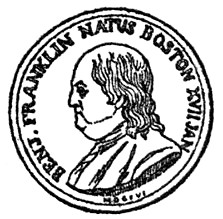 ______________________ 1 Quarrel between George
II and his
son, Frederick, Prince of Wales, who died before his father. 2 A satirical poem by
Alexander Pope
directed against various contemporary writers. 3 William Pitt, first
Earl of Chatham
(1708-1778), a great English statesman and orator. Under his able
administration, England won Canada from France. He was a friend of
America at
the time of Our Revolution. 4 This relation
illustrates the
corruption that characterized English public life in the eighteenth
century.
(See page 308) was gradually overcome in the early part of the next
century. 5 A piece of wood shaped
and weighted
so as to keep it stable when in the water. To this is attached a line
knotted
at regular distances. By these devices it is possible to tell the speed
of a
ship. 6 A celebrated
prehistoric ruin,
probably of a temple built by the early Britons, near Salisbury,
England. It
consists of inner and outer circles of enormous stones, some of which
are
connected by stone slabs. 7 “Here terminates the Autobiography, as published by
Wm. Temple
Franklin and his successors. What follows was written in the last year
of Dr.
Franklin’s life, and was never before printed in English.” — Mr.
Bigelow’s note
in his edition of 1868. 8 George Granville or
Grenville
(1712-1770). As English premier from 1763 to 1765, he introduced the
direct
taxation of the American Colonies and has sometimes been called the
immediate
cause of the Revolution. 9 This whole passage
shows how
hopelessly divergent were the English and American views on the
relations
between the mother country and her colonies. Grenville here made clear
that the
Americans were to have no voice in making or amending their laws.
Parliament
and the king were to have absolute power over the colonies. No wonder
Franklin
was alarmed by this new doctrine. With his
keen
insight into human nature and his consequent knowledge of American
character,
he foresaw the inevitable result of such an attitude on the part of
England
This conversation with Grenville makes these last pages of the Autobiography one of its most
important
parts. |
 Click the book image to turn
to the next Chapter.
Click the book image to turn
to the next Chapter.