
Web
and Book design,
Copyright, Kellscraft Studio 1999-2007 (Return to Web Text-ures) |
 (HOME)
|
|
Chapter 12.
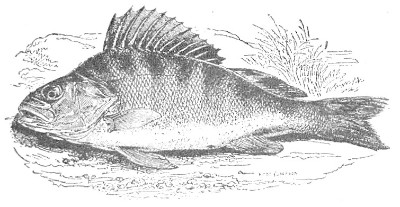
OBSERVATIONS OF THE PEARCH, AND DIRECTIONS HOW TO FISH FOR HIM
 PISCATOR.
The
Pearch is a very good and a very bold-biting fish. He is one of the
fishes of
prey that, like the Pike and Trout, carries his teeth in his mouth,
Which is
very large; and he dare venture to kill and devour several other kinds
of
fish. He has a hooked, or hog-back, which is armed With sharp and stiff
bristles, and all his skin armed or covered over with thick, dry, hard
scales;
and hath, which few other fish have, two fins on his back. He is so
bold that
he will invade one of his own kind, which the Pike will not do so
willingly;
and you may therefore easily believe him to be a bold biter. The Pearch
is of
great esteem in Italy, saith Aldrovandus; and especially the least are
there
esteemed a dainty fish. And Gesner prefers the Pearch and Pike above
the Trout,
or any fresh-water fish: he says the Germans have this proverb, "More
wholesome than a Pearch of Rhine": and he says the River-Pearch is so
whole some, that physicians allow him to be eaten by wounded men, or
by men in
fevers, or by Women in child-bed. He spawns
but once
a year, and is by physicians held very nutritive; yet, by many, to be
hard of
digestion. They abound more in the river Po and in England, says
Rondeletius,
than other parts, and have in their brain a stone, which is, in foreign
parts,
sold by apothecaries, being there noted to be very medicinable against
the
stone in the reins. These be a part of the commendations which some
philosophical brains have bestowed upon the fresh-water Pearch: yet
they
commend the Sea-Pearch, which is known by having but one fin on his
back, of
Which, they say, we English see but a few, to be a much better fish. The Pearch
grows
slowly, yet will grow, as I have been credibly informed, to be almost
two foot
long; for an honest informer told me, such a one was not long since
taken by
Sir Abraham Williams, a gentleman of worth, and a Brother of the Angle,
that
yet lives, and I Wish he may. This was a deep-bodied fish, and
doubtless durst
have devoured a Pike of half his own length; for I have told you he is
a bold
fish, such a one as, but for extreme hunger, the Pike will not devour:
for to
affright the Pike, and save himself, the Pearch will set up his fins,
much like
as a turkey-cock will sometimes set up his tail. But, my
Scholar,
the Pearch is not only valiant to defend him self, but he is, as I
said, a
bold-biting fish, yet he Will not bite at all seasons of the year; he
is very
abstemious in winter, yet will bite then in the midst of the day, if it
be
warm: and note, that all fish bite best about the midst of a Warm day
in
Winter, and he hath been observed by some not usually to bite till the
mulberry-tree
buds; that is to say, till extreme frosts be past the spring: for when
the
mulberry-tree blossoms, many gardeners observe their forward fruit to
be past
the danger of frosts; and some have made the like observation of the
Pearch's
biting. But bite
the Pearch
Will, and that very boldly; and as one has wittily observed, if there
be twenty
or forty in a hole, they may be, at one standing, all catched one after
another; they being, as he says, like the wicked of the world, not
afraid,
though their fellows and companions perish in their sight. And you may
observe,
that they are not like the solitary Pike; but love to accompany one
another,
and march together in troops. And the
baits for
this bold fish are not many: I mean, he will bite as well at some or at
any of
these three, as at any or all others what soever, — a worm, a minnow,
or a
little frog, of which you may find many in hay-time: and of worms the
dunghill-worm, called a Brandling, I take to be best, being well
scoured in
moss or fennel; or he will bite at a worm that lies under cow-dung,
with a
bluish head. And if you rove for a Pearch with a minnow, then it is
best to be
alive, you sticking your hook through his back fin; or a minnow with a
hook in
his upper lip, and letting him swim up and down, about mid-water or a
little
lower, and you still keeping him to about that depth by a cork, which
ought not
to be a very little one: and the like way you are to fish for the
Pearch, with
a small frog, your hook being fastened through the skin of his leg,
towards the
upper part of it: and lastly, I will give you but this advice, that you
give
the Pearch time enough when he bites, for there was scarce ever any
Angler that
has given him too much. And now I think best to rest myself, for I have
almost
spent my spirits with talking so long. VEN. Nay,
good
Master, one fish more, for you see it rains still, and you know our
Angles are
like money put to usury; they may thrive, though we sit still and do
nothing
but talk and enjoy one another. Come, come, the other fish, good
Master. PISC. But,
Scholar,
have you nothing to mix with this discourse, which now grows both
tedious and
tiresome? Shall I have nothing from you, that seem to have both a good
memory
and a cheerful spirit? VEN. Yes,
Master, I
will speak you a copy of verses that were made by Doctor Donne, and
made to
show the world that he could make soft and smooth verses, when he
thought
smoothness worth his labor; and I love them the better, because they
allude to
rivers, and fish, and fishing. They be these: — And we will some new pleasures prove Of golden sands, and crystal brooks, With silken lines and silver hooks. There will the river whispering run, Warmed by the eyes more than the sun; And there the enamel'd fish will stay, Begging themselves they may betray. When thou wilt swim in that live bath, Each fish, which every channel hath, Most amorously to thee will swim, Gladder to catch thee than thou him. If thou to be so seen be'st loath, By sun or moon, thou dark'nest both; And if mine eyes have leave to see, I need not their light, having thee. Let others freeze with angling-reeds, And cut their legs with shells and weeds; Or treacherously poor fish beset With strangling snares, or windowy net: Let coarse, bold hands from slimy nest The bedded fish in banks outwrest; Let curious traitors sleave silk flies, To 'witch poor fishes' wandering eyes: For thee, thou need'st no such deceit, For thou thyself art thine own bait: That fish that is not catch't thereby Is wiser far, alas! than I. PISC. Well
remembered, honest Scholar! I thank you for these choice verses, which
I have
heard formerly, but had quite forgot till they were recovered by your
happy
memory. Well, being I have now rested myself a little, I will make you
some
requital, by telling you some observations of the Eel, for it rains
still; and
because, as you say, our angles are as money put to use, that thrives
when we
play, therefore we'll sit still and enjoy ourselves a little longer
under this
honeysuckle hedge. |
 Click the book image to turn
to the next Chapter.
Click the book image to turn
to the next Chapter.