|
WHITTINGTON AND HIS
CAT
 N the reign of the
famous King Edward the Third, there was a little boy called Dick
Whittington,
whose father and mother died when he was very young, so that he
remembered
nothing at all about them, and was left a ragged little fellow running
about a
country village. As poor Dick was not old enough to work, he was very
badly
off; he got but little for his dinner, and sometimes nothing at all for
his
breakfast; for the people who lived in the village were very poor
themselves, and
could not spare him much more than the parings of potatoes, and now and
then a
hard crust. For all this, Dick Whittington was a very sharp boy and was
always
listening to what every body talked about. On Sunday, he was sure to
get near
the farmers, as they were talking in the church-yard before the
clergyman had
come; and once a week you might see little Dick leaning against the
sign-post
of the village ale-house, where people stopped to drink as they came
from the
next market town, and when the barber’s shop-door was open, Dick
listened to
all the news that his customers told one another. In this manner, Dick
heard
many strange things about the great city called London: for the foolish
country-people at that time thought that folks in London were all fine
gentlemen
and ladies; and that the streets were paved with gold. N the reign of the
famous King Edward the Third, there was a little boy called Dick
Whittington,
whose father and mother died when he was very young, so that he
remembered
nothing at all about them, and was left a ragged little fellow running
about a
country village. As poor Dick was not old enough to work, he was very
badly
off; he got but little for his dinner, and sometimes nothing at all for
his
breakfast; for the people who lived in the village were very poor
themselves, and
could not spare him much more than the parings of potatoes, and now and
then a
hard crust. For all this, Dick Whittington was a very sharp boy and was
always
listening to what every body talked about. On Sunday, he was sure to
get near
the farmers, as they were talking in the church-yard before the
clergyman had
come; and once a week you might see little Dick leaning against the
sign-post
of the village ale-house, where people stopped to drink as they came
from the
next market town, and when the barber’s shop-door was open, Dick
listened to
all the news that his customers told one another. In this manner, Dick
heard
many strange things about the great city called London: for the foolish
country-people at that time thought that folks in London were all fine
gentlemen
and ladies; and that the streets were paved with gold. One day, a
large
wagon, and eight horses, with bells at their heads, drove through the
village,
while Dick was standing by the sign-post. He thought that this wagon
must be
going to the flue town of London; so he took courage, and asked the
wagoner to
let him walk with him by the side of the wagon. As soon as the wagoner
heard
poor Dick had neither father nor mother, and saw by his ragged clothes
that he
could not be worse off than he was, he told him he might go if he
would, so
they set off together.
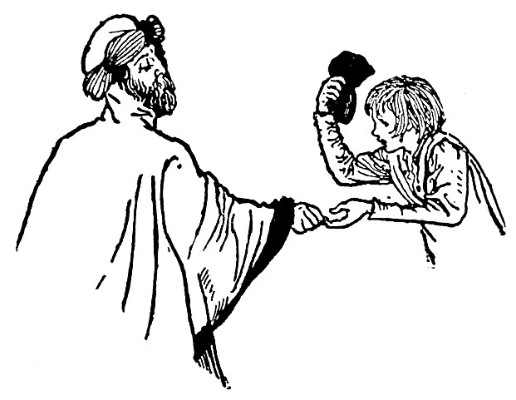  I could never
find
out how little Dick contrived to get meat and drink on the road; nor
how he
could walk so far, for it was a long way; nor what he did at night for
a place
to lie down to sleep in. Perhaps some good-natured people in the towns
that he
passed through, when they saw that he was a poor little ragged boy,
gave him
something to eat; and perhaps the wagoner allowed him to get into the
wagon at
night, and take a nap. Dick, however, got safe to London, and was in
such a
hurry to see the fine streets, paved all over with gold, that I am
afraid he
did not even stay to thank the kind wagoner, but ran off as fast as his
legs
could carry him, through many of the streets, thinking every moment to
come to
those that were paved with gold: for Dick had seen a guinea three times
in his
own little village, and remembered what a deal of money it brought in
change:
so he thought he had nothing to do but to take up some little bits of
the
pavement, and would then have as much money as he could wish for. I could never
find
out how little Dick contrived to get meat and drink on the road; nor
how he
could walk so far, for it was a long way; nor what he did at night for
a place
to lie down to sleep in. Perhaps some good-natured people in the towns
that he
passed through, when they saw that he was a poor little ragged boy,
gave him
something to eat; and perhaps the wagoner allowed him to get into the
wagon at
night, and take a nap. Dick, however, got safe to London, and was in
such a
hurry to see the fine streets, paved all over with gold, that I am
afraid he
did not even stay to thank the kind wagoner, but ran off as fast as his
legs
could carry him, through many of the streets, thinking every moment to
come to
those that were paved with gold: for Dick had seen a guinea three times
in his
own little village, and remembered what a deal of money it brought in
change:
so he thought he had nothing to do but to take up some little bits of
the
pavement, and would then have as much money as he could wish for.
Poor Dick
ran till
he was tired, and had quite forgotten his friend the wagoner; but at
last,
finding it grow dark, and that every way he turned, he saw nothing but
dirt
instead of gold, he sat down in a dark corner, and cried himself to
sleep.
Little Dick was all night in the streets, and next morning, being very
hungry,
he got up and walked about, and asked every body he met to give him a
halfpenny
to keep him from starving, but nobody staid to answer him, and only two
or
three gave him a half-penny; so that the poor boy was soon quite weak
and faint
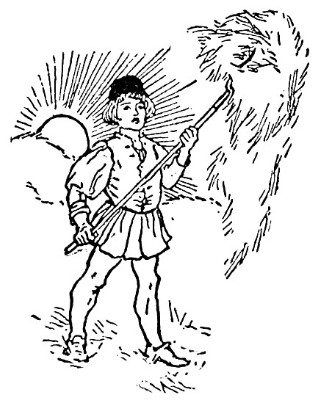
for want of food. At last a good-natured looking gentleman saw how
hungry he
looked. ‘Why don’t you go to work, my lad?’ said he to Dick. ‘That I
would,’
answered Dick, ‘but do not know how to get any.’ — ‘If you are
willing,’ said
the gentleman, ‘come along with me,’ and so saying, he took him to a
hay-field,
where Dick worked briskly and lived merrily till the hay was all made.
After
this, he found himself as badly off as before; and being almost starved
again,
he laid himself down at the door of Mr. Fitzwarren, a rich merchant.
Here he
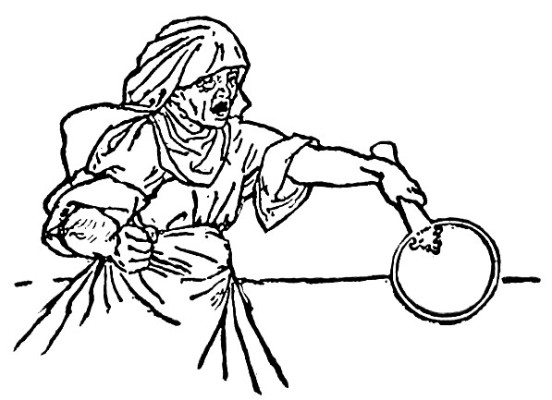
was soon seen by the cook-maid. who was an ill-tempered creature: she
called
out to poor Dick, ‘What business have you there, you lazy rogue? there
is
nothing else but beggars; if you do not take yourself away, we will see
how you
will like a sousing of some dish-water I have here, that is hot enough
to make
you jump.’
Just at
this time
Mr. Fitzwarren himself came home to dinner; and when he saw a dirty
ragged boy
lying at the door, he said to him; ‘Why do you lie there, my lad? you
seem old
enough to work, I am afraid you are lazy.’ — ‘No, indeed, sir,’ said
Dick to
him, ‘that is not the case; for I would work with all my heart; but I
do not
know any body, and I believe I am very sick for want of food.’ — ‘Poor
fellow,’
answered Mr. Fitzwarren, ‘get up, and let us see what ails you.’ Dick
now tried
to rise, but was obliged to lie down again, being too weak to stand;
for he had
not eaten any thing for three days, and was no longer able to run about
and beg
a halfpenny of people in the streets. So the kind merchant ordered him
to be
taken into the house, and have a good dinner given to him; and to be
kept to do
what dirty work he was able for the cook.
 Little Dick would
have lived very happy in this good family, if it had not been for the
ill-natured cook, who was finding fault and scolding him from morning
till
night; and besides, she was so fond of basting, that when she had no
roast meat
to baste, she would be basting poor Dick. At last her ill usage of him
was told
to Miss Alice, Mr. Fitzwarren’s daughter; who asked the ill-tempered
creature
if it was not a shame to use a little forlorn boy so cruelly; and said
she
should certainly be turned away if she did not treat him kindly. But
though the
cook was so ill-tempered, the footman was quite different: he had lived
in the
family many years, and was an elderly man, and very kind-hearted: he
had once a
little son of his own, who died when about the age of Dick; so he could
not
help feeling a pity for the poor boy, and sometimes gave him a
halfpenny to buy
gingerbread, or a top; for tops were cheaper at that time than they are
now.
The footman was very fond of reading; and used often in the evening, to
entertain the other servants, when they had done their work, with some
amusing
book. Little Dick took great pleasure in hearing this good man, which
made him
wish very much to learn to read too; so the next time the footman gave
him a
halfpenny, he bought a little book with it; and with the footman’s help
Dick
soon learned his letters, and afterwards to read. Little Dick would
have lived very happy in this good family, if it had not been for the
ill-natured cook, who was finding fault and scolding him from morning
till
night; and besides, she was so fond of basting, that when she had no
roast meat
to baste, she would be basting poor Dick. At last her ill usage of him
was told
to Miss Alice, Mr. Fitzwarren’s daughter; who asked the ill-tempered
creature
if it was not a shame to use a little forlorn boy so cruelly; and said
she
should certainly be turned away if she did not treat him kindly. But
though the
cook was so ill-tempered, the footman was quite different: he had lived
in the
family many years, and was an elderly man, and very kind-hearted: he
had once a
little son of his own, who died when about the age of Dick; so he could
not
help feeling a pity for the poor boy, and sometimes gave him a
halfpenny to buy
gingerbread, or a top; for tops were cheaper at that time than they are
now.
The footman was very fond of reading; and used often in the evening, to
entertain the other servants, when they had done their work, with some
amusing
book. Little Dick took great pleasure in hearing this good man, which
made him
wish very much to learn to read too; so the next time the footman gave
him a
halfpenny, he bought a little book with it; and with the footman’s help
Dick
soon learned his letters, and afterwards to read.
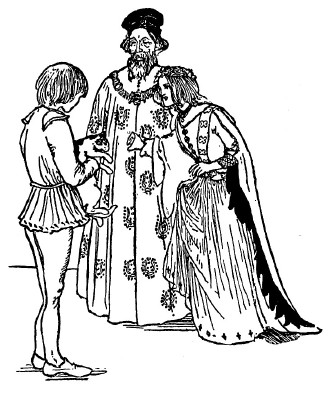
About this
time,
Miss Alice was going out one morning for a walk, and the footman
happened to be
out of the way, so as little Dick had a suit of good clothes that Mr.
Fitzwarren gave him to go to church in on Sundays, he was told to put
them on,
and walk behind her. As they went along, Miss Alice saw a poor woman
with one
child in her arms, and another on her back: she pulled out her purse,
and gave
the woman some money; but as she was putting it into her pocket again,
she
dropped it on the ground, and walked on. It was lucky that Dick was
behind, and
saw what she had done; he picked up the purse, and gave it to her
again.
Another time, when Miss Alice was sitting with the window open, and
amusing
herself with a favourite parrot, it suddenly flew away to the branch of
a high
tree, where all the servants were afraid to venture after it. As soon
as Dick
heard of this, he pulled off his coat, and climbed up the tree as
nimbly as a
squirrel; and after a great deal of trouble, for Poll hopped about from
branch
to branch, he caught her and brought her down safe to his mistress.
Miss Alice
thanked him, and liked him ever after for this.
 The ill-humoured
cook was now a little kinder; but besides this, Dick had another
hardship to
get over. His bed, which was of flock, stood in a garret where there
were so
many holes in the floor and the walls, that every night he was waked in
his
sleep by the rats and mice; which often ran over his face, and made
such a
noise that he sometimes thought the walls were tumbling down about him.
One day
a gentleman who came to see Mr. Fitzwarren, required his shoes to be
cleaned;
Dick took great pains to make them shine, and the gentleman gave him a
penny.
This he thought he would buy a cat with; so the next day, seeing a
little girl
with a cat under her arm, he went up to her, and asked if she would let
him
have it for a penny. The girl said she would with all her heart, for
her mother
had more cats than she could keep. She told him besides, that this one
was a
very good mouser. Dick hid his cat in the garret, and always took care
to carry
a part of his dinner to her; and in a short time he had no more trouble
from
the rats and mice, but slept as soundly as he could wish. Soon after
this, his
master had a ship ready to sail; and as he thought it right all his
servants
should have some chance for good fortune as well as himself, he called
them
into the parlour, and asked them what they would send out. They all had
something that they were willing to venture, except poor Dick; who had
neither
money nor goods, and so could send nothing at all. For this reason he
did not
come into the parlour with the rest; but Miss Alice guessed what was
the
matter, and ordered him to be called in. She then said she would lay
down some
money for him from her own purse; but her father told her this would
not do,
for Dick must send something of his own. When poor Dick heard this, he
said, he
had nothing but a cat, which he bought for a penny that was given him.
Fetch
your at then, my good boy,’ said Mr. Fitzwarren, ‘and let her go.’ Dick
went up
stairs and brought down poor Puss, and gave her to the captain with
tears in
his eyes; for he said he should now be kept awake all night again by
the rats
and mice. All the company laughed at Dick’s odd venture; and Miss
Alice, who
felt pity for the poor boy, gave him some half-pence to buy another
cat. The ill-humoured
cook was now a little kinder; but besides this, Dick had another
hardship to
get over. His bed, which was of flock, stood in a garret where there
were so
many holes in the floor and the walls, that every night he was waked in
his
sleep by the rats and mice; which often ran over his face, and made
such a
noise that he sometimes thought the walls were tumbling down about him.
One day
a gentleman who came to see Mr. Fitzwarren, required his shoes to be
cleaned;
Dick took great pains to make them shine, and the gentleman gave him a
penny.
This he thought he would buy a cat with; so the next day, seeing a
little girl
with a cat under her arm, he went up to her, and asked if she would let
him
have it for a penny. The girl said she would with all her heart, for
her mother
had more cats than she could keep. She told him besides, that this one
was a
very good mouser. Dick hid his cat in the garret, and always took care
to carry
a part of his dinner to her; and in a short time he had no more trouble
from
the rats and mice, but slept as soundly as he could wish. Soon after
this, his
master had a ship ready to sail; and as he thought it right all his
servants
should have some chance for good fortune as well as himself, he called
them
into the parlour, and asked them what they would send out. They all had
something that they were willing to venture, except poor Dick; who had
neither
money nor goods, and so could send nothing at all. For this reason he
did not
come into the parlour with the rest; but Miss Alice guessed what was
the
matter, and ordered him to be called in. She then said she would lay
down some
money for him from her own purse; but her father told her this would
not do,
for Dick must send something of his own. When poor Dick heard this, he
said, he
had nothing but a cat, which he bought for a penny that was given him.
Fetch
your at then, my good boy,’ said Mr. Fitzwarren, ‘and let her go.’ Dick
went up
stairs and brought down poor Puss, and gave her to the captain with
tears in
his eyes; for he said he should now be kept awake all night again by
the rats
and mice. All the company laughed at Dick’s odd venture; and Miss
Alice, who
felt pity for the poor boy, gave him some half-pence to buy another
cat.
This, and
many
other marks of kindness shown him by Miss Alice, made the ill-tempered
cook
jealous of poor Dick, and she began to use him more cruelly than ever,
and
always made game of him for sending his cat to sea. She asked him if he
thought
his cat would sell for as much money as would buy a stick to beat him.
At last
poor little Dick could not bear this usage any longer, and he thought
he would
run away from his place; so he packed up his few things, and set out
very early
in the morning on All hallows day, which is the first of November. He
walked as
far as Holloway; and there sat down on a stone, which to this day is
called
Whittington’s stone, and began to think which road he should take
farther.
While he was thinking what he could do, the bells of Bow Church, which
at that
time had only six, began to ring, and he fancied their sounds seemed to
say to
him,
Turn again
Whittington,
Lord Mayor of
London.
‘Lord
mayor of
London!’ said he to himself. ‘Why to be sure, I would put up with
almost any
thing now, to be lord mayor of London, and ride in a fine coach, when I
grow to
be a man! Well, I will go back, and think nothing of all the cuffing
and
scolding of the old cook, if I am to be lord mayor of London at last.’
Dick
went back; and was lucky enough to get into the house, and set about
his work,
before the old cook came down stairs. The ship with the cat on board,
was a
long time at sea; and was at last driven by the winds on a part of the
coast of
Barbary, where the only people are Moors, that the English had never
known
before. The people of this country came in great numbers to see the
sailors,
who were all quite of a different colour from themselves, and treated
them very
civilly; and when they became better acquainted, were very eager to buy
the
fine things that the ship was laden with. When the captain saw this, he
sent
patterns of the best things he had to the king of the country; who was
so much
pleased with them, that he sent for the captain and his chief mate to
the
palace.
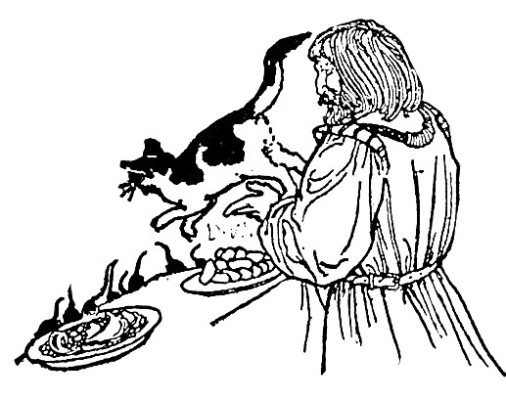 Here they were
placed, as it is the custom of the country, on rich carpets, marked
with gold
and silver flowers. The king and queen were seated at the upper end of
the
room; and a number of dishes, of the greatest rarities, were brought in
for
dinner; but before they had been set on the table a minute, a vast
number of
rats and mice rushed in, and helped them‑selves from every dish,
throwing the
gravy, and pieces of the meat all about the room. The captain wondered
very
much at this, and asked the king’s servants if these vermin were not
very
unpleasant. ‘Oh! yes,’ they said, ‘and the king would give half his
riches to
get rid of them; for they not only waste his dinner, as you see, but
disturb
him even in his bed-room, so that he is obliged to be watched while he
is
asleep for fear of them.’ The captain was ready to jump for joy when he
heard
this: he thought of poor Dick’s cat, and told the king he had a
creature on
board his ship, hat would kill all the rats and mice. The king was
still more
glad than the captain. ‘Bring this creature to me,’ said he; ‘and if it
can do
what you say I will give you your ship full of gold for her.’ The
captain, to
make quite sure of his good luck, answered, that she was such a clever
cat for
catching rats and mice, that he could hardly bear to part with her; but
that to
oblige his majesty he would fetch her. ‘Run, run,’ said the queen; ‘for
I long
to see the dear creature that will do us such a service.’ Away went the
captain
to the ship, while another dinner was got ready. He took Puss under his
arm,
and came back to the palace soon enough to see the table full of rats
and mice
again and the second dinner likely to he lost again in the same way as
the
first. When the cat saw them she did not wait for bidding; but jumped
out of
the captain’s arm, and in a few moments laid almost all the rats and
mice dead
at her feet. The rest of them, in a fright, scampered away to their
holes. Here they were
placed, as it is the custom of the country, on rich carpets, marked
with gold
and silver flowers. The king and queen were seated at the upper end of
the
room; and a number of dishes, of the greatest rarities, were brought in
for
dinner; but before they had been set on the table a minute, a vast
number of
rats and mice rushed in, and helped them‑selves from every dish,
throwing the
gravy, and pieces of the meat all about the room. The captain wondered
very
much at this, and asked the king’s servants if these vermin were not
very
unpleasant. ‘Oh! yes,’ they said, ‘and the king would give half his
riches to
get rid of them; for they not only waste his dinner, as you see, but
disturb
him even in his bed-room, so that he is obliged to be watched while he
is
asleep for fear of them.’ The captain was ready to jump for joy when he
heard
this: he thought of poor Dick’s cat, and told the king he had a
creature on
board his ship, hat would kill all the rats and mice. The king was
still more
glad than the captain. ‘Bring this creature to me,’ said he; ‘and if it
can do
what you say I will give you your ship full of gold for her.’ The
captain, to
make quite sure of his good luck, answered, that she was such a clever
cat for
catching rats and mice, that he could hardly bear to part with her; but
that to
oblige his majesty he would fetch her. ‘Run, run,’ said the queen; ‘for
I long
to see the dear creature that will do us such a service.’ Away went the
captain
to the ship, while another dinner was got ready. He took Puss under his
arm,
and came back to the palace soon enough to see the table full of rats
and mice
again and the second dinner likely to he lost again in the same way as
the
first. When the cat saw them she did not wait for bidding; but jumped
out of
the captain’s arm, and in a few moments laid almost all the rats and
mice dead
at her feet. The rest of them, in a fright, scampered away to their
holes.
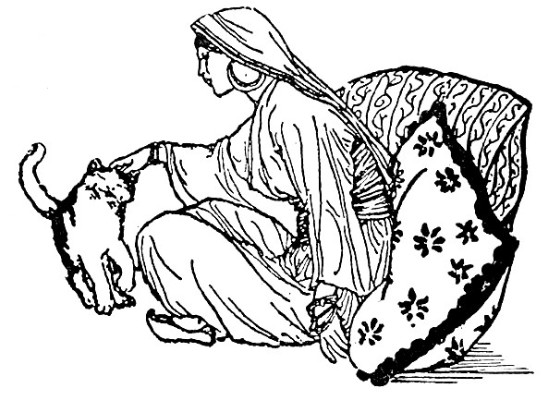 The king and queen
were quite charmed to get so easily rid of such plagues; for, ever
since they
could remember, they had not had a comfortable meal by day. nor any
quiet sleep
by night. They desired that the creature who had done them so great a
kindness,
might be brought for them to look at. On this the captain called out
‘Puss,
Puss,’ and the cat ran up to him, and bumped upon his knee. He then
held her
out to the queen, who started back, and was afraid to touch a creature
that was
able to kill so many rats and mice: but when she saw how gentle the cat
seemed,
and how glad she was at being stroked by the captain, she ventured to
touch her
too; saying all the time, ‘Poot, Poot,’ for she could not speak
English. At
last the queen took Puss on her lap; and by degrees became quite free
with her,
till Puss purred herself to sleep. When the king had seen the actions
of
mistress Puss, and was told that she would soon have young ones which
might in
time kill all the rats and mice in his country, he bought the captain’s
whole
ship’s cargo; and afterwards gave him a great deal of gold besides,
which was
worth still more, for the cat. The captain then took leave of the king
and
queen, and the great persons of their court; and, with all his ship’s
crew, set
sail with a fair wind for England, and after a happy voyage arrived
safe at
London. The king and queen
were quite charmed to get so easily rid of such plagues; for, ever
since they
could remember, they had not had a comfortable meal by day. nor any
quiet sleep
by night. They desired that the creature who had done them so great a
kindness,
might be brought for them to look at. On this the captain called out
‘Puss,
Puss,’ and the cat ran up to him, and bumped upon his knee. He then
held her
out to the queen, who started back, and was afraid to touch a creature
that was
able to kill so many rats and mice: but when she saw how gentle the cat
seemed,
and how glad she was at being stroked by the captain, she ventured to
touch her
too; saying all the time, ‘Poot, Poot,’ for she could not speak
English. At
last the queen took Puss on her lap; and by degrees became quite free
with her,
till Puss purred herself to sleep. When the king had seen the actions
of
mistress Puss, and was told that she would soon have young ones which
might in
time kill all the rats and mice in his country, he bought the captain’s
whole
ship’s cargo; and afterwards gave him a great deal of gold besides,
which was
worth still more, for the cat. The captain then took leave of the king
and
queen, and the great persons of their court; and, with all his ship’s
crew, set
sail with a fair wind for England, and after a happy voyage arrived
safe at
London.
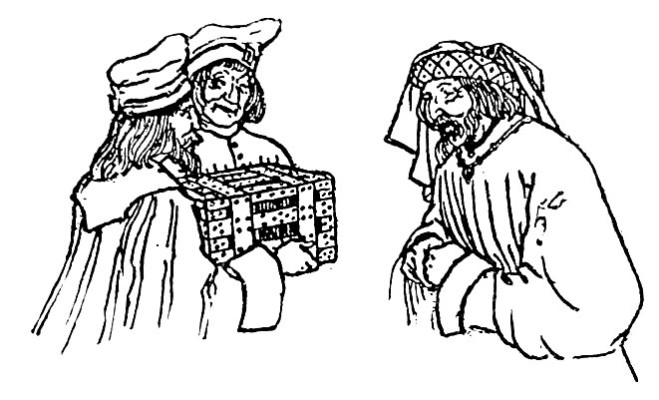  One morning, when
Mr. Fitzwarren had bust come into his counting-house, and seated
himself at the
desk, somebody came tap, tap, tap, at the door. — ‘Who is there?’ said
Mr.
Fitzwarren. — ‘A friend,’ answered some one, opening the door; when who
should
it be but the captain and mate of the ship bust arrived from the coast
of
Barbary, and followed by several men carrying a vast many lumps of
gold, that
had been paid him by the king of Barbary for the ship’s cargo. — They
then told
the story of the cat, and showed the rich present that the king had
sent to
Dick for her: upon which the merchant called out to his servants: One morning, when
Mr. Fitzwarren had bust come into his counting-house, and seated
himself at the
desk, somebody came tap, tap, tap, at the door. — ‘Who is there?’ said
Mr.
Fitzwarren. — ‘A friend,’ answered some one, opening the door; when who
should
it be but the captain and mate of the ship bust arrived from the coast
of
Barbary, and followed by several men carrying a vast many lumps of
gold, that
had been paid him by the king of Barbary for the ship’s cargo. — They
then told
the story of the cat, and showed the rich present that the king had
sent to
Dick for her: upon which the merchant called out to his servants:
‘Go fetch him, we
will tell him of the same,
Pray call him Mr.
Whittington by name.’
Mr.
Fitzwarren now
showed himself to be really a good man; for when some of his clerks
said so
great a treasure was too much for such a boy as Dick, he answered; ‘God
forbid
that I should keep the value of a single penny from him! It is all his
own, and
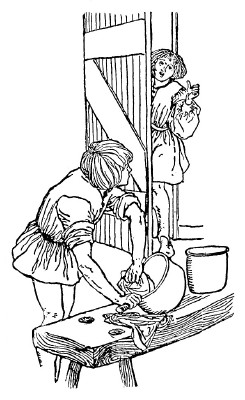
he shall have every farthing’s worth of it to himself.’ He then sent
for Dick,
who at that time happened to be scouring the cook’s kettles, and was
quite
dirty; so that he wanted to excuse himself from going to his master, by
saying
that the great nails in his shoes would spoil the fine rubbed floor.
Mr.
Fitzwarren, however, made him come in, and ordered a chair to be set
for him;
so that poor Dick thought they were making game of him, as the servants
often
did in the kitchen; and began to beg his master not to play tricks with
a poor
simple boy, but to let him go down again to his work. — ‘Indeed, Mr.
Whittington,’ said the merchant, ‘we are all quite in earnest with you;
and I
most heartily rejoice in the news these gentlemen have brought you; for
the
captain has sold your cat to the king of Barbary, and brought you in
return for
her more riches than I possess in the whole world; and I wish you may
long
enjoy them!’
 Mr. Fitzwarren then
told the men to open the great treasure they had brought with them; and
said,
‘Mr. Whittington has now nothing to do but to put it in some place of
safety.’
— Poor Dick hardly knew how to behave himself for joy: he begged his
master to
take what part of it he pleased, since he owed it all to his kindness.
— ‘No,
no,’ answered Mr. Fitzwarren, ‘this is all your own; and I have no
doubt you
will use it well.’ — Dick next asked his mistress, and then Miss Alice,
to
accept a part of his good fortune; but they would not, and at the same
time
told him that his success afforded them great pleasure. But the poor
fellow was
too kind hearted to keep it all to himself; so he made a handsome
present to
the captain, the mate, and every one of the sailors, and afterwards to
his good
friend the footman, and the rest of Mr. Fitzwarren’s servants; and even
to the
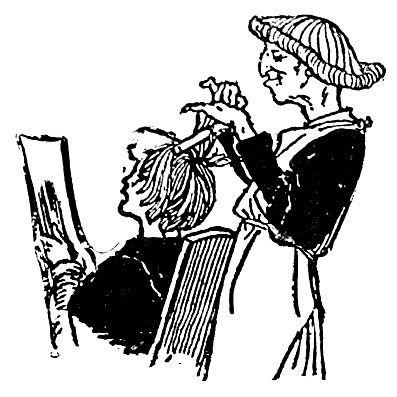
ill-natured old cook. After this Mr.
Fitzwarren advised him to send for proper tradesmen, and get himself
dressed
like a gentleman; and told him he was welcome to live in his house till
he
could provide himself with a better. Mr. Fitzwarren then
told the men to open the great treasure they had brought with them; and
said,
‘Mr. Whittington has now nothing to do but to put it in some place of
safety.’
— Poor Dick hardly knew how to behave himself for joy: he begged his
master to
take what part of it he pleased, since he owed it all to his kindness.
— ‘No,
no,’ answered Mr. Fitzwarren, ‘this is all your own; and I have no
doubt you
will use it well.’ — Dick next asked his mistress, and then Miss Alice,
to
accept a part of his good fortune; but they would not, and at the same
time
told him that his success afforded them great pleasure. But the poor
fellow was
too kind hearted to keep it all to himself; so he made a handsome
present to
the captain, the mate, and every one of the sailors, and afterwards to
his good
friend the footman, and the rest of Mr. Fitzwarren’s servants; and even
to the
ill-natured old cook. After this Mr.
Fitzwarren advised him to send for proper tradesmen, and get himself
dressed
like a gentleman; and told him he was welcome to live in his house till
he
could provide himself with a better.
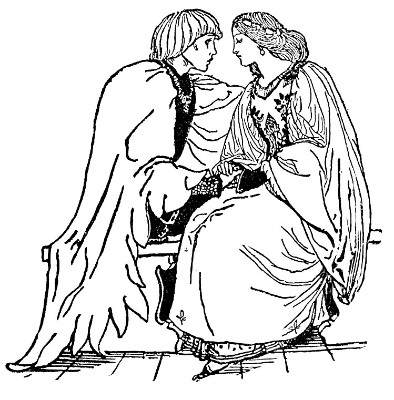 When Whittington’s
face was washed, his hair curled, his hat cocked, and he was dressed in
a nice
suit of clothes, he was as handsome and genteel as any young man who
visited at
Mr. Fitzwarren’s; so that Miss Alice, who had been so kind to him, and
thought
of him with pity, now looked upon him as fit to be her sweetheart; and
the more
so, no doubt, because Whittington was now always thinking what he could
do to
oblige her, and making her the prettiest presents that could be. Mr.
Fitzwarren
soon saw their love for each other, and proposed to join them in
marriage; and
to this they both readily agreed. When Whittington’s
face was washed, his hair curled, his hat cocked, and he was dressed in
a nice
suit of clothes, he was as handsome and genteel as any young man who
visited at
Mr. Fitzwarren’s; so that Miss Alice, who had been so kind to him, and
thought
of him with pity, now looked upon him as fit to be her sweetheart; and
the more
so, no doubt, because Whittington was now always thinking what he could
do to
oblige her, and making her the prettiest presents that could be. Mr.
Fitzwarren
soon saw their love for each other, and proposed to join them in
marriage; and
to this they both readily agreed.
A day for
the
wedding was soon fixed: and they were attended to church by the lord
mayor, the
court of aldermen, the sheriffs, and a great number of the richest
merchants in
London; whom they afterwards treated with a very fine feast.
History
tells us
that Mr. Whittington and his lady lived in great splendour, and were
very
happy. They had several children. He was sheriff of London in the year
1360,
and several times afterwards lord mayor; the last time, he entertained
king
Henry the Fifth, on his majesty’s return from the famous battle of
Agincourt.
In this company, the king, on account of Whittington’s gallantry, said:
‘Never
had prince such a subject;’ and when Whittington was told this at the
table, he
answered: ‘Never had subject such a king.’ Going with an address from
the city,
on one of the king’s victories, he received the honour of knighthood.
Sir
Richard Whittington supported many poor; he built a church, and also a
college,
with a yearly allowance to poor scholars, and near it raised a
hospital. The
figure of Sir Richard Whittington, with his cat in his arms, carved in
stone,
was to be seen till the year 1780, over the archway of the old prison
of
New-gate, that stood across Newgate-street.
|


 Click the book image to turn
to the next Chapter.
Click the book image to turn
to the next Chapter.