
Web
and Book design,
Copyright, Kellscraft Studio 1999-2007 (Return to Web Text-ures) |
 (HOME)
|
|
L A Girl in
the Shenandoah Valley 1 WHEN the
war broke
out my father had a large flouring mill here on Cedar Creek. It was
doing a
good business and he was making money. He had a sawmill, too, and used
it
constantly until some Yankee troops came through here in '62. Up to
that time
the people in this vicinity were right prosperous. I was the
oldest of
the children of the family, and I was small. Father was a very old man.
He was
sixty, I reckon. Mother was a good deal younger. They were opposed to
slavery,
but a family of slaves was willed to Mother, and they came here to
live. There
were two sisters and two brothers. They were bright, but also real
independent,
and kind of dangerous. Several white tenants of ours lived across the
creek and
worked for us, and we hired others. I s'pose
it was
about April that the Yankees were here in '62. They broke into our
granary and
smokehouse in the night, and the doors were all open in the morning
when our
folks were astir. Besides, they destroyed the bolting cloths in the
flouring
mill. One army or the other got all Our horses, and we couldn’t use our
sawmill
any more because we had no teams to draw logs. We couldn’t keep
anything that
was good, and we thought we were having a hard time, but affairs were
n't quite
so dizzy those days as they were later in the war. The
Northerners
annoyed us most. The trouble of it was that there were so many toughs
in the
Union army. You opened your penitentiaries and let the convicts out to
become
soldiers, and you hired a heap of foreigners for soldiers. We were
always glad
to see our troops back, though there were some bad men among them as
well as
among the Yankees. You couldn’t trust 'em to behave if they'd been
drinking.
Yes, our army had its bad men, and yours had its good men. At such
times as the
Northerners camped near here a guard was sent to stay at the house.
We'd get
friendly with him, and with others who would come from the camp and sit
awhile
of an evening. We liked some of them very well. When the
armies
would stay away long enough Father would buy one or two old horses and
try to
draw wood and farm a little. There were right good woods over the
creek, but it
wasn’t always easy to get to 'em. Oftentimes the bridge was down. The
old
bridge which was there at the beginning of the war was burned by a
retreating
army. Afterward a trustle bridge was put up, and the high water washed
that
away. The troops built temporary bridges in its place one after the
other as
they were destroyed either for military purposes or by floods. When
there was
no bridge the only way to cross was at fords. We planted
our
garden every year, but we never knew who'd gather what we raised in it.
The
soldiers would take our onions and dig our sweet potatoes, and we
couldn’t have
apples or anything. If they were here in grape time they got our
grapes. Yes, I
can tell you that — they gathered the crops. But if we had good luck
we'd grow
cabbages and make kraut, and we'd raise enough sorghum to make some
sorghum
molasses. Whenever we could we had a cow, but we were apt to lose her,
and we'd
go for a long, long time without butter or milk. We always had corn
bread and
some wheat bread. Our own mill was disabled, and we got the grinding
done at mills
off the pike that escaped. There was sure to be lard in the house, but
we
seldom had meat. We never starved, and our chief complaint was that we
didn’t
have any variety hardly. Often the
soldiers
came to the house to ask for something to eat, and we'd give it to 'em
if we
had it. Sometimes they'd walk right in and take things. If no officers
were on
hand they'd be real rude to us. We raised
a little
corn on two small fields that lay out of sight like, where the hills
and trees
hid them. But the fields didn’t either of 'em contain over five or six
acres;
so we couldn’t raise much. What
helped us out
more than anything else was a little mountain farm that we owned. It
was eight
or ten miles from here. We had sheep up there that furnished us with
wool, and
fields of corn and wheat. A man rented the farm and got some share of
the wool,
and he divided with us the crops that he raised. In the
summer-time
we'd get the wool ready to send to the fulling mill to be carded and
made into
rolls. There was always a-plenty for us to do. When the rolls came back
Mother
would spin 'em into thread, and we took the thread to a woman who wove
it into
cloth. Some of the cloth was linsey for the women, and some was a
heavier cloth
for men's wear. We colored
a good
deal of the wool. If we wanted black we used logwood, and by mixing
black and
white wool we'd get gray. For brown we made a dye out of walnut hulls,
and for
a bright color we'd perhaps use pokeberries, but they didn’t make a
lasting
color. It was a
very hard
thing to get clothes during the war, and yet we always managed somehow.
Our
summer dresses were cotton. We bought the thread in hanks and had it
woven by
the same woman who wove our wool. We dyed the thread with indigo and
copperas
as long as we could get the dyes. I remember I had a summer dress made
in those
days that was tan and white striped. Toward the end of the war we dyed
with
hickory wood. That colored the cotton a light yellow. We made the
dresses
ourselves here at home. Sometimes
we had
plain, gray, linen dresses. We raised flax, and after the husks were
roughed
off by hackling and swingling, it was spun and woven into cloth for
sheets and
towels, dresses, and underwear. Some of the linen thread was used for
the warp
in weaving rag carpets. Pretty much every one had rag carpets then. This house
was a
general's headquarters twice. One of the generals who used it was a
Dutchman
with foreign soldiers. When those Dutch came through the valley in '62
they
ransacked houses and treated the people cruelly. I know we had great
fear of
them. They'd tear up quilts and the homemade counterpanes and coverlids
and
such things. They were here when the green leaves first came in the
spring. The
general took
all of our house except one room. His officers would go around with
spurs on
their boots and their swords clanking on the carpets, and when we saw
how they
did we took the carpets up. The general had a French cook and lived in
style.
He said we would all eat together, but oh my goodness! we tried it once
and that
was enough: They stayed so long at table and had so many courses! and
they
drank wines and they smoked. Afterward we ate at a little table in our
room.
Sometimes we'd take things to a neighbor's to cook. We've got one of
that
general's stone beer jugs here now. We keep vinegar in it. There were
five
tents in the yard. I s'pose some of the general's staff were in those.
It
seemed to us children like a long time that he stayed in our house. He
had a
large flag on a tall pole near the gate. When the wind blew from the
right
direction the flag would wave over the path. The older people of our
household
wouldn’t go under it, and we children patterned after them and turned
aside,
too. At one
time we had
a sick Southern soldier in the house when the Yankees raided through
the
region. They stopped at our place and asked if any Rebel soldiers were
there,
and we said "No." That
didn’t satisfy
'em, and they come in and looked around. They even opened the door of
the room
where the sick soldier lay and poked their heads in, but he was only a
young
lad and had his face to the wall. So they went away and didn’t discover
that he
was a soldier. I'll show you his daguerreotype. There, that's him.
Isn't he too
nice a boy to be shot? We
couldn’t keep
any poultry or hogs if they were where the soldiers could get at 'em.
When
Sheridan camped here the last time we had four chickens in the garret,
and we
made a pen in the cellar and kept one hog there. The
soldiers
destroyed a good deal just from meanness. Everything
was laid
waste on the farms around us. At one place they even took the
weather-boarding
from the corn crib and hoghouse. We had a right large barn, but they
tore it
down. They told us they wanted the material for building a bridge
across the
creek, but Father said they used very little of it in the bridge. Shortly
after
dinner one day we looked out and saw that the flouring mill was on
fire. It had
stone walls, and the soldiers had piled up a lot of lightwood just
inside of
the door and started the fire in that wood. The wind was blowing, and
the
flames spread to the sawmill and to a small building that we used for
extry
work such as boiling apple-butter. The soldiers carried brands to put under the frames of the log hoghouse and the corn crib, and they burnt the hoghouse, but some officers saved the corn crib. The officers told us to watch the house and see that the soldiers didn’t set fire to that. 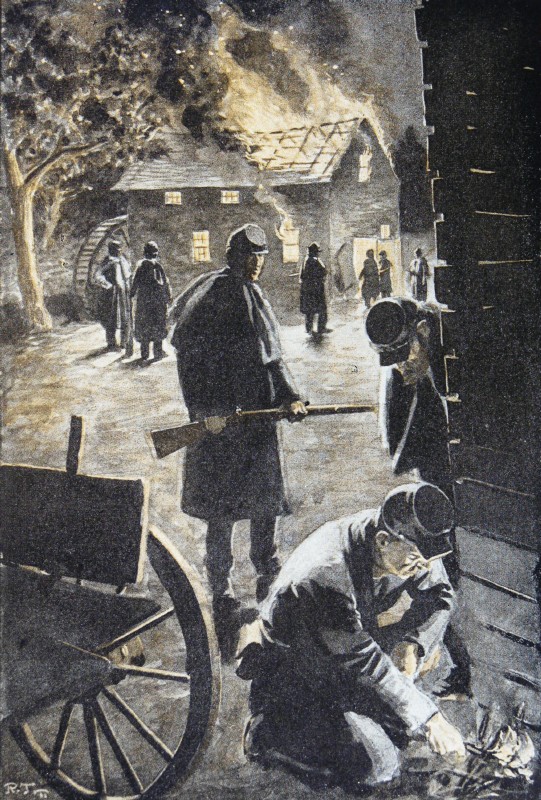 SETTING FIRE TO THE BUILDINGS Sheridan's
raid was
in the autumn of 1864. He came to our valley to destroy everything that
an
enemy might use, and his troops burned two thousand barns and seventy
mills,
and they gathered up four thousand head of cattle. They were opposed by
the
Confederate General Early, and they had a number of fights with him
before the
battle of Cedar Creek was fought on October 19th. The Yankee
camp was
only a short distance from our house when they fought here. It had been
there
for some time and we had so little food of our own then that we drew
rashions
at the camp. I reckon we youngsters were thinking about something to
eat pretty
constantly, and Mother felt obliged to do what she could for us. She
and a
stout young woman who worked for us would each take a basket and go
over to
headquarters, and the men there would give 'em crackers, beef, coffee,
and
sugar. Father
wasn’t well,
and at the time of the battle he had been sick in bed with an attack of
bilious
fever, and had just got up. Mother had hired the young woman because
she didn’t
like to stay here without some other able-bodied person besides herself
in the
house. She wasn’t any coward either. She was brave, and she needed to
be. We
never knew what would happen next. One afternoon Mother was sitting in
a
rocking-chair side of the lounge holding the baby, and a bullet came
through
the window sash and fell on her lap. It was a stray bullet fired by the
Union
soldiers who were practisin' over on the hill. Oh, we had some narrow
escapes! The battle
began
early one misty morning before sunup. Sheridan's army of forty thousand
men
were asleep in their tents. They were not expecting an attack, and
Sheridan
himself was in Winchester, fifteen miles north of here. Our men crept
up by
stealth, and the Federals were completely surprised. They didn’t have
time to
form in line, and they were quickly beaten and retreated in disorder. We had
been inside
of the Union lines, and the first I knew of the battle Mother woke us
children
up to look out and see the Yankee pickets surrender. Soon afterward two
Southern soldiers come along carrying a wounded comrade. They would
have
brought him into the house, but just as they got to the gate he died.
The three
were brothers, and the two who had been carrying the wounded man buried
him in
the orchard under an apple tree and put up a piece of pine board at the
head of
the grave with the name of the dead brother very neatly penciled on it.
They
said they would come again for the body, but they never did. It was my
lot to
take care of the smaller children during the day, and I had right smart
trouble
with 'em. They were crying for something to eat, and I had nothing to
give 'em.
It was very trying. The
wounded of both
armies were brought to our house till every room downstairs was full,
and the
yard outside was filled, too. They just lay on the floor or on the
grass with
maybe a blanket or overcoat under 'em. The surgeons took anything they
could
get in the house for bandages. I came
downstairs
once in a while to see what was going on, and there was one time that I
went
out to watch some Southern cavalry going along the pike with a lot of
prisoners. They brought 'em here and kept 'em in a field behind the
house. I'd
hardly been outside of the house two minutes looking at the cavalry
when I was
called back in to take care of those cross children. I never got to
give
anything to the wounded. Mother was waiting on 'em, and made coffee for
'em. When the
Union army
was routed they say that Early's men plundered the camp instead of
pursuing the
enemy. Then General Sheridan, who had heard the cannonading, came
galloping
from Winchester. He met his retreating troops and stopped them. "Face
the
other way, boys!" he shouted. Soon he
had changed
the whole course of the movement and got his men into fighting trim.
Back they
came then, and when the day ended Early's army had been almost
destroyed. We
heard our men retreating about four o'clock, and toward sundown, as the
last of
'em were passing here, the surgeons set fire to the medical wagons and
hurried
off. Some of the wagons were down on the meadow by the springhouse, and
some up
the hill back of the orchard. The chemicals in them made a bright
blaze. While the
wagons
were burning the Northern cavalry came and recaptured the prisoners who
were
in our field, and took possession of the artillery their men had
abandoned in
the morning. By night the Union surgeons were here in the house. I never
experienced
so many stirring events in any other day in my life. I'm always right
wide
awake where there's excitement, but after things quieted down that
evening we
went to bed and I think I slept some before morning. When we
got up we
found that right smart of the wounded men who had been brought to our
house and
yard had died. I tell you what, 'twas awful! Most of the survivors were
taken
away that day to Winchester, and then we had the cleaning up to do. The
rooms
were bloody, and out on the back porch, where the surgeons did their
amputating, Father cleared the blood off with a shovel. All of the
second
night after the battle we sat in the sitting-room on chairs or the
lounge. The
blinds were pulled down and we kept a bright fire burning, for the
night was
cool. Two Southern soldiers lay dying on the kitchen floor. They had
been
fatally hurt, but were so long dying that some of the Union soldiers
wanted to
bury 'em before they were dead. Mother went to an officer to prevent
that. A good
many of the
dead were buried on our place — some along the pike, some on the
hillside back
of the granary, and some near where we got water to use for washing,
and the
water used to smell. The bodies were all taken up after the war except
that of
the soldier who had been buried by his brothers in the orchard. We were
dreadfully
broken up by the war, and had a hard struggle to get started again. We
didn’t
have anything hardly, and we had to go mighty far away to get our first
meat.
The fences were all gone, and rails had to be split before we could
inclose the
fields to raise crops. Our only horse was a broken-down army horse that
was
picked up on the battlefield. Father had a terrible turn with neuralgia and the rheumatism, and he felt so poor that he stopped using tobacco and didn’t buy any more. You know it's mighty bad to break off a lifelong habit that way. Mother was one of those people who always manage to have a little money, and she bought him some tobacco, but he wouldn’t take it. We fared hard — all of us. We certainly did! _____________________ 1 The girl of long ago
was now a
gray-haired woman. She was delightfully hospitable and made me welcome
to the
sitting-room of the fine, dignified old brick farmhouse in which she
lived. The
day was dull, but indoors a cheerful fire blazing on the hearth
banished all
gloom. |
 Click the book image to turn
to the next Chapter.
Click the book image to turn
to the next Chapter.