
Web
and Book design,
Copyright, Kellscraft Studio 1999-2007 (Return to Web Text-ures) |
 (HOME)
|
|
XXXVII The Mulatto Girl 1 I LIVED with my Uncle Amos in a four-room frame house in what is now the business part of the city. Chattanooga was a small place then with just a house hyar and thar. Not more 'n three or four of the houses was of brick, and a good many were little log cabins with whitewashed walls. Right in the middle of the town was a big frog pond. Well, the place wasn’t nothing but a mudhole. Oh, but I've spent many happy days thar! I was just
a
stripling of a girl when the Yankees bumbarded the town from across the
river.
They throwed in bumbshells, log chains, and everything. We could see
the chains
twisting through the air like snakes. A piece of a bumb struck a white
woman
right above our house just after dark that evening and killed her. Uncle Amos
spoke to
my aunt and said, "I expect you'll have to go to the bluff to-night."
The bluff
was right
in town on the edge of the river, and the women and children, black and
white,
all went thar together and got under the rocks. A lot of 'em carried
bedclothes, but no one did much sleeping. We had fires all along in
front and
kept them burning till morning. Uncle had
a farm
out across Missionary Ridge. Thar was thirty or forty acres in it.
During the
summer he lived in a little log hut at the farm and cropped the land.
We was
thar in the early fall of 1863. One day, when we was about ready to
start
gathering the corn, the old folks took the wagon and the two horses and
went
into town to get provisions. I and my two sisters stayed at the log
hut. That
morning four
or five Rebels come running through the yard and smashed their guns
against the
trees and stumps and left 'em thar. I found out afterward that the
Rebel army
was retreatin' from Chattanooga. Later the same day the Yankees got to
our
farm, and the first thing I knew their wagons was out in front, and the
men
tore down the fence and drove in our cornfield. They began to break off
the
ears and throw 'em into the wagons. Oh, they like to have scared me to
death!
The road was full of soldiers. They were all dressed in blue and were
covered
with dust, and they had canteens and guns and bayonets — they did look
scarey.
Some of 'em come to the door and said, "Where's your father?" I felt
like I was
havin' a chill. My tongue cleaved to the roof of my mouth. They were
swearing
at me and had me most dead when a captain rode up to the gate. "What
are
you-all doing hyar scaring children?" he said, and he drove 'em right
out
of the yard and told 'em to go about their business. "How come
these guns hyar lyin' around on the ground?" he asked. "The
Rebels
left 'em," I said. "Whar are
the
Rebels?" he wanted to know. "They're gone across the mountain,"
I told him. He asked
some more
questions and found out that our old folks were in Chattanooga, and he
said,
"We've put out our picket lines, and your people can't come back
through
'em. It won't be safe for you to stay hyar. I'll take you to town." So we just left everything standing as it was, and he carried my little baby sister on the horse in front of him. My other sister was larger, and she took hold of my hand and we walked right by the captain's stirrup, and the wagons loaded with corn was driving along behind. He went with us to my uncle's, and delivered us to the old folks. "Hyar's your children," he said, and they thanked him and thanked him. 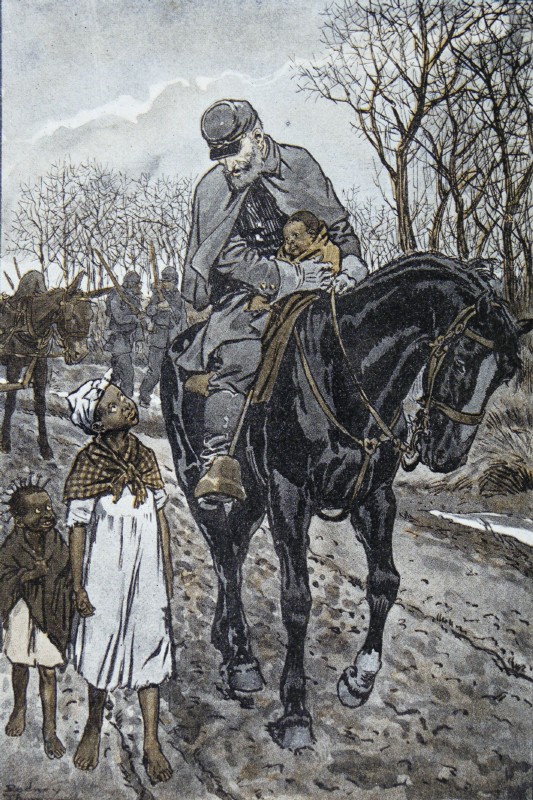 A FRIENDLY OFFICER Not long
afterward
the battle of Chickamauga was fought. We could hear the firing, and the
second
day of the fight it was boom, boom, boom, boom from morning till night.
The
weather was hot, and most of the springs was dried up. Thar was a pond
on the
battlefield, and so many were shot near it that their blood ran down in
the
pond; and the soldiers just drank that bloody water because they
couldn’t get
any other. It's called "Bloody Pond" now. The
ambulances were
coming all the time bringing the wounded, some with their arms broken,
some
with their legs shot off. officers and soldiers was just piled in on
top of
each other. Some of 'em were moaning, and some were hollering, "Lord,
have
mercy!" All the churches was full of the wounded, and a good many of
the
houses. One
wounded man
come to our house. A bullet had gone in one cheek and out the other and
it shot
some of his teeth out, too. His tongue wasn’t hit, but he couldn’t talk
very
well — only just mumble a little bit, He told us he was starved to
death
almost, and I made some mush right quick. My little sister cried
because she
was sorry for him. He had to hold a handkercher on each side of his
face so the food
wouldn’t run out when he swallowed months before they had the fighting
hyar
Uncle Amos
brought a
Yankee spy to our house. We children stood and looked at him and at his
blue
uniform while he eat supper. He seemed to be anxious about his safety,
and by
and by he pointed to me and said: "Who's that little girl? I'm afraid
of
her, she watches me so tight." After he
finished
his supper my uncle took him out and put him in the corncrib and
covered him up
in the shucks, Uncle got him a gray suit, and the spy put it on and he
went off
at three o'clock in the morning to ketch a train, He was a very small
man with
hair as black as jet. While the fighting was going on at Chickamauga a
man came
from the battlefield and leaned up against our fence, It was that spy.
He
didn’t have any gun, and he was dusty and wore out and all broke down.
He asked
for water, and when I brought it to him I says, "You're the one who was
hyar that night," and he said he was. He stayed thar leaning against
the
fence for an hour or two. During the
next two
months the Union troops was bottled up in Chattanooga, and food got
scarce,
Aunt would cook things and swap 'em to the Yankees for coffee. We
didn’t have
no meal or corn, but we had rice, and we sent it to a little mill up
the river
and had it ground, The rice flour made very good batter cakes, and
sometimes we
baked it into bread, but I didn’t care for rice bread. Now and then we
would
get hardtacks from the soldiers. We liked those hardtacks. I had good
teeth and
I could eat 'em, and they were nice if you put 'em in coffee or milk. We owned
two big
mooly cows, so we had milk and butter. There was a shed we kept 'em in
at
night, and we had fenced an acre lot that we turned 'em out into every
morning.
General Stedman had a quart of milk a day from us, and we supplied him
with
fresh butter when we churned. One night the soldiers tore down our
cow-lot
fence. They wanted it for their fires. At the same time they broke into
the
shed and milked the cows. The general didn’t get any milk the next
morning, and
we told him why. Then he made the soldiers take an army wagon and haul
lumber
from a sawmill over on the river and put up a new fence and a fine
large gate.
It was a better fence than we had before. Another
night the
soldiers tore our dairy down. We could hear 'em, but you know we didn’t
dare go
out. There were some jars of peach preserves in the dairy, and the
soldiers eat
up the preserves and rolled the earthen jars down to the gate. They
pulled up
everything in our garden and took all our ducks and geese. As it
happened, we
had plenty of meat, but the meat wasn’t in our smokehouse. We'd rented
that to
some poor colored contrabands. They had a stove in there and a bed. I
don't
think they had any table. It was one little room, and there wasn't no
window in
it—just a front door. Our meat
was buried
under the house. The old woman had prepared for war in time of peace.
We had
taken up some boards of the kitchen floor, dug down in the earth, and
put in
the meat. Then we'd covered it with dirt, and we poured ashes out of
the
fireplace around on the ground so if any one looked down there they
wouldn’t
see the fresh dirt. That meat wasn’t stolen from us, and it never
molded
either. One day my
aunt had
me under the floor scratching for a ham when General Stedman come to
the house.
He pushed the door open and walked right in. "What have you got down
there?" he said. "Meat,"
my aunt replied. "I buried it to feed my children." "Well,"
he said, "that is a nice Yankee trick in you. Let me have a ham, and
you
send your wagon up to my headquarters. You needn't be afraid of your
children
starving." We sent
the wagon,
and he gave us pickled beef and pork, cheese, crackers, sugar, and
beans. I remember
once a
soldier come to the door and rapped, and Aunt just opened the door a
crack and
asked, "What do you want?" It made
him mad to
have her so cautious, and he cussed her and kicked her right under the
chin. He
kicked her flat, and she screamed like everything. It was mean of him,
but I
went into the kitchen and laughed, she fell so flat. General Stedman
was near
by, and he heard the screams, and come hisself. He told some soldiers
to ketch
the feller, and they carried him to camp and tied him up by his thumbs.
One time
the
soldiers got some skulls out on the battleground, and they come to our
house in
the night with those skulls and set three or four of 'em on sticks and
leaned
'em against our door. Early in the morning I opened the door and the
skulls
fell into the house. I hollered and run, and Uncle Amos throwed the
skulls
outside, That tickled the soldiers. We could hear 'em laughing up in
the camp.
They didn’t care for anything, About
eight o'clock
one morning the Rebels at the foot of Lookout Mountain commenced
shooting, The
Union army was attacking 'em. It was a cold, drizzly day, and misty
clouds hid
the mountain. We could hear the guns, but we couldn’t see the soldiers.
The
shooting sounded like so many barrels of firecrackers, with once in a
while the
boom of a cannon. When night come the clouds rolled away, and we could
see the
campfires of both armies in two long lines that went from the valley to
the
mountain top, and between the campfire lines the men were still
fighting. We
stood in our yard and looked at the lights from the guns — the blinking
lights.
They were pretty to see. In the
morning the
Rebels had gone, and the Yankee soldiers had clumb that high mountain.
We saw
what seemed to be a bolt of white cloth stretched right along the
mountain top.
"Oh, there's the flag of truce!" we cried. If you'd
been hyar
you'd have heard lots of old shouting in the town when the people knew
that the
soldiers had got through fighting on the mountain. The battle
was
fought late in November, and the winter that followed was very cold.
The horses
couldn’t stand the weather, and they died in the corrals faster than
the men
could haul 'em out. The soldiers suffered from the cold, too. We were
cooking
breakfast one morning when we heard a noise outside like some one was
trying to
lift the doorlatch. Uncle Amos opened the door, and a soldier carrying
a gun
fell in on his face. He was nearly dead of cold. The tears were frozen
on his
cheeks, his beard was nothing but icicles, and his eyes looked like
they were
set in death. Uncle told
me to
get some cold water. I went to the well and drawed out bucketful after
bucketful as fast as I could. They dashed the water over him till it
looked
like enough had been poured on to drown him. They rubbed him, too, and
he got
so after a while he could move. Then they carried him back to camp. The
men at
the camp thought he would die, but he got well and come to our house
afterward.
He told us
how it
happened that he nearly froze. It was because he was out all night on
the
picket line. He was passed by when the time come to change pickets. So
he was
on duty twice as long as he ought to have been. Well, that
is the
way things went in that old war. Sometimes I go out over the Ridge to
whar we
had our farm and visit the folks who remember what happened while the
soldiers
were around hyar. But most of those who were living then have passed
away, and
those of 'em who are left are few and far between. ______________ 1 I called at her home,
a humble
wooden house on the outskirts of the city, and was invited into the
dingy,
odorous living-room. My informant was a tall, elderly woman with dark,
straight
hair, and a mottled, yellow complexion. She had some snuff in her mouth
and
frequently paused in her narrative to spit into the little fireplace
grate. |
 Click the book image to turn
to the next Chapter.
Click the book image to turn
to the next Chapter.